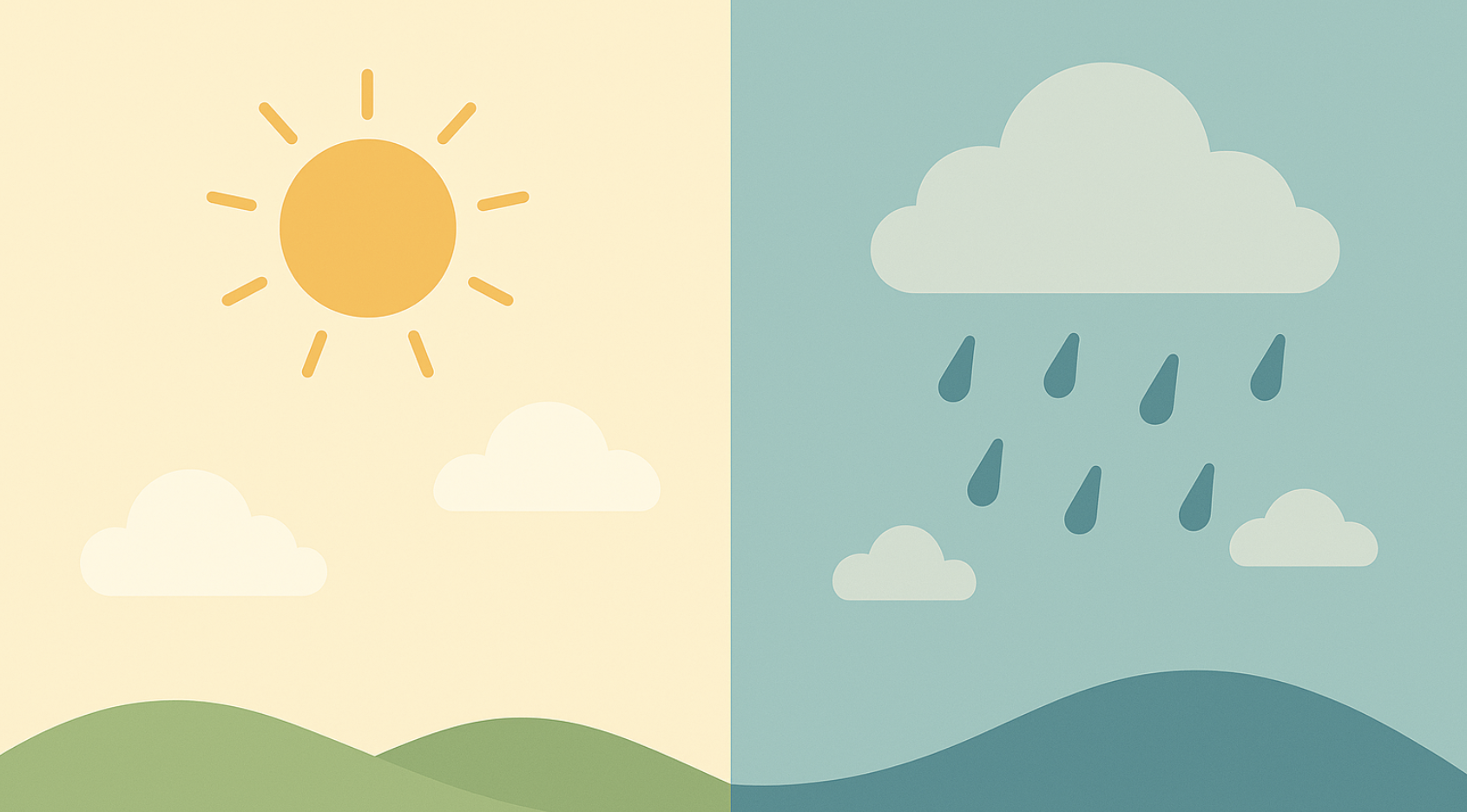
Juxtaposition might sound like one of those intimidating literary terms you learned in school and immediately forgot, but it’s actually one of the simplest (and coolest) writing tools you can use. At its core, juxtaposition is all about placing two things side by side to show contrast. Light vs. dark. Rich vs. poor. Calm vs. chaos. Puppies vs. Monday mornings.
Once you start noticing it, you’ll see it everywhere: in books, movies, ads, conversations, and even the way we describe our daily lives. And the best part? You can use it instantly to make your writing sharper, more emotional, and way more memorable.
In this guide, we’ll break down what juxtaposition is, give you clear examples, and share famous literary moments where authors use it beautifully. By the end, you’ll be spotting (and using) juxtaposition like a pro.
Start Your Publishing Journey FOR FREEWhat Is Juxtaposition?
Juxtaposition is a fancy word for a simple idea: placing two things side by side to highlight their differences. That’s it. No overthinking required.
Writers use juxtaposition to make moments more vivid, characters more interesting, and themes more meaningful. When two contrasting elements sit next to each other, sweet and bitter, peaceful and violent, innocent and corrupt, they sharpen each other. The contrast makes both stand out.
You see juxtaposition everywhere:
- A bright neon sign glowing in a dark alley
- A child laughing during a scary scene in a movie
- A character with a gentle voice delivering bad news
- A love story unfolding in the middle of a war
Quick sentence example:
“Her laughter filled the room, even as the storm pounded angrily against the windows.”
(Soft vs. violent = juxtaposition.)
In short: juxtaposition is contrast with purpose, and it’s one of the easiest ways to add depth to your writing. Next, let’s explore the definition a bit deeper with some clear, everyday examples.
Juxtaposition Definition and Examples
Now that you’ve got the basic idea, let’s break it down a little more. Juxtaposition works because our brains are wired to notice contrast. When two opposite ideas sit next to each other, the meaning becomes sharper… and the writing becomes more memorable.
Why Writers Use Juxtaposition
Writers lean on juxtaposition for a few powerful reasons:
- To create emotion — contrast makes feelings hit harder.
- To add clarity — a character’s kindness looks even kinder next to cruelty.
- To build tension — peaceful scenes become suspenseful when something dark lurks beside them.
- To highlight themes — big ideas shine when shown in comparison.
Common Types of Juxtaposition
You’ll see it most often in:
- Characters: a strict, disciplined soldier paired with a carefree rebel
- Settings: a cheerful festival taking place beside a decaying, abandoned building
- Themes: love and betrayal woven into the same scene
- Imagery: soft sunlight hitting cold steel
- Tone: a humorous line delivered in the middle of a tragic moment
Simple Everyday Examples
These quick examples show how juxtaposition pops up naturally:
- “The tiny kitten hissed at the enormous Great Dane.”
- “He smiled warmly while delivering the worst news of her life.”
- “Their luxury penthouse overlooked a city full of homelessness.”
- “Her bright yellow dress stood out against the gray, lifeless street.”
- “The kids played happily while the parents argued behind closed doors.”
See? Juxtaposition doesn’t have to be complicated—it just requires a moment of contrast.
25 Juxtaposition Examples in Sentences
Juxtaposition becomes much easier to understand once you see it in action. These sentence-level examples show how contrast can instantly shape mood, meaning, and impact, even in just a few words.
Everyday Juxtaposition Sentences
Simple contrasts you might hear or use in daily life.
- “Her joyful laughter echoed through the silent room.”
- “The bright neon sign flickered above the dark, deserted street.”
- “He was dressed in a perfect suit, standing beside a car falling apart at the seams.”
- “The warm smell of cookies drifted through the cold, sterile hospital corridor.”
- “She held onto hope even as reality kept crumbling around her.”
- “The baby giggled while thunder rattled the windows.”
Character Contrast Examples
When two people highlight each other’s differences.
- “The strict professor stood next to his carefree, barefoot student.”
- “She was soft-spoken; her brother thundered through every conversation.”
- “The villain smiled kindly while the hero glared suspiciously.”
- “One twin loved chaos; the other needed color-coded order.”
- “He apologized with sincerity, while she accepted with cold indifference.”
Setting Contrast Examples
When place and atmosphere clash.
- “The luxury hotel towered over the crumbling shacks beside it.”
- “A blooming garden surrounded the abandoned house.”
- “A peaceful river flowed past the battlefield’s broken armor.”
- “Snow fell gently on the glowing red crime-scene tape.”
- “A lively festival unfolded in a town scarred by drought.”
Tone, Mood & Imagery Contrast
These examples show emotional or visual juxtaposition.
- “She whispered a thank-you during the loud argument.”
- “His calm voice cut through the chaos around them.”
- “A single candle flickered in the vast, consuming darkness.”
- “Her colorful scarf brightened the gray, rainy day.”
- “He felt strangely peaceful as the world fell apart.”
Bonus Juxtaposition Sentences
A few extra examples to round things out.
- “The old man moved slowly, but his mind raced ahead.”
- “She felt both terrified and thrilled at the same moment.”
- “The child clutched a teddy bear during the police interrogation.”
- “The wedding vows continued as storm clouds gathered overhead.”
Juxtaposition Examples in Literature
If you really want to see juxtaposition at its best, look to great literature. Authors use contrast to build tension, shape themes, and create unforgettable moments. Here are some of the most iconic juxtaposition examples in literature, along with quick explanations of how each one works.
A Tale of Two Cities by Charles Dickens
“It was the best of times, it was the worst of times…”
Dickens opens the novel with a bold string of opposites—hope vs. despair, wisdom vs. foolishness. This immediate contrast sets the tone for the entire story and mirrors the divided world the characters live in.
Romeo and Juliet by William Shakespeare
Shakespeare constantly contrasts love vs. hate, youth vs. age, and light vs. darkness. Romeo calling Juliet “a bright angel” in the middle of a dangerous family feud is a classic example of how juxtaposition intensifies emotion.
Lord of the Flies by William Golding
Golding uses juxtaposition by placing civilization (rules, order, democracy) against savagery (violence, chaos, primal instinct). The boys’ descent into brutality feels even more shocking when contrasted with the innocence of childhood.
To Kill a Mockingbird by Harper Lee
Harper Lee contrasts goodness vs. injustice, especially through Atticus Finch’s moral clarity set against the racial prejudice of the town. The innocence of Scout’s narration heightens the cruelty she witnesses.
Animal Farm by George Orwell
Orwell juxtaposes ideals vs. reality. The hopeful promise of equality is placed directly beside the grim rise of tyranny. This contrast exposes the corruption of power in a simple, devastating way.
The Necklace by Guy de Maupassant
The story contrasts appearance vs. reality—a glamorous-looking diamond necklace that is actually fake, and a couple who suffer real hardship because of it. Maupassant uses juxtaposition to underscore pride, vanity, and consequence.
These literary examples show how powerful juxtaposition can be when you want a moment—or an entire story—to carry deeper meaning.
Juxtaposition vs. Foil vs. Oxymoron (Clear Differences)
Juxtaposition often gets mixed up with other literary terms, but each one serves a different purpose. Here’s the easiest way to tell them apart.
Juxtaposition
What it is:
Placing two contrasting ideas, characters, images, or settings side by side to highlight their differences.
Example:
A child laughing in a war zone.
Think of it as:
Big-picture contrast.
Foil
What it is:
A type of juxtaposition that applies specifically to characters.
A foil is a character who contrasts with another to highlight traits in both.
Example:
Sherlock Holmes (brilliant, eccentric) vs. Dr. Watson (steady, logical).
Think of it as:
Character vs. character contrast.
Oxymoron
What it is:
Two opposite words placed together for dramatic or comedic effect.
Example:
“Deafening silence” or “bittersweet.”
Think of it as:
Tiny, two-word contrast.
Quick summary:
- Juxtaposition = contrast of big elements (ideas, scenes, characters, images)
- Foil = contrast between two characters
- Oxymoron = contrast packed into two words
Now that you’ve mastered the differences, let’s look at how to use juxtaposition intentionally to supercharge your own writing.
How to Use Juxtaposition in Your Own Writing
Juxtaposition is one of those literary tools that looks impressive but is actually incredibly easy to use. Whether you’re writing fiction, essays, poetry, or even marketing copy, a little contrast can make your message more powerful and memorable.
Contrast Characters
Create tension or highlight personality by placing opposites together.
Example:
A grumpy old man paired with an overly optimistic teenager.
Their interactions instantly become more dynamic because their differences sharpen each other.
Try this:
Give two characters opposing worldviews, habits, or desires.
Contrast Settings
Set the mood by placing a bright moment in a dark place (or vice versa).
Example:
A wedding taking place during a raging storm.
The external chaos mirrors—or contradicts—the internal emotions of the characters.
Try this:
Place a joyful event in a somber setting, or a dangerous moment in a peaceful one.
Contrast Themes or Ideas
Juxtaposition isn’t just visual—it works beautifully with abstract ideas too.
Example:
Hope in the middle of despair.
Love during conflict.
Innocence faced with corruption.
Try this:
Ask yourself: What big idea could I pair with its opposite?
Strengthen Imagery
Use contrasting descriptions to make your scenes more vivid.
Example:
“Her bright dress glowed against the gray, crumbling city.”
The pop of color becomes striking because of its dull surroundings.
Try this:
Pair soft with sharp, warm with cold, light with dark.
Before/After Writing Example
Without juxtaposition:
“The hallway was quiet.”
With juxtaposition:
“The hallway was quiet, but the party roared behind the thin walls.”
Instantly more vivid. Instantly more layered.
Juxtaposition is about purposeful contrast. When you place opposites side by side, everything feels richer, sharper, and more meaningful.
FAQ: Juxtaposition Examples
Q: What is the simplest definition of juxtaposition?
Juxtaposition means placing two contrasting things side by side so the differences stand out. It’s all about comparison—light vs. dark, calm vs. chaos, innocence vs. corruption.
Q: What are examples of juxtaposition?
Everyday examples include things like a child laughing during a thunderstorm or a bright dress in a gloomy room. In literature, it might be two opposing characters or a peaceful setting contrasted with violent events.
Q: Why do writers use juxtaposition?
Writers use juxtaposition to create impact. It makes emotions stronger, themes clearer, and scenes more memorable. Contrast helps readers notice what the writer wants them to feel or understand.
Q: Is juxtaposition only used in literature?
Not at all. You’ll find it in movies, photography, art, advertising, song lyrics—even conversations. Anywhere contrast is used to make meaning, juxtaposition is at work.
Q: What’s the difference between juxtaposition and contrast?
Contrast is the broad idea of showing differences. Juxtaposition is how you show those differences—by placing them next to each other in a sentence, scene, or image.