Let’s taco ‘bout puns because they’re nacho average jokes! Whether you’re groaning or laughing out loud, puns have a unique charm that can’t be ignored. They’re the clever little wordplays that take a familiar phrase and twist it into something delightfully unexpected. They’re witty, they’re sharp, and, let’s face it, they’re funnier than they have any right to be.
So why do we love them so much? Puns are the perfect blend of creativity and simplicity. They take advantage of double meanings, homophones, and a dash of linguistic acrobatics to deliver quick, punchy humor. No wonder they’ve been a staple of comedy for centuries, from Shakespearean plays to today’s viral memes.
In this article, we’re diving into some of the best pun examples out there. From the classic one-liners that never fail to make us smile, to the brilliant visual puns that bring a new layer of humor, we’ve got it all. So buckle up, it’s time to celebrate the beauty of wordplay!
What is a Pun?
A pun is a form of wordplay that takes advantage of multiple meanings or similar sounds in words to create humor. It’s a clever twist on language, where a word or phrase has two or more interpretations, often resulting in a laugh or groan. Puns are like a delightful puzzle for the brain, challenging us to think beyond the obvious and find connections that we might not have noticed before.
So why do puns work? It’s all about cognitive surprise. Our brains are wired to recognize patterns, but when a pun challenges our expectations, it creates a moment of mental “aha!” This unexpected twist triggers a release of dopamine, the brain’s “feel-good” chemical, giving us that satisfying chuckle. It’s an instant reward for our brain’s quick thinking.
Here are a few quick examples to get you in the pun spirit:
- “I used to be a baker, but I couldn’t make enough dough.”
- “I’m reading a book about anti-gravity. It’s impossible to put down.”
- “I can’t trust stairs because they’re always up to something.”
Now that you’re warmed up, let’s dive deeper into the pun world!
Your Publishing Journey Awaits – Start NowOldies but Goodies: Classic Puns That Never Get Old
Some puns are like fine wine, they only get better with age. These classic examples of puns have stood the test of time, finding their way into everyday conversations, jokes, and even advertising campaigns. You’ve probably heard them a million times, yet they still manage to get a chuckle. Why? Because they’re simple, clever, and universally relatable.
Take this classic, for instance: “I’m reading a book about anti-gravity. It’s impossible to put down.” It’s a perfect example of how puns work: the word “put down” has a double meaning: one referring to physically placing something down, and the other to the idea of losing interest in a book. Clever, right?
Another fan favorite is, “I used to be a baker, but I couldn’t make enough dough.” It plays on the double meaning of “dough” as both a baker’s ingredient and a slang term for money. It’s the kind of pun example you can imagine popping up in a casual conversation, and somehow, it never gets old.
These puns have woven themselves into the fabric of pop culture, showing up in everything from stand-up comedy routines to the slogans of major brands. They’re the puns you can always rely on to break the ice or lighten the mood. And it’s not just about jokes, advertisers have mastered the art of the pun to catch attention and make their campaigns memorable.
Ultimately, these timeless puns show the power of wordplay in making people laugh. They remind us that the simplest jokes often have the most staying power.
Seeing is Believing: The Power of Visual Puns
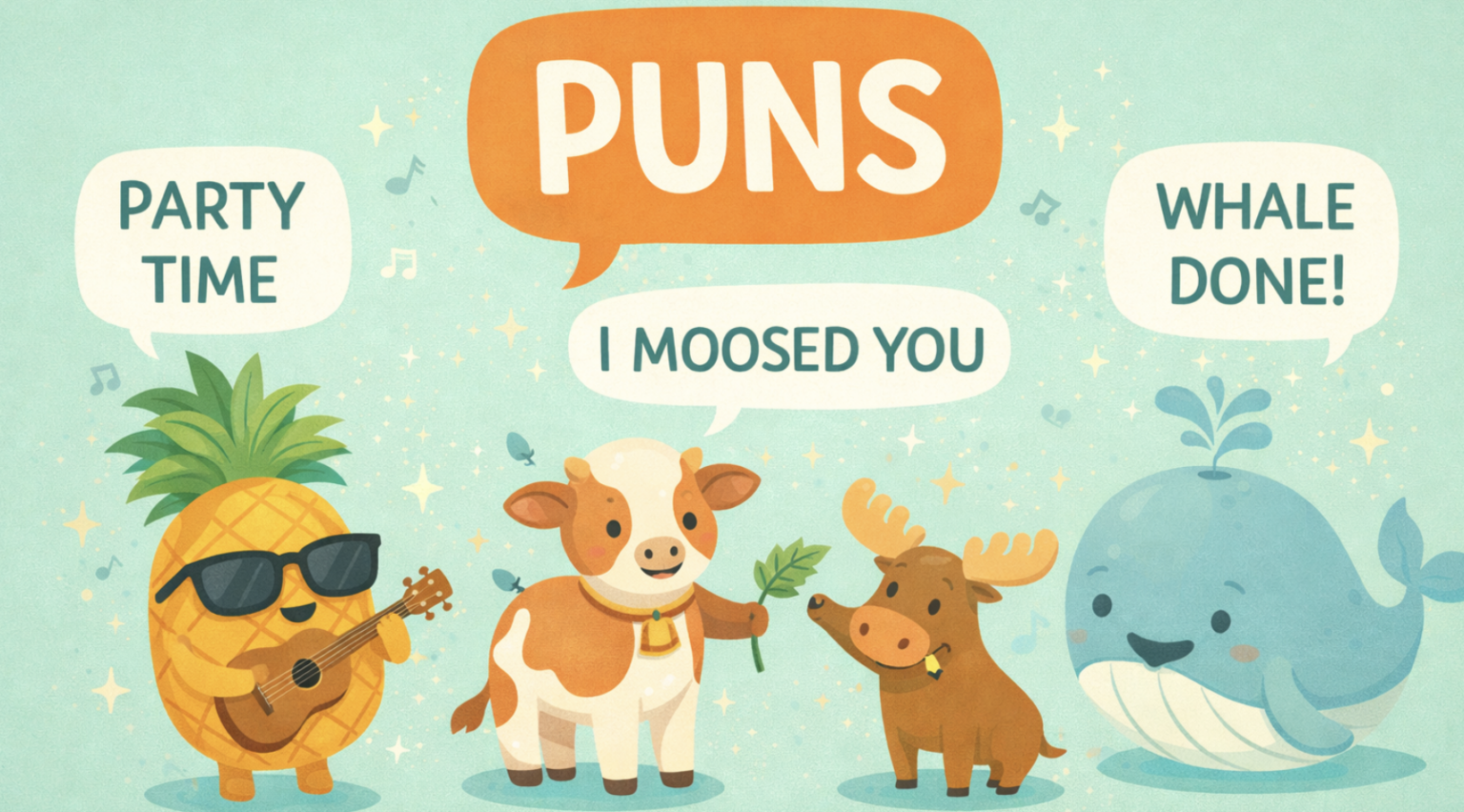
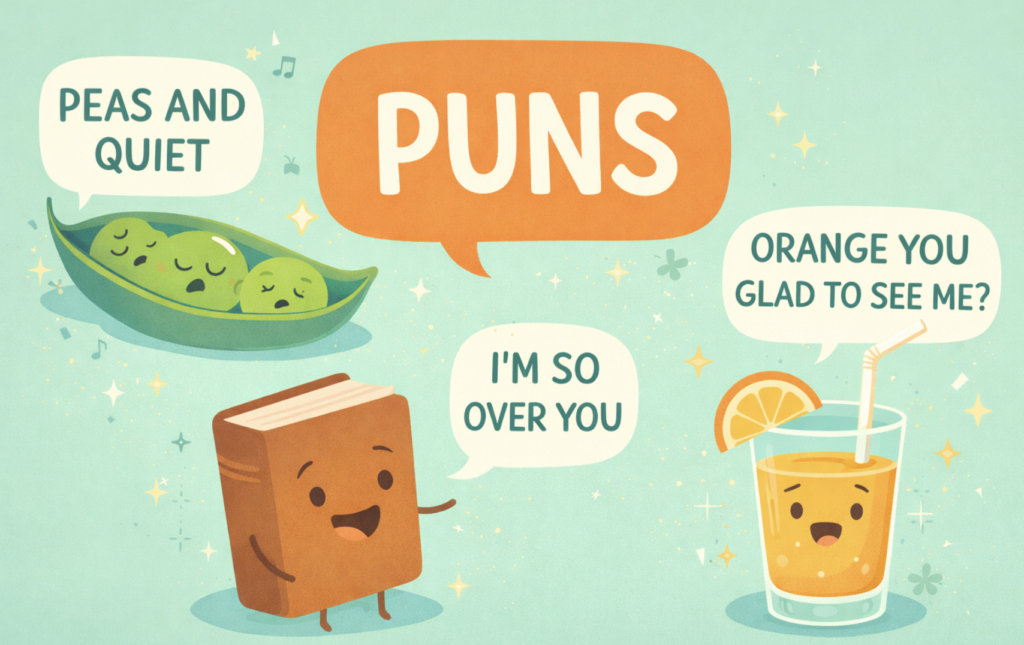
While verbal puns may tickle the ear, visual puns work their magic by hitting us right in the eye. A visual pun is a clever use of imagery that takes a familiar concept or word and plays with it in a way that’s both humorous and creative. Unlike traditional puns, where the punchline comes from words, visual puns combine visual elements with wordplay to deliver a double whammy of fun. It’s like an optical illusion for your sense of humor.
Imagine a picture of a cat holding a glass of milk with the caption “Purrfectly Milked.” The play on “purrfect” (as opposed to perfect), combined with the cat’s role in the image makes for an instant laugh. Or consider a slice of pizza wearing sunglasses with the phrase “Too cool for school” written underneath. It’s funny because it combines the literal coolness of sunglasses with the pizza being “cool” in a totally unexpected way.
These examples of visual puns are everywhere. Advertisers use them to grab attention, think of a fast food ad with a burger and fries in a love heart shape, highlighting how irresistible their combo is. On the internet, memes take visual puns to a whole new level with image manipulation and hilarious captions.
So why do visual puns work so well? They’re an immediate blend of humor and creativity. When done right, they catch you off guard and make you look twice, only to realize the pun is staring you right in the face. They engage both your visual senses and your brain’s love of wordplay, making them not just funny, but clever and memorable.
Pun Intended: How Puns Make Ads Pop
In the fast-paced world of advertising, grabbing attention is everything. And what better way to stand out than with a clever pun? Puns bring an extra layer of personality and wit to ads, making them more memorable and shareable. When a brand uses wordplay effectively, it can turn a simple product pitch into a fun, engaging experience.
Take, for example, Taco Bell’s iconic “Time to Taco ‘bout It” campaign. It’s a perfect blend of humor and product association: by using “taco” instead of “talk,” they make the message fun and relevant to their brand. It’s catchy, clever, and it sticks. Another memorable pun comes from the popular brand Bounty, with their “The quicker picker-upper” slogan. Not only does it describe the product’s strength, but it also plays on the dual meaning of “picker-upper” as both a cleaning tool and a compliment.
These examples of puns work because they use wordplay to reinforce the product’s identity while keeping the tone light and engaging. In a world full of ads fighting for attention, puns break through the noise and create a lasting impression. They’re the type of marketing that doesn’t just get you to remember the product but also makes you smile while doing it. The best puns examples in ads don’t just sell, they entertain, and that’s what keeps customers coming back for more.
Punbelievable! How to Craft Your Own Puns
Ready to put your wordplay skills to the test? Crafting your own puns is easier than you might think, and with a little practice, you can become a pun-making pro. The key to creating a great pun lies in the art of wordplay: finding clever ways to use words with double meanings, homophones, or even visual cues.
Start by looking for double meanings. For instance, the word “bark” can refer to a dog’s sound or the outer layer of a tree. Combine those meanings, and you’ve got: “The dog was so loud, he really gave me a bark to remember.” It’s a simple twist that turns a regular phrase into a pun.
Next, play with homophones: words that sound the same but have different meanings. Take the word “sole,” which can mean the bottom of a shoe or a type of fish. A pun could be, “I’m quite the catch, just ask the sole of my shoes.”
Word associations are another great tool. Combine two seemingly unrelated words to create something humorous, like “I couldn’t bear the pressure, so I went to the zoo.”
Now that you know the tricks, it’s time to let your creativity flow. Try making a pun on something simple: your morning coffee, your favorite movie, or even your pets!
The Last Laugh
Puns are more than just a form of humor: they’re a testament to the creativity and flexibility of language. Whether they make us chuckle, groan, or roll our eyes, puns tap into our love for wordplay and our desire to see language bend in fun, unexpected ways. From classic one-liners to clever visual puns, they prove that humor is all around us, waiting to be discovered in the simplest phrases and images.
As we wrap up, let’s leave you with this: “I couldn’t figure out why the baseball kept getting bigger, but then it hit me.” A little bit cheesy? Sure. But isn’t that the beauty of puns? They never fail to deliver a smile, no matter how old or predictable they may seem.So, go ahead and embrace the world of wordplay. Keep experimenting with puns in your conversations, advertisements, and social media. Who knows? Your next pun might just be the one that makes everyone’s day a little brighter. Keep punning, it’s a “pun”derful way to add some fun to your life!
FAQ: Pun Examples
Q: What type of figure of speech is a pun?
A pun is a type of wordplay, specifically a figure of speech that exploits multiple meanings of a word or similar-sounding words to create humor or a clever twist. It often involves homophones, words with double meanings, or words that sound similar but have different meanings.
Q: What does the slang word “punning” mean?
“Punning” refers to the act of making puns, playing with words to create jokes, typically by exploiting their double meanings or sound-alike qualities. It’s often used to add humor to conversations, writing, or even advertisements. If you’re “punning,” you’re using clever wordplay to make people laugh or think twice.
Q: What are the most popular puns?
Some of the most popular puns are simple and timeless, like:
“I’m reading a book about anti-gravity. It’s impossible to put down.”
“I used to be a baker, but I couldn’t make enough dough.”
“What’s orange and sounds like a parrot? A carrot!”
These puns are favorites because they’re easy to understand, quick-witted, and fun.
Q: When should I not use puns?
While puns are great for humor, there are times when they might not be appropriate. Avoid using puns when:
The situation is serious: In serious or solemn settings, puns can undermine the gravity of the conversation.
The audience doesn’t appreciate humor: If you’re in a formal meeting or dealing with sensitive topics, puns might come across as unprofessional or disrespectful.
They distract from your message: In professional or academic writing, overuse of puns can divert attention from the main point and weaken the message.
Q: Can puns improve my writing?
Yes! Puns, when used sparingly, can make your writing more engaging and memorable. They can add a touch of humor, show off your creativity, and make your content stand out. Just be mindful of your audience and the context in which you use them to ensure they don’t distract from your message.
Q: Are visual puns more effective than verbal puns?
Visual puns can be extremely effective, especially in advertising or design, because they combine humor with imagery to create an immediate impact. They’re often more memorable because they engage both visual and cognitive senses. However, verbal puns are still powerful in conversations and written forms, where wordplay can shine through the simplicity of language. It really depends on the context, both types of puns have their place!