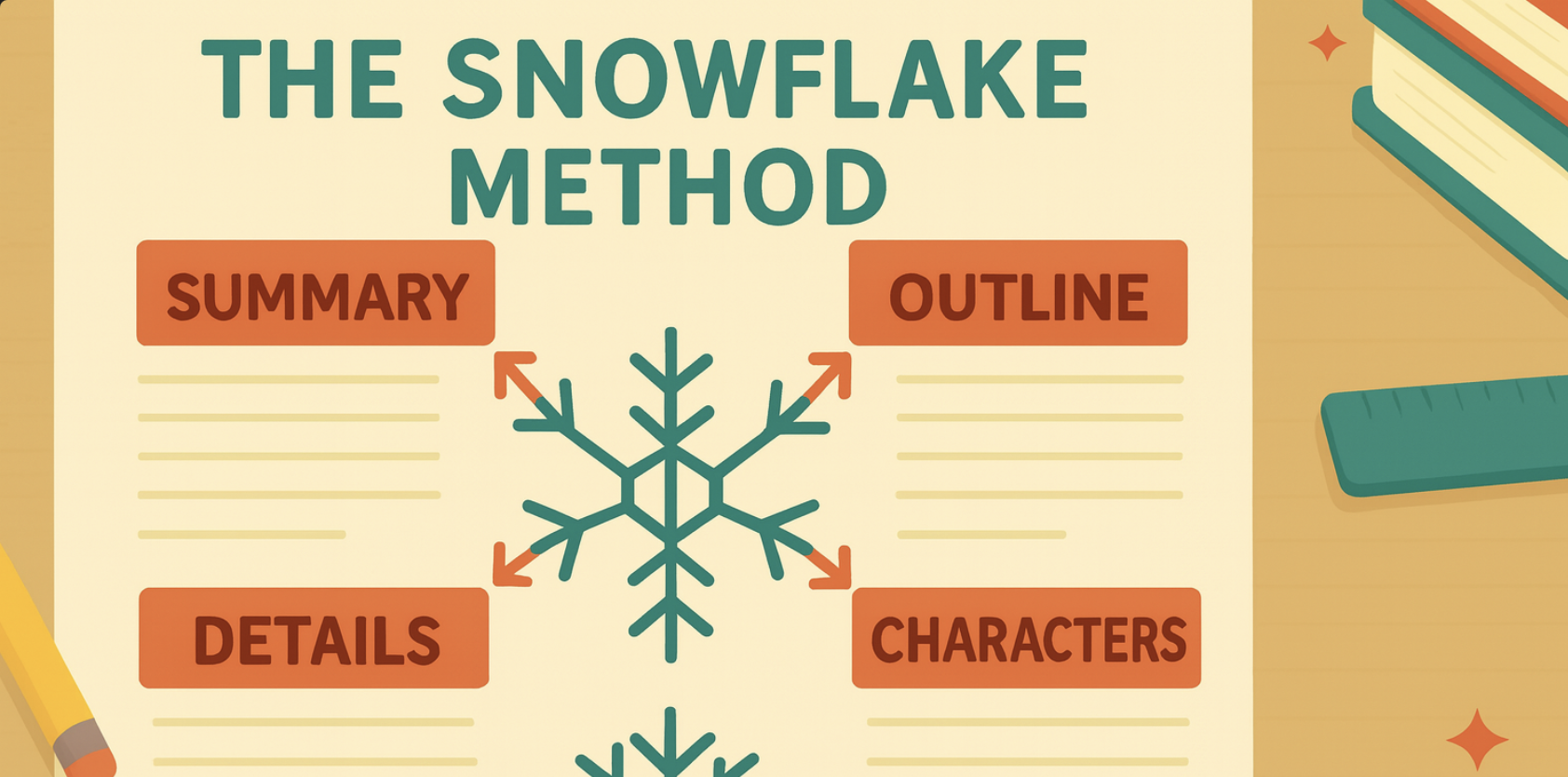
Staring at a blank page can feel a lot like standing in front of a blizzard: endless, overwhelming, and a little chilly for your confidence.
That’s where the Snowflake Method comes in, a structured, step-by-step approach to writing fiction that turns the chaos of a basic idea into a fully fleshed-out draft of your entire novel.
Created by author and physicist Randy Ingermanson around 2001, the Snowflake Method is based on the principle of gradual expansion.
You start small, a single sentence, and then build outward in layers, just like the branching pattern of a snowflake.
By the end of the planning process, you don’t just have a story idea, you have character development, subplots, and a scene-by-scene outline ready to draft, all before actual writing begins on the manuscript itself.
This guide breaks down exactly what the Snowflake Method is, how it works, and how you can use it when writing your novel, including an honest look at real writer pushback the method gets, and how it actually holds up against AI writing tools in 2026.
What Is the Snowflake Method?
The Snowflake Method is a novel-writing approach that helps you grow your story idea from a single, simple sentence into a complete draft.
Instead of diving headfirst into a 300-page draft, you expand your story step by step. First a one sentence description, then a paragraph, then pages, until the novel takes shape naturally.
In practice, the Snowflake Method walks you through 10 stages, each one adding more detail. You’ll create a summary paragraph, then map out characters, then build a full scene-by-scene outline, and eventually write the full manuscript.
It’s an outlining method that keeps you organized without boxing in your creative freedom, popular with writers who like structure (the “plotters”), but flexible enough that even “pantsers,” those who usually write by the seat of their pants, can adapt it to fit their process.
Many first time novelists in particular find that having this kind of structure in place before actual writing gives them real forward momentum once they finally sit down to start writing the manuscript itself.
Why Use the Snowflake Method? (Pros & Cons)
The Snowflake Method has earned a loyal following because it takes the panic out of “where do I even start?” This is really the whole point of the method: giving fiction writing a real structure to lean on, whether you’re pursuing traditional publishing or self publishing your own creative work.
But like any approach, it has real strengths and real drawbacks worth weighing honestly, and it’s worth asking directly whether the snowflake method works for your specific project before committing to all ten steps.
The pros
Beginning with a single-sentence summary sharpens your story’s focus early, before you’re fifty thousand words in and realize you forgot a plot. The step-by-step expansion makes it easier to plan not just one book but an entire series.
Weak character arcs or saggy middles become obvious in the outline stages, long before you’ve written chapters that need painful rewrites. And having a roadmap genuinely makes the drafting stage feel less intimidating for a lot of writers.
The cons
Building summaries, character sheets, and scene lists can feel like homework before the “real” writing begins. Some writers feel boxed in if they follow all 10 steps too literally, stories evolve, and the method works best with real flexibility.
And pure discovery writers, those who thrive on spontaneity, may find it too structured unless they adapt it down to just a few key steps.
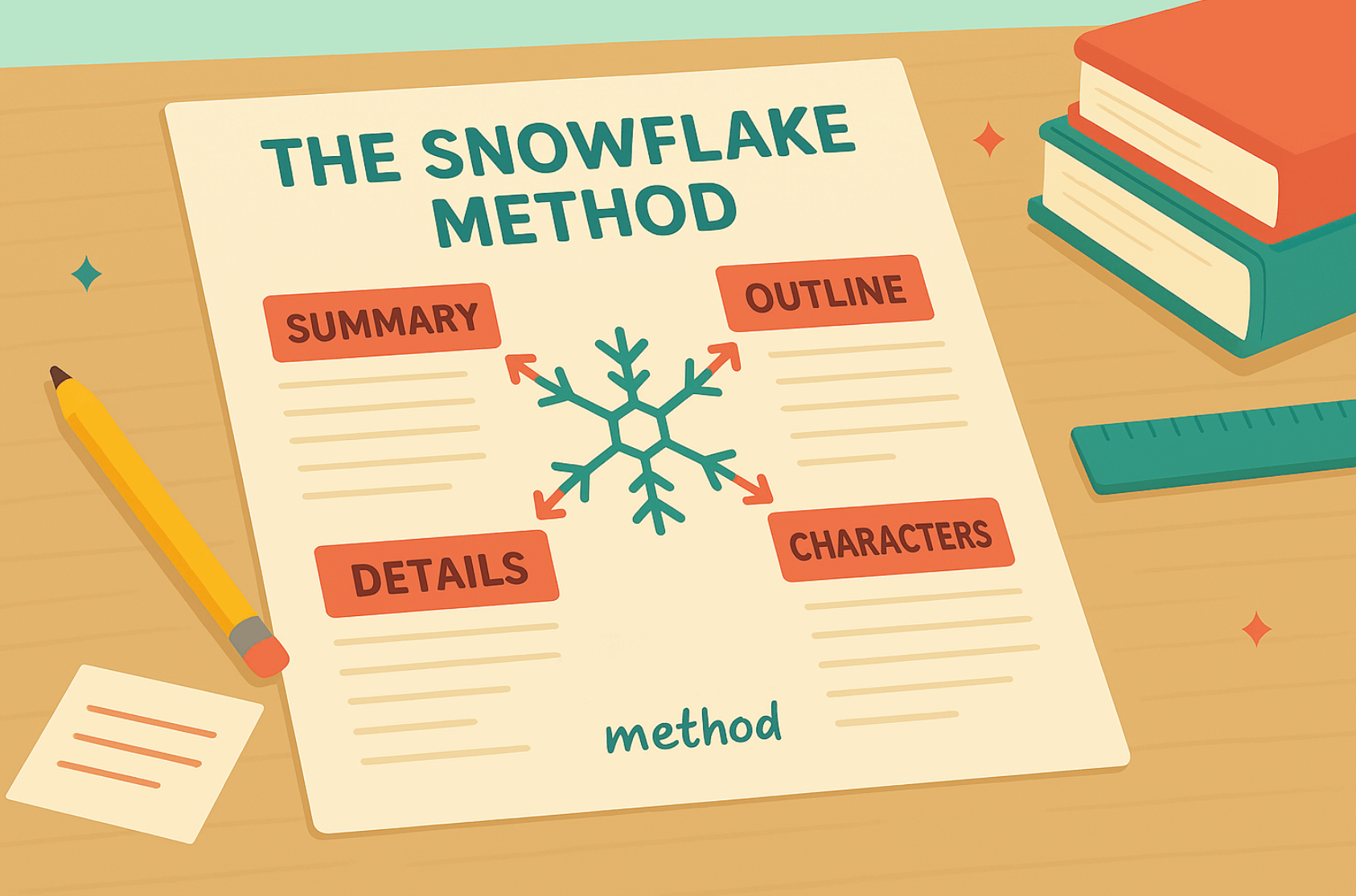
Real Writer Pushback: The Method Isn’t Universally Loved
Most guides to the Snowflake Method present it as an unqualified win, and that’s worth complicating a little, since real writer communities are genuinely more divided than the marketing suggests.
Not every writer who tries it comes away a convert. One critical account bluntly compares the experience to something out of a psychological thriller, arguing the method “seems specifically designed to bore you to death,” and that all the careful planning can become its own form of procrastination, a way to feel productive without actually finishing anything.
The same writer lands on a genuinely sharp point worth sitting with: a writing method is only as good as the number of projects it actually helps you finish, not how thorough or scientific it feels while you’re doing it.
There’s also a common misconception worth correcting directly, since it scares off writers who’d otherwise benefit from the method. Some assume it demands dozens of pages of dense character psychology and scene-by-scene planning before you’re allowed to write a single word of the actual story.
In practice, the method is far more flexible than that reputation suggests, plenty of writers stop at Step 3 or 5 and start drafting from there, treating the remaining steps as optional rather than mandatory. If your only exposure to the Snowflake Method has been the intimidating version, it’s worth knowing that’s not the only way to use it.
The 10 Steps of the Snowflake Method
The Snowflake Method unfolds in ten stages, each one adding a new layer of detail to your story. To see how it works in practice, let’s imagine we’re building a fantasy novel about a young blacksmith who discovers they’re destined to save their kingdom.
Step 1: Write a one-sentence summary
Capture the heart of your story in about fifteen words, your logline, naming your main character, their primary conflict, and the stakes. Example: A humble blacksmith discovers a magical secret that could save the kingdom from an ancient curse.
Step 2: Expand into a single paragraph
Turn your one sentence description into a five-sentence summary paragraph: setup, three escalating disasters, resolution. Many outlining guides call these three disasters the backbone of your plot, since each one raises the stakes past what came before it.
Step 3: Write character synopses
Outline each major character’s name, role, motivation, goal, character’s conflict, and character’s epiphany, how they change by the story’s end. This is where full fledged character charts, sometimes called character bibles, can start to take shape, though most authors keep things brief at this stage rather than building those out in full so early in the process.
Step 4: Expand to a one page plot synopsis
Stretch your full paragraph into about a full page, highlighting turning points, your story’s midpoint reversal, and subplots.
Step 5: Write character descriptions
Develop one-page character sheets covering backstory, inner wounds, relationships, flaws, and strengths for each key character, adding real narrative description to what were previously just character’s goals stated in a line or two.
Step 6: Expand the synopsis to a four page synopsis
Refine pacing, weave in subplots, and note your inciting incident, mid point reversal, and climax in more detail than the one-page version allowed.
Step 7: Map character storylines
Track each character’s journey individually, identifying key scenes and how their arc contributes to the whole story.
Step 8: Build a scene by scene outline
Create a spreadsheet covering point of view, purpose, conflict, outcome, location, and estimated length for all the scenes in the book.
Step 9: Write scene summaries
One or two paragraphs per scene, focused on what happens and how it moves the story forward, giving you new ideas to draw on once you actually sit down to draft.
Step 10: Write the first draft
Draft the novel using all the groundwork you’ve laid, focusing on storytelling since the foundation is already well structured. By this point, the actual writing itself tends to move faster, since you’re not inventing the story and drafting it at the same time.
Whether this is your first novel or your fifteenth, working through all the steps in order, or just the next few steps that feel useful, tends to save real time once you reach the next stage of actually writing the thing.
Can You Use AI Tools With the Snowflake Method in 2026?
This is a genuinely current question, and the honest answer involves real capability alongside a real limitation.
AI use among fiction writers is no longer a fringe practice, though the exact numbers vary depending on which survey you look at. BookBub’s May 2025 survey of more than 1,200 authors, skewing toward self-published writers, found that roughly 45% were currently using AI in some part of their process, most commonly for research, outlining, and editing rather than finished prose.
A separate, more traditionally-published-leaning sample found meaningfully lower adoption, a reminder that “how many authors use AI” doesn’t have one single answer yet.
For the Snowflake Method specifically, AI chat tools genuinely excel at the early, expansive steps, turning a rough one-sentence summary into several paragraph options, or brainstorming character motivations and conflicts you hadn’t considered.
The real limitation shows up further along. General-purpose tools like ChatGPT or Claude used on their own consistently struggle to hold a full outline across an entire session, let alone across the multiple sessions a proper Snowflake expansion takes, and they tend to generate fairly generic structural suggestions pulled from broad training data rather than something genuinely shaped by your specific story.
The workflow that seems to actually work well in practice: use AI as a scaffolding partner for the earlier steps, then take over as the primary decision-maker for anything requiring genuine narrative judgment, character consistency, and the connective structural work the later steps depend on.
Dedicated outlining software like Plottr, which reports more than 40,000 writers using its platform according to its own website, has also built the Snowflake Method directly into its templates, a sign the method has real, current staying power well beyond its original 2001 publication.
Templates & Tools
Logline formula: [Protagonist] + [goal] + [conflict] + [stakes].
One-paragraph summary template: introduce your protagonist and setting, present the inciting incident, show three escalating conflicts, conclude with the climax or resolution.
Character sheet outline: name and role, motivation, goal, conflict, epiphany, key quirks or backstory notes.
Scene list spreadsheet columns: scene number, point of view, location, purpose, conflict, outcome, estimated word count.
Helpful tools: Google Docs and Sheets for a free, simple setup, Scrivener for built-in organization, Notion or Obsidian for keeping research and outlines in one place, or plain index cards if you prefer something physical and visual.
Adapting the Snowflake Method
The method isn’t a rigid checklist, it’s a framework you can bend depending on your project. Discovery writers can borrow just the early steps, a one-sentence summary and paragraph outline, as an anchor without over-planning, often revisiting later steps like the scene list only after a messy first draft exists.
Short stories and novellas can compress the process, combining the paragraph summary and one-page synopsis into a single step. Series writers can build a “master snowflake” outlining the overarching story arc, then run the full method for each individual book.
And busy writers can simply cherry-pick whichever steps give them the most clarity, some stop at Step 5 and start drafting, others push through to Step 8 first.
Randy Ingermanson has also written his own book-length introduction to the method, How to Write a Novel Using the Snowflake Method, taught through the story of a fictional aspiring novelist learning the process step by step rather than a dry instructional format, worth a look for anyone who wants a fuller walkthrough than a single article can provide.
As an award winning author himself, Ingermanson developed the approach out of his own experience writing novel manuscripts, refining the method well before ever publishing it as a formal system for other writers to follow.
Snowflake vs. Other Plotting Methods
The Three-Act Structure gives a big-picture map, setup, confrontation, resolution, but leaves out fine detail. The Snowflake Method zooms in step by step, producing tangible documents along the way.
Save the Cat! is highly prescriptive, built around fifteen specific story beats, while Snowflake is less about hitting specific beats and more about growing a story organically, many writers actually combine the two.
The Hero’s Journey focuses on mythic transformation and works best for archetypal stories, while Snowflake is more flexible, building structure from any premise regardless of genre.
There’s no single best method. If you want detailed prep work, Snowflake fits well. If you want a looser guide, Three-Act or Hero’s Journey may be enough.
Many writers end up mixing and matching rather than following any one system exactly as written, and how your story starts, whether from a single image, a character, or a fully formed premise, often points toward which system will feel most natural.
Variations of gradual, layered outlining like this have been reinvented what feels like a million times across different writing traditions, which is part of why the core idea behind Snowflake tends to resonate even with writers who’ve never heard the term itself.
FAQ: The Snowflake Method
Q: What is the Snowflake Method for writing?
A structured way to develop a novel by expanding your idea in stages, starting with a one-sentence summary and growing it into a paragraph, character profiles, scene lists, and finally a full draft. It’s called the “Snowflake” method because the story grows outward in layers, like a snowflake’s branching pattern.
Q: Who created the Snowflake Method?
Randy Ingermanson, a physicist and award-winning novelist, developed it as a practical framework for balancing creativity with organization.
Q: Is the Snowflake Method good for beginners?
Yes. It breaks an overwhelming task into manageable steps, so you always know what to do next instead of writing hundreds of pages without direction.
Q: Do I have to follow all ten steps?
No. Some writers only use the first few steps to clarify their ideas, others go all the way through Step 10. Treat it as a toolkit rather than a strict recipe.
Q: Can discovery writers (pantsers) use the Snowflake Method?
Yes. Even confirmed pantsers can use the early steps for direction before skipping straight to drafting, or revisit later steps like the scene list only after a messy first draft already exists.
Q: Can AI tools replace the Snowflake Method’s planning steps?
Not entirely. AI chat tools are genuinely useful for the early, expansive steps, but they struggle to hold a full outline consistently across sessions and tend to produce generic structures. The strongest current approach treats AI as a scaffolding partner for early brainstorming, with the writer making the final structural and character decisions.
Q: What genres work best with the Snowflake Method?
Any genre can benefit, since the method focuses on building structure step by step rather than prescribing specific tropes or archetypes.