

Before Harry ever got his wand or Katniss ever drew her bow, their worlds did something crucial: they set the stage.
Whether it’s the enchanted halls of Hogwarts or the eerie, ever-watching woods of Panem, the setting of a story does more than describe a place, it creates a mood, sets the atmosphere, and shapes the reader’s experience from the very first page.
So what is the setting of a story, exactly? Think of a story setting as more than a physical location. It reveals how characters live, what they value, and even how they speak or think.
It’s an important element in both fiction and non-fiction, grounding readers in a specific time, place, and culture. Place a character in a quiet countryside cottage, and you’ll get one kind of tale. Drop them into a burning spaceship orbiting a doomed planet, and the story changes entirely.
This guide covers what the setting of a story actually is, the real distinction between the types of setting most craft guides skip, concrete techniques for revealing it without stopping your story cold, and real setting examples, from horror stories to sci fi, that show it working.
What Is the Setting of a Story?
At its core, the setting refers to the time, place, and environment in which the events of a story unfold. But a truly well-crafted setting goes beyond coordinates and calendars, it gives the story context, color, and a beating heart. It’s the backdrop against which everything happens, but it also shapes the way your characters think, feel, and interact with the world around them.
A story’s setting can be broad, like a futuristic galaxy at war, or incredibly specific, like a single room in a house during a stormy night. It can stretch across an entire city, focus on a small town, or even unfold in one cramped apartment.
A short story might use just one tightly focused location, while a novel often moves through various settings and individual settings across its full length, each one doing a slightly different job. Wherever your narrative takes place, the story setting helps define the rules, rhythms, and limitations of that world.
And it’s not just for fiction. In non-fiction, the setting still matters. A memoir set in 1980s New York will feel wildly different from one set in a quiet 1950s Midwestern town.
The time and place influence the tone, the themes, and the reader’s experience, even when the story is drawn from real life.
A strong setting typically includes:
- Temporal setting: time (year, era, season, time of day, whether the story takes place in the present day or centuries ago)
- Geographical location: place (a real location or an invented one, surroundings, architecture)
- Environmental setting: social environment (societal norms, politics, class structure) and social milieu more broadly
- Weather and atmosphere, including changing seasons (gloomy, bright, chaotic, quiet)
Together, these elements help establish the mood of the story and serve as an anchor for the plot and characters. In short, the setting of a story isn’t just where things happen, it’s why they happen the way they do.

Two Types of Setting: Backdrop vs. Integral
This distinction rarely gets named clearly, but it’s genuinely useful for deciding how much attention your setting actually needs, especially in a story that moves through multiple settings rather than staying in one real place for its entire story.
A backdrop setting is largely interchangeable, the story could plausibly happen somewhere else with only minor adjustments.
A courtroom drama, for instance, might work whether it’s set in Chicago or Denver, since the setting isn’t doing much structural work beyond providing a plausible geographical location.
An integral setting, by contrast, is inseparable from the story itself, the plot genuinely couldn’t happen anywhere else.
| Backdrop Setting | Integral Setting | |
| Interchangeable? | Yes, story could move elsewhere with minor changes | No, the plot depends on this specific place |
| Main job | Provides a plausible location | Shapes and drives the plot itself |
| Example | A courtroom drama set in any major city | The Hunger Games‘ Panem, Life of Pi‘s lifeboat |
| Development needed | Light, atmosphere over structure | Heavy, setting functions almost like a character |
The Hunger Games couldn’t be relocated out of Panem’s specific political structure and still function. Life of Pi couldn’t happen without that particular lifeboat, alone, on that particular ocean.
Middle Earth, in The Lord of the Rings, is about as integral as a setting gets, the story tells itself through the geography, since the entire quest is structured around the physical journey across that world.
The galaxy of Star Wars works similarly, its various settings, from desert planets to ice worlds, aren’t interchangeable backdrops, they’re built to reflect each stage of the story’s larger arc.
Neither type is inherently better, plenty of excellent stories use a backdrop setting deliberately, keeping the focus on character and plot rather than world. A story set in the Wild West, for example, might lean on the setting mainly for atmosphere and genre convention rather than making the specific stretch of land essential to the plot.
But knowing which type you’re working with early on tells you how much setting development your story actually needs, and how much you can shift or simplify without damaging what makes the story work.
Why Setting Is More Than Just a Place
It’s easy to think of the setting as just the physical place where the story unfolds, a house, a city, a stretch of land. But a truly powerful story setting is much more than that. It’s not just where the action happens, it helps explain why it happens, and how it feels when it does.
The setting of a story plays a key role in shaping your main character’s thoughts, choices, and even their emotional state.
A character raised in a war-torn society will approach challenges differently than one raised in a peaceful mountain town. Setting also helps establish the themes and mood of your narrative.
A story that takes place in the middle of a thunderstorm immediately feels tense, even before anything happens.
As Angela Ackerman and Becca Puglisi, co-authors of the widely used Emotion Thesaurus series, put it, a setting should function as an active participant in a scene, not just a backdrop for the action to happen in front of.
That framing matters because it changes what you’re actually doing when you write a setting, not decorating a scene, but giving it something real to push against.
F. Scott Fitzgerald’s The Great Gatsby is a good example of setting doing real work: the Jazz Age itself, with all its excess and restlessness, isn’t just a time period the story happens to occupy, it’s the whole engine behind Gatsby’s doomed pursuit of Daisy.
This is exactly the kind of thing worth noting when a setting plays a role that’s just as active as any single character’s choices, and for most people reading it, that’s precisely why the novel’s setting sticks with them.
Elements of a Well-Crafted Setting
A well-crafted setting isn’t just a backdrop, it’s a living part of your story. It shapes the tone, supports the plot, deepens your characters, and makes the reader feel like they’re right there.
So, what are the key elements that make a setting truly stand out?
Time
The time of your story helps establish context and influences everything from character behavior to dialogue. Is your story set in ancient history, a dystopian future, or modern-day New York? Does it unfold over a single night or span an entire life?
Place
This includes physical location and geographical details, a room, a house, a city, a country, or even another planet. A story set in a cramped apartment will feel very different from one set on a windswept cliff or in a bustling market.
Environment
This is where the atmosphere really comes into play. What’s the weather like? The environment also includes an emotional tone, eerie, cheerful, chaotic, or calm.
Social and cultural context
A truly immersive setting also includes society, class structure, politics, language, and traditions. Are your characters part of a tight-knit village or navigating life in a fractured, tech-driven metropolis?
How characters interact with the setting
Characters don’t just exist in a setting, they engage with it. A strong setting reflects how characters see, hear, and feel their world through the five senses, revealing both their inner lives and the outer world.
Show Setting Through What Characters Do, Not Just What They See
This is a more advanced technique than the usual advice to “engage the five senses,” and it’s worth learning specifically because it solves the exact problem most new writers run into when they start writing: setting a description that stops the story cold and loses a reader’s interest right when it should be growing.
Rather than pausing to describe a room like a stage set before the scene begins, reveal setting details only as characters actually use them.
A character peeling an apple, lacing up skates, bandaging a wound, or counting money at a kitchen table tells readers about the setting, the time period, the character’s economic situation, their habits, without ever stopping the narrative to explain it directly.
This is genuinely different from simply “filtering setting through your character’s point of view,” it’s about tying setting details specifically to action, so the reader absorbs the world while characters spend their time doing something concrete, and the story keeps moving rather than pausing for a description that, however vivid, still functions as a detour.
It’s worth noting, too, that this technique works whether one character is alone in a familiar room or several are together in conversation, moving into a brand new location for the first time, the same principle of “show it through use” applies either way.
This technique also solves what’s often called infodumping, the specific, well-known failure mode where a writer delivers a large block of setting or world information all at once, usually early in a chapter, in a way that stalls momentum right when a story most needs to build it.
Infodumping isn’t really a problem of detail, it’s a problem of timing and delivery. The same information delivered through action, spread across several scenes instead of one paragraph, rarely causes the same drag.

How to Write a Setting of a Story That Pulls Readers In
A setting isn’t just something you describe, it’s something the reader should feel. If your setting feels flat, generic, or forced, the entire scene can lose impact, no matter how strong the dialogue or action might be.
That’s why learning how to write a setting of a story is so important, it’s not just about listing details, but about building a world your characters and readers can fully experience.
Use the five senses
Want to make your setting feel alive? Engage sight, sound, smell, touch, and taste. Don’t just tell us the woods were quiet. Let us hear the crunch of dry leaves, smell the moss, feel the sharp chill in the air.
Filter it through your main character
Don’t describe the setting like a tour guide. Describe it the way your main character would experience it. A child walking into a crowded city will notice completely different things than a detective, a soldier, or a lost tourist.
Let the setting shape dialogue and action
The way people talk, move, and react is often shaped by their surroundings. Think about how people speak in a loud nightclub versus a quiet hospital corridor.
Start small and build out
Not every scene needs sweeping worldbuilding. Sometimes, describing a single room in precise detail, a cluttered desk, a dusty window, the hum of a broken fan, can say more than a full paragraph about a city.
Include meaningful details
Don’t include a description just for the sake of it. Choose details that support the mood, advance the plot, or reveal something about the character or theme.
Common Mistakes When Writing Setting
Avoid these common setting slip-ups:
- Infodumping. Too much setting information delivered all at once stalls the story’s momentum right when it needs to build.
- Being vague. Generic settings feel flat. Add specific, memorable elements.
- Ignoring mood. Your setting should match the tone or intentionally contrast it.
- Lacking sensory detail. Don’t just show, let readers hear, smell, and feel the space.
- No emotional weight. A strong setting should reflect or influence your character’s inner world.
Examples of Setting in a Story
Hogwarts — Harry Potter by J.K. Rowling. The castle is more than a school, it’s a magical world full of moving staircases, hidden rooms, and rich history. The setting establishes mood, introduces key themes like wonder and danger, and evolves as Harry does.
The Woods — The Hunger Games by Suzanne Collins. Katniss’s connection to the woods reflects her independence and survival instincts. Later, the arena becomes a more hostile version of that same setting, showing how setting shapes character and directly impacts plot.
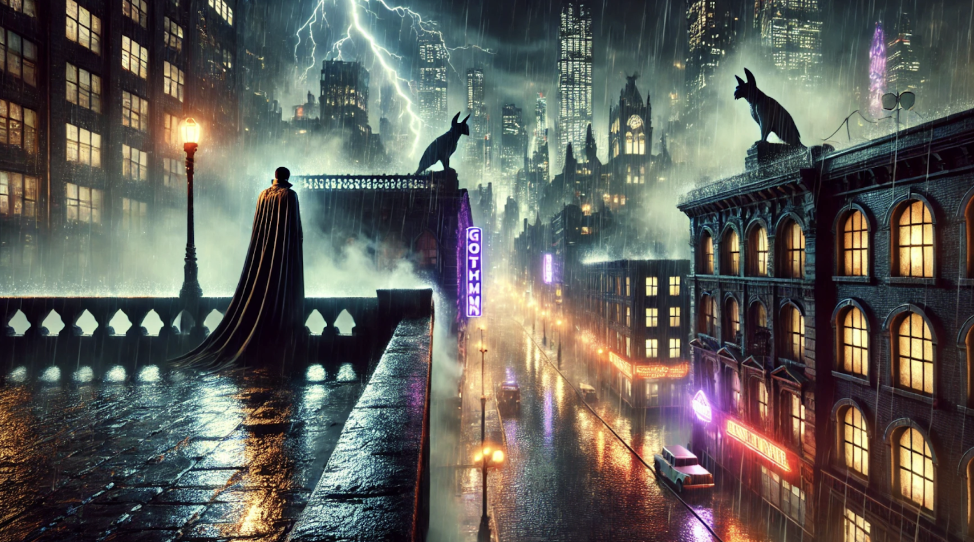
Gotham City — Batman comics. Dark, grim, and crime-ridden, Gotham doesn’t just exist in the background, it creates the very need for Batman. The city reflects his mission, challenges, and psychology.
The Boat — Life of Pi by Yann Martel. A single lifeboat in the middle of the Pacific becomes the setting for a deeply emotional and philosophical journey. It’s minimal but immersive, driven by rich sensory detail and constant tension.
Each of these settings supports the theme, enhances the reader’s experience, and stays with us long after the story ends, exactly what a strong setting should do, whether it’s a backdrop quietly supporting the plot or an integral setting the story couldn’t exist without. Imagine any of these stories stripped of their setting entirely, told only in generic words with no real place attached, and it’s easy to see just how much of the big impact would be lost. Of course, not every setting needs to carry that much weight, but knowing the difference is what lets you make that choice on purpose.
FAQs – Setting Of a Story
Q: What is the setting of a story?
The setting of a story is the time, place, and environment in which the narrative unfolds. It includes physical surroundings, historical period, weather, social conditions, and cultural context. A well-developed setting supports the plot, enhances mood, and shapes characters’ actions and perspectives.
Q: What is a setting sentence example?
A setting sentence introduces the time, place, or mood of a scene. Example: “The wind howled through the broken windows of the abandoned farmhouse as the last light of day slipped behind the hills.” This gives the reader a clear sense of location, weather, and emotional tone in one line.
Q: What setting is included in a story?
Time (past, present, future), place (specific location or broader world), environment (weather, landscape, physical conditions), and social context (customs, beliefs, politics, culture). It’s not just the backdrop, it’s the entire world your story lives in.
Q: What is the difference between a backdrop setting and an integral setting?
A backdrop setting is largely interchangeable, the story could plausibly happen somewhere else with minor adjustments. An integral setting is inseparable from the plot, the story genuinely couldn’t happen anywhere else.
Q: What is infodumping, and how does it relate to setting?
Infodumping is delivering a large block of setting or world information all at once, usually early in a chapter, which stalls a story’s momentum. Revealing setting details through character action instead, rather than a single descriptive block, generally avoids this problem.
Q: What are the four functions of setting?
Establishing mood, providing context for the plot, shaping characters’ behavior, and symbolizing themes or ideas. These functions help the setting of a story become active and meaningful, not just descriptive.
Q: What is a physical setting in a story?
A physical setting is the tangible, sensory part of the world: the buildings, landscapes, weather, and objects that surround the characters, everything a reader could “see” if they walked into your story.