Some things in life are impossible to forget: your first crush, your worst haircut, and apparently, certain book titles. Ever notice how The Great Gatsby or The Hunger Games glide into your memory and refuse to leave, like glitter after craft day? That’s not an accident. Famous book titles aren’t just clever phrases; they’re tiny psychological machines engineered to lodge themselves in your brain and set up camp.
Behind every iconic title lies a surprisingly scientific cocktail: a pinch of linguistics, a sprinkle of cognitive psychology, and a generous dash of marketing instinct. Together, they explain why some titles grab your attention instantly while others vanish like socks in the laundry.
And here’s the real magic: once you understand the hidden mechanics behind these unforgettable titles, you can wield the same tools for your own book. Whether you’re writing fiction, nonfiction, or something delightfully unclassifiable, knowing why certain titles work makes it infinitely easier to craft one that readers can’t help but remember.
Your Publishing Journey Awaits – Start NowThe Psychology of “Instant Recognition”
Your brain is a busy place, constantly scanning, sorting, and deciding what deserves attention. So when a book title manages to stop the mental scrolling, it’s already doing something remarkable. The secret? Cognitive shortcuts. Our brains adore short, punchy phrases because they’re easy to process, little linguistic snacks that deliver maximum flavor with minimal effort.
That’s why so many famous book titles lean on rhythm, contrast, or the occasional curveball word. The Great Gatsby sticks because it rolls off the tongue with a satisfying beat. The Hunger Games grabs you with stark contrast: hunger vs. games, survival vs. spectacle. And Pride and Prejudice? A rhythmic pairing of two opposing forces that your brain loves to hold in tension.
But beyond the structure, these titles create a fast emotional hit. They spark curiosity (What are the Hunger Games?), offer built-in conflict (Pride vs. Prejudice), or wrap you in familiarity (Great, Games, Gatsby: simple words, big impact). The result is instant recognition: the feeling that this title matters and that you might want to open the book behind it.
The Power of Simplicity: Why Short Titles Win Long-Term Memory
In a world overflowing with information, the simplest titles often shine the brightest. Minimalism is a secret weapon in memorability: the fewer the words, the less your brain has to untangle. This is where processing fluency comes in: a fancy term for “easy-to-grasp = easy-to-love.” When a title requires almost no cognitive effort, your mind rewards it by making it feel instantly familiar, even comforting.
Think of It; a single syllable that somehow manages to feel ominous. Or Beloved, which carries emotional weight without any decorative extras. Then there’s Gone Girl, a title that reads like a headline you can’t ignore. These short titles don’t waste a single letter; they hit fast, stick easily, and linger long after you’ve closed the book.
For authors, embracing simplicity doesn’t mean stripping your creativity. It means sharpening your focus. Choose words that punch above their weight, aim for clarity over cleverness, and remember: a title doesn’t need to explain your entire book. It just needs to open the door and make readers curious enough to walk through.
The Wordplay, Rhythm, and Music of Good Titles
Great titles don’t just look good on a cover; they sound good in your mouth. That’s the musicality of language at work: alliteration, cadence, and patterns that make words feel almost melodic. When a title has rhythm, your brain treats it like a tiny song snippet, and suddenly it’s much harder to forget.
Consider Sense and Sensibility. The paired S’s create gentle alliteration, while the balanced structure gives it a soothing, almost lyrical flow. Then there’s Tinker Tailor Soldier Spy, a masterclass in rhythmic patterning: four beats, four professions, each stepping neatly into the next like a linguistic drumline. These titles don’t just inform; they perform.
That performance matters. A title with music behind it becomes easier to repeat, recommend, and remember: key components of brandability. If a reader can say your title once and already feel the rhythm, they’re more likely to recall it later and share it with others. Rhythm isn’t just pretty; it’s practical. For authors aiming to stand out, crafting a title that “sings” may be one of the smartest branding moves you can make.
Curiosity: The Oldest Marketing Trick in Literature
If simplicity makes a title memorable, ambiguity makes it irresistible. Humans are wired to chase answers, give us even a whiff of a mystery, and our brains start leaning forward like eager detectives. This is where the “curiosity gap” comes in: the space between what we know and what we want to know. A well-crafted title opens that gap just enough to make readers itch for the missing information.
Take The Girl on the Train. Which girl? Why that train? Why should we care? Or The Catcher in the Rye, a phrase that sounds familiar and puzzling at the same time. And The Silent Patient practically throws down a challenge: What happened to make her silent? Why won’t she speak? Titles like these plant a question in your mind, and humans hate unanswered questions.
But mystery is a delicate spice. Too little, and the title feels flat. Too much, and it becomes incoherent gobbledygook. The key is balance: give readers just enough information to anchor the story, then leave a small, tantalizing gap that their curiosity will gladly fill by turning the page.
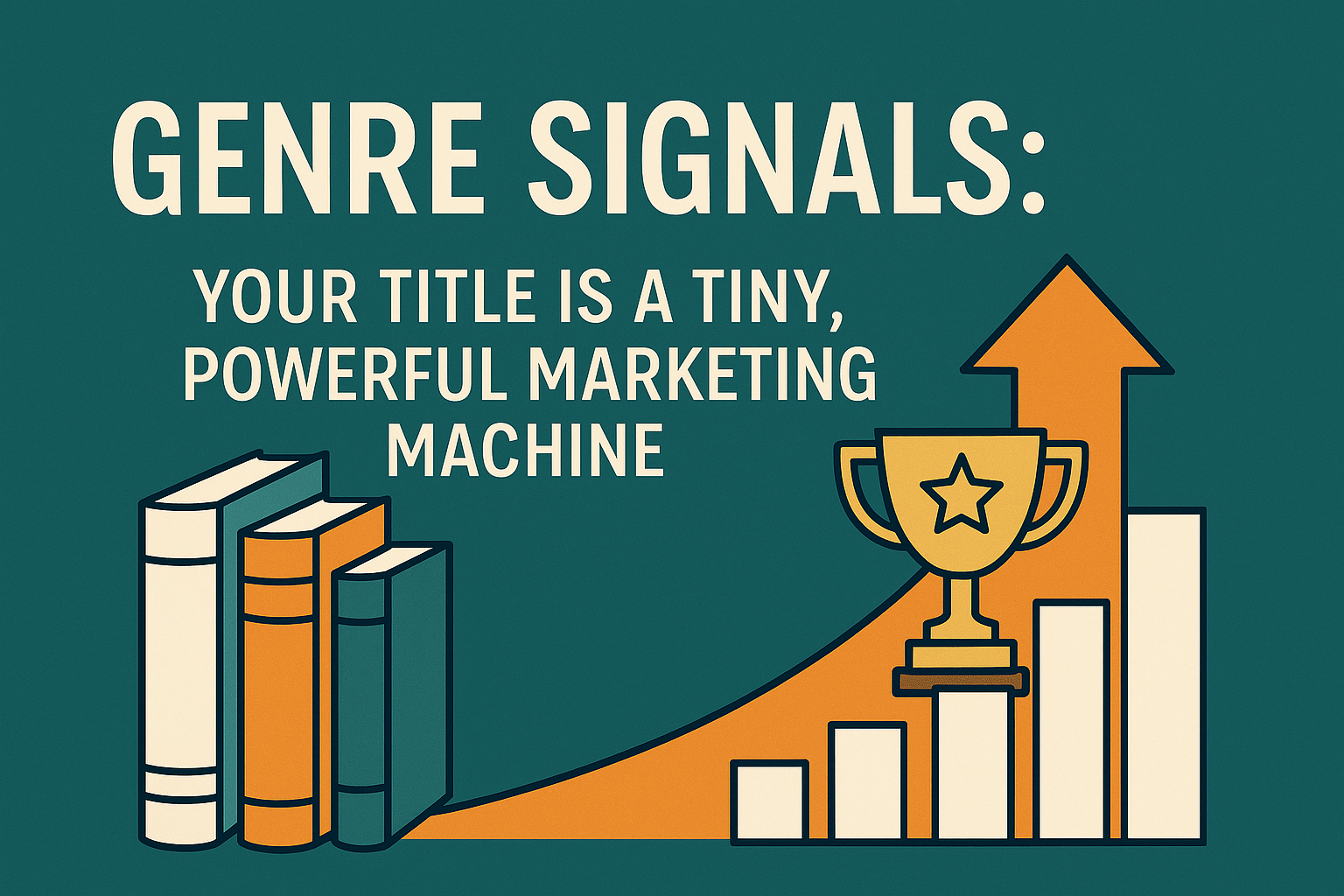
Genre Signals
Before a reader even glances at the cover art, your title is already whispering clues about what kind of story awaits. Famous book titles do this brilliantly: they signal genre through tone, word choices, and subtle imagery. Think of it as literary pheromones: readers instantly sense whether a book belongs to them.
In fantasy, titles often evoke grandeur or myth: A Game of Thrones, Shadow and Bone. Thrillers lean into tension and threat: The Da Vinci Code, Gone Tomorrow. Romance favors warmth, longing, or emotional stakes: Me Before You, The Light We Lost. None of these titles spell out the genre, yet their micro-cues make it unmistakable.
Those micro-cues might include:
- Atmosphere words (“shadow,” “ice,” “midnight”)
- Emotional triggers (“lost,” “broken,” “forever”)
- Action-forward phrasing for thrillers
- Mythic or elemental language for fantasy
- Soft, intimate vocabulary for romance
Used intentionally, these cues help your book find its rightful readers faster. A great title isn’t just memorable; it’s a tiny, powerful marketing machine that sets expectations before page one.
Emotional Resonance: Titles That Make You Feel Something (Before Page One)
Some titles don’t just catch your eye, they hit you right in the feelings. Emotional resonance is one of the strongest predictors of memorability because our brains are wired to prioritize anything that sparks a reaction. When a title carries emotional weight, it lingers long after the book has been shelved.
Consider All the Light We Cannot See, a title that feels both hopeful and heartbreaking in one breath. A Little Life hints at smallness, fragility, and the enormity hiding underneath. The Fault in Our Stars combines cosmic imagery with human vulnerability, creating a sense of fate and tenderness before you even meet the characters.
What makes these titles iconic isn’t complexity; it’s the blend of emotion and simplicity. They use everyday words arranged in ways that evoke something deeper, something universal. This combination gives them longevity: they’re easy to remember but rich enough to feel meaningful each time you revisit them. For authors, aiming for emotional clarity without melodrama can transform a good title into a timeless one.
Reverse-Engineering Famous Book Titles Without Copying Them
Studying famous book titles isn’t about imitation; it’s about extracting the mechanics that make them unforgettable. The good news? You can reverse-engineer their magic without veering into copycat territory. Start with brainstorming: list key themes, emotions, images, and contradictions in your book. Mix and match them like magnetic poetry until something sparks. Then test your favorites out loud. If a title trips your tongue or takes a decoder ring to understand, it’s not the one.
Steer clear of clichés: anything involving “shadows,” “secrets,” or “whispers” needs to earn its place. Aim for originality, but not at the expense of clarity. The sweet spot is a title that’s intriguing without being cryptic, emotional without being sentimental, and fresh without sounding like it was generated by a malfunctioning thesaurus.
Here’s a quick exercise: write three micro-summaries of your book, one emotional, one visual, and one conceptual. Pull one strong word from each and see what combinations emerge. You might be surprised how quickly a compelling title materializes when your creativity has boundaries to push against.
Conclusion: The Art and Science of a Perfect Title
The most famous book titles don’t happen by accident; they’re built on a subtle blend of psychology, emotion, simplicity, and musicality. Together, these elements create the kind of instant recognition and lasting impact every author dreams of. In a book market bursting at the seams, a standout title is your first chance to captivate readers before they ever touch the page.
Experiment boldly, play with rhythm and meaning, and trust your creative instincts. The perfect title isn’t just found, it’s crafted. And with a little curiosity and courage, you’re closer to one than you think.
FAQ: Famous Book Titles
Q1: What makes famous book titles so memorable?
Famous book titles are memorable because they combine psychology and craft: they’re usually short, emotionally charged, easy to say, and slightly intriguing. They use rhythm, contrast, or vivid imagery, so your brain can process them quickly and file them under “important.” In other words, they’re engineered to stick.
Q2: How can I use psychology to create a strong book title?
Think in terms of cognitive ease and curiosity. Use simple, familiar words arranged in a way that suggests tension, contrast, or a question. Titles that are easy to process feel more “right,” and titles that open a curiosity gap make readers want to know more. Blend clarity (“what kind of book is this?”) with intrigue (“what’s really going on here?”).
Q3: Do famous book titles always have to be short?
Not always, but shorter titles have a natural advantage. They’re easier to remember, repeat, and search for online. That said, longer titles can work if they have a strong rhythm or a clear hook (think of quirky, sentence-like titles in nonfiction). The rule of thumb: no unnecessary words. Every word has to earn its place.
Q4: How important is genre when choosing a book title?
Crucial. Your title should quietly signal the genre before readers even see the cover. Certain words, tones, and patterns scream “thriller,” “fantasy,” or “romance” without ever naming the category. Look at famous book titles in your genre and study the micro-cues they use, atmospheric words, emotional triggers, or mythic imagery, then adapt those patterns in your own way.
Q5: How do I avoid clichés when brainstorming book titles?
First, write the cliché version on purpose: The Secret of the Something, Whispers in the Dark, etc. Then break it. Swap one word for something unexpected, strip the title down to one or two powerful words, or combine two contrasting ideas. If your title sounds like 20 others on the same shelf, it’s a sign to push one step further.