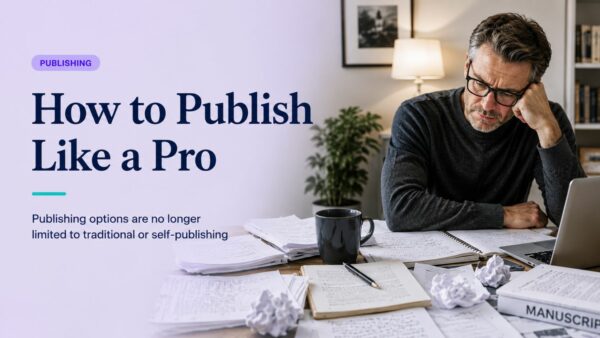


Somewhere between the 3rd or 4th read of your manuscript, the wheels can start to fall off. By now, you know your sentences so well that they start to blend together, and you stop seeing the words on the page.
A plot hole that would jump out at you in someone else’s book magically disappears on your own, because your brain knows what you meant to write, it’s a blind spot that’s hard to shake.
That’s precisely the problem an editor is supposed to help with & it’s why even the most seasoned authors don’t even think about publishing without one.
Finding the right editor is about finding that one person who can take a genuine look at your book, with fresh eyes, untainted by the months of familiarity and a dash of sleep deprivation that comes with writing. It’s not about tracking down someone with a red pen and a keen eye for grammar.
This guide will cover what a good editor actually does, the different types of editors you might need to work with, where to find one, and most importantly, how to pick the right one for your book before you hand it over.
What a Book Editor Actually Does
A book editor’s job is to bridge the gap between the book you always had in your head and the one that’s actually staring back at you from the page.
That involves catching all the things you’ve glossed over (even if it’s just to yourself) a hundred times: inconsistencies that have become second nature, a character whose eye color suddenly changes mid-story, a timeline that just doesn’t add up, and subplots that vanish into thin air without any resolution.
On top of that, they make sure your words flow right, fixing up grammar, punctuation and sentence structure so the writing actually sounds the way you want it to. And they keep a watchful eye out for sections that drag the pace or make things unclear, making sure the story stays in focus from the very start.
The job of a good editor is not to impose their own writing style on you. They shouldn’t be trying to ‘improve’ your voice, that’s not what editing is about. The best kind of editing is actually more about fine-tuning what you already have, rather than trying to replace it altogether.
By skimming over this important step, you’ll often end up with a batch of problems later on that are tough to fix. Things like clunky phrasing that trips readers up, gaping plot holes that’ll get your book savaged in a review, and a manuscript that reads like a decent first draft rather than a finished product.
Whether it’s a children’s book or a memoir, the gap between a pretty good first draft and something that’s actually ready for print is almost always bridged with the help of a second pair of eyes, one that’s trained to spot all the things you’ve stopped seeing.

The Four Types of Editors, and Which One You Need
Not every editor does the same job, and understanding the differences up front saves both money and frustration.
| Editor Type | What They Focus On | Best For |
| Developmental Editor | Big picture structure, plot, pacing, character arcs, tone | Early drafts, major rewrites, uncertainty about whether the story holds together |
| Line Editor | Sentence-level rhythm, word choice, flow, without changing voice | Manuscripts that are structurally solid but need polish |
| Copy Editor | Grammar, spelling, punctuation, verb tense, factual consistency | Final stages before formatting and publishing |
| Proofreader | Typos and formatting errors in the final version | The last pass before print or digital publishing |
A developmental editor is the one who tells you a character disappears for five chapters. A line editor is the one who notices your sentences all start the same way.
A copy editor catches the difference between “its” and “it’s” for the thirty-seventh time. A proofreader is the final check, not a substitute for the editing that came before it, since proofreading and copy editing solve different problems even though they’re often confused.
Knowing which one your manuscript actually needs, and when, keeps you from paying for a structural edit when what you really need is a grammar pass, or the reverse.
Where to Actually Find a Book Editor
Once you know what kind of editor you need, the next question is where to find one. Each option below offers a genuinely different working relationship, not just a different price point.
Freelance marketplaces like Reedsy, Upwork, and Fiverr Pro host vetted editors with visible portfolios, client reviews, and transparent pricing. Reedsy in particular is built specifically for authors, so the editors there tend to have direct experience with both traditional and indie manuscripts.
Always request a sample edit before committing, since it tells you more about an editor’s style in ten minutes than a portfolio does in an hour.
Editing agencies, companies like Editage or Kirkus Editorial, offer structured packages with guaranteed timelines and built-in quality control. This route costs more but trades some of the vetting work for reliability.
Writing communities and author groups, Facebook groups, Reddit threads like r/selfpublish, or forums such as Absolute Write and Scribophile, are where peer recommendations tend to surface. These spaces often let you see an editor’s actual work through other authors’ experiences before you ever contact them.
Professional associations, the Editorial Freelancers Association (EFA) and ACES (The Society for Editing), along with LinkedIn searches, tend to surface editors with specialized niches, fantasy, memoir, business nonfiction, which matters more than it seems once you’re deep into vetting.
How to Vet and Choose the Right Editor
Not all editors are created equal, and just because someone says they’re an editor doesn’t mean they should touch your manuscript. This is your book, your voice, your baby. You want someone who will respect it and make it better. Here’s how to make sure you’re hiring the right person:
Review Their Portfolio and Experience
Ask for samples of books they’ve edited, ideally in your genre. Have they worked with debut authors? Traditionally published titles? Do those books look professional and well-reviewed?
Pro Tip: Look for editors who’ve worked on books similar in tone, structure, or audience to yours. Editing a gritty crime thriller is very different from editing a whimsical children’s book.
Request a Sample Edit
Many editors will edit 1–2 pages for free or a small fee. This gives you a sneak peek at their editing style and whether it aligns with your expectations.
What to look for:
- Are their changes clear and helpful?
- Do they preserve your voice?
- Do they over-edit or under-edit?
Ask About Their Process
Do they work in Google Docs, Word Track Changes, or PDF annotations? Will they provide an editorial letter with feedback? How many rounds of edits are included?
Clarify:
- Timeline
- Communication style
- Revisions policy (what if you disagree with a change?)
- Payment terms (hourly, per word, flat fee)
Check References or Reviews
If you’re hiring through a platform, read their client reviews. If you’re hiring directly, don’t be shy—ask for references. Past authors can give insight into reliability, communication, and overall satisfaction.
Trust Your Gut
You’re going to be working closely with this person. If something feels off, rushed responses, vague pricing, overly critical tone, it probably is.
Hiring an editor is both a professional decision and a creative partnership. When you find someone who “gets” your writing and helps it shine? That’s gold.

What It Costs to Hire a Book Editor
Editing costs vary by type, manuscript length, and the editor’s experience, but the ranges below give a reasonable starting point, based on Editorial Freelancers Association averages.
| Type of Editing | Average Rate (per word) |
| Developmental Editing | $0.03–$0.08 |
| Line Editing | $0.02–$0.05 |
| Copy Editing | $0.01–$0.03 |
| Proofreading | $0.005–$0.015 |
For an 80,000-word novel, that puts developmental editing somewhere between $2,400 and $6,400, which is often the largest single line item in a self-publishing budget.
A few ways to manage that cost without cutting corners: some editors bundle services at a reduced combined rate, a cleaner manuscript going in takes less of the editor’s time and lowers the bill, and using beta readers before hiring an editor catches big picture problems early, for free.
AI tools like Grammarly can catch surface level errors, but they’re not a substitute for a human editor who understands story and voice.
As a general rule, setting aside 10 to 20 percent of your total production budget for editing tends to be the difference between polished reviews and comments pointing out what an editor would have caught.
What Working With an Editor Actually Looks Like
Once you’ve actually hired an editor the whole process generally goes like this: you do an initial once-over to make sure you’ve got something worth working with, send it off to them for their first round of edits to the level of detail you signed them up for, then take a crack at their suggestions yourself, and after that sometimes you do a second round after you’ve made your own changes, and then one last time through to make sure everything is just right before it hits the shelves.
Communication’s really important throughout the whole process. A good editor isn’t just going to tell you what to do, they’ll actually ask you questions to get a better sense of what you’re trying to do, rather than just imposing their own ideas on you.
You should be able to ask them to explain their thinking, politely disagree with stuff that you just don’t feel is right, and ask for clarification when you’re not sure what’s going on.
And yeah, you’re going to get some feedback that’s a bit of a gut-check, that’s just part of the deal, but the key is to just step away from it for a day before deciding how to respond.
The best editors are the ones who are brutally honest with you, but they’re also constructive, because that’s what matters most, getting your book the best it can be, not getting them to get their own way.
The thing to keep in mind here is that you’re always in the end going to get the final call on every single change.
Editors don’t try to force their will on you, they work with you. They don’t steamroll through your project, they collaborate and that’s what makes working with a good one so great.
Editors for Self-Publishing Authors: What’s Different
If you’re self-publishing, you’re the writer, the publisher, the marketer, and the project manager all at once, which changes what you need from an editor.
Editors who specialize in indie work understand that you’re doing this without a publishing house behind you, often on a tighter budget, and they tend to work more collaboratively as a result, helping you realize your vision rather than reshaping the book to fit house guidelines.
Many also offer connections to formatters or designers, or light guidance on prepping a manuscript for platforms like KDP. The best ones respect that the book is being published your way, and they aim to polish it while keeping your tone, genre, and audience intact.
After Editing: Your Publishing Path
Once the manuscript is edited and proofed, three broad paths open up. Self-publishing gives you full control over design, pricing, and distribution, but means handling formatting, cover design, and marketing yourself.
Traditional publishing means querying agents or publishers directly, a longer timeline in exchange for built-in editing, design, and distribution support. Hybrid publishing sits between the two, you pay for services like editing and design while the company handles distribution and marketing, though it’s worth vetting carefully since not every hybrid model is legitimate.
FAQs – How to Find an Editor for Your Book
Q: What types of editing services are available for authors?
Four main types cover most manuscripts: developmental editing for structure and pacing, line editing for sentence-level style, copy editing for grammar and consistency, and proofreading as the final typo check before publication.
Q: How do I get an editor?
Start by identifying which type of editing your manuscript actually needs, then look for editors with experience in your genre through platforms like Reedsy and Upwork or associations like the Editorial Freelancers Association. Request a sample edit before committing, and be clear about timelines and cost upfront.
Q: How much does it cost to hire a book editor?
Costs depend on the type of editing and the manuscript’s length, ranging roughly from $0.005 to $0.08 per word depending on whether you need proofreading or full developmental editing. Getting quotes from a few editors before deciding is worth the extra step.
Q: What should I look for in a book editor?
Genre experience matters most, followed by editing style and communication. A sample edit reveals more than a portfolio alone, and checking references or reviews helps confirm reliability before you commit.
Q: What’s the difference between editing in traditional publishing versus self-publishing?
Traditional publishers typically provide editing as part of the contract, guiding the manuscript through each stage in house. Self-published authors are responsible for finding, hiring, and budgeting for editors themselves, which means more control but also more responsibility for quality.
Q: How long does the editing process usually take?
It depends on the type of edit and the manuscript’s length. Developmental editing can take several weeks to a few months, while copy editing and proofreading usually move faster. Discussing timelines with your editor early keeps the whole publishing schedule on track.
Q: Can I skip professional editing if I’ve thoroughly self-edited?
Self-editing helps, but it can’t fully replace an outside perspective. Editors catch what familiarity hides, and skipping this step tends to show up later as errors or gaps a reader notices before you ever get the chance to.