If you’ve ever been trapped in a conversation with a toddler, you already know repetition is a power move. Why? Because it works. Why? Because it gets a reaction. Why? Because… okay, you get it. The same trick shows up everywhere: catchy ads (“Buy now!”), big speeches (“We will…”), even your own brain at 2 a.m. replaying one embarrassing moment like it’s a playlist.
Writers have been using this “say it again, but make it meaningful” technique for centuries, and not just because they ran out of words. In fact, some of the most unforgettable lines in storytelling rely on repetition to build rhythm, emotion, and emphasis.
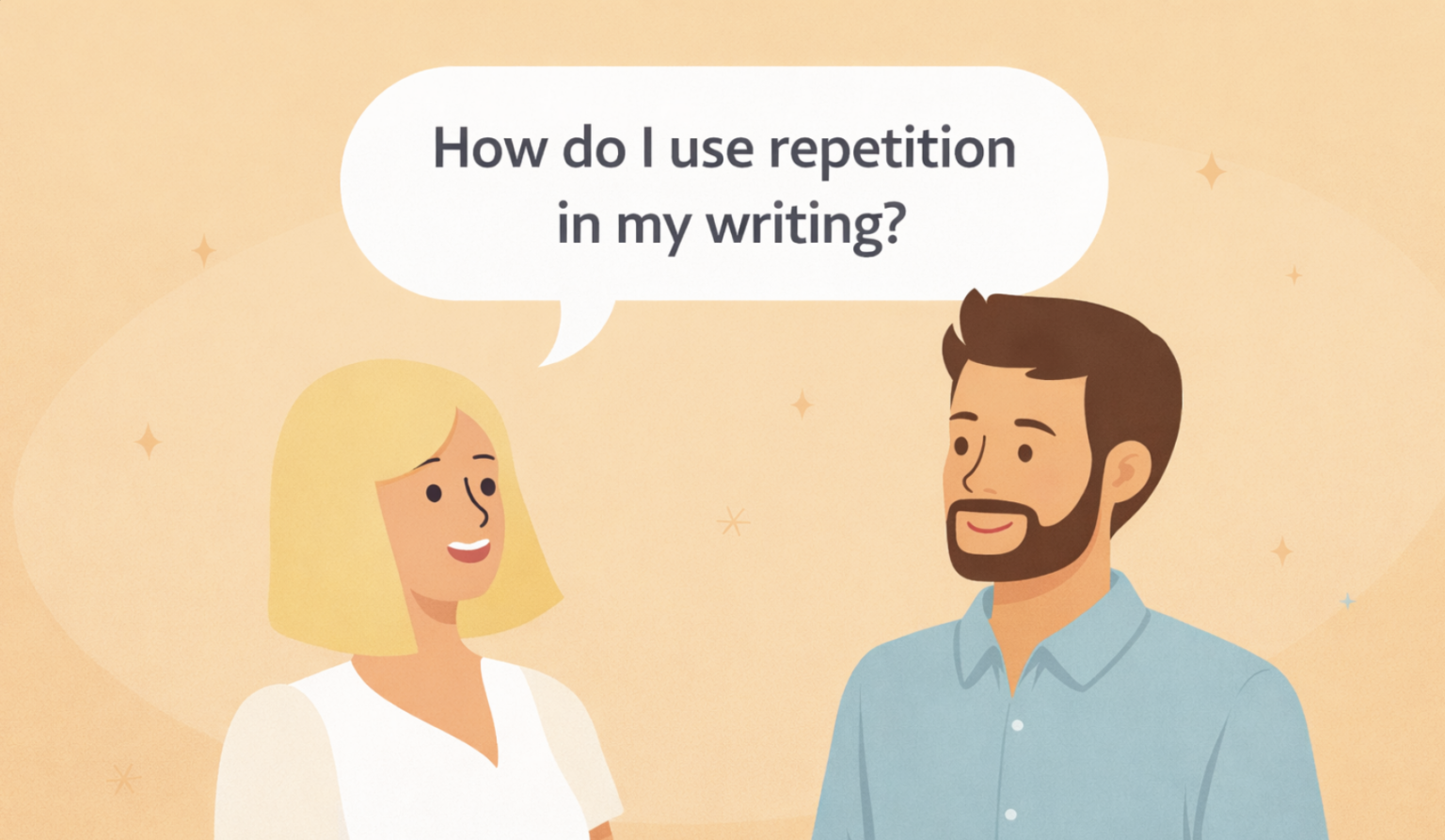
If you’ve ever wondered, what are examples of repetition? (and why they don’t feel annoying on the page), you’re in the right place. In this guide, we’ll break down the most famous repetition examples in literature, explain the patterns behind them, and show you how to use repetition without sounding like a broken record.
What Are Examples of Repetition? A Fast Definition (That Doesn’t Put You to Sleep)
Repetition is exactly what it sounds like… but on purpose. In writing, it means intentionally reusing a word, sound, phrase, or sentence structure to create emphasis, rhythm, and that stick-in-your-head effect readers can’t shake. It’s the reason a line can feel dramatic, lyrical, persuasive, or even quietly haunting without adding a single extra plot twist.
Writers use repetition for a few big reasons: to make an idea clearer, to punch up emotion, to persuade an audience, or to make language feel musical (even in plain old prose). And no, it’s not “lazy writing” when it’s done well.
Here’s the rule: repetition is a tool, not a glitch. The best examples of repetition don’t feel repetitive, they feel intentional, like the writer is guiding your attention with a spotlight.
Start Your Publishing Journey FOR FREERepetition Examples in Literature: 7 Famous Patterns Writers Use Again and Again
Anaphora: Starting Strong, Again and Again
Anaphora is repetition at the beginning of lines or sentences. It’s the “first-word echo” that turns ordinary writing into something that feels bigger than life. Think of it like a drumbeat: This matters. This matters. This matters. The effect is momentum. It pushes the reader forward, ramps up emotion, and can feel almost chant-like in the best way. You’ll see it in speeches, climactic scenes, and manifesto-style paragraphs where the writer is building conviction. It’s especially effective when a character is spiraling, declaring, pleading, or finally deciding who they are.
Epistrophe: Ending With a Mic Drop
Epistrophe is anaphora’s dramatic cousin: it repeats a word or phrase at the end of lines or sentences. And because endings naturally hit harder, this pattern packs a punch. It creates a sense of finality, like a door closing in the reader’s mind: this is the point, this is the point, this is the point. Writers use it to land emotional conclusions, sharpen punchlines, or hammer home an argument without sounding like they’re hammering. It’s also great in dialogue, when a character wants the last word (and wants it to sting). If you want your reader to feel the impact after the sentence ends, epistrophe delivers.
Epizeuxis: The Verbal Double-Tap
Epizeuxis is immediate repetition: no words in between, no waiting, no subtlety. It’s the writing equivalent of grabbing someone by the shoulders and saying, listen to me. You’ll recognize it in moments like “never, never,” or “go, go,” or “mine, mine.” The effect is intensity: panic, obsession, urgency, joy, grief, whatever emotion is overflowing gets echoed twice (or more) because once isn’t enough. This technique shows up most often in inner monologue and high-stakes scenes where the character’s thoughts are moving faster than their dignity. Used sparingly, it’s electric. Overused, it becomes… well, a bit much.
Diacope: Repetition With Something in Between
Diacope repeats a word or phrase, but with a small interruption in the middle. It’s repetition with a dramatic pause, like the writer is letting the tension breathe for half a second before snapping it back. A classic structure is “to be, or not to be” (and yes, you’ve heard it even if you’ve never read the play). Diacope works because it feels natural, like real speech, while still sounding memorable and lyrical. Writers use it for iconic quotes, emotional declarations, and character voice that hits with style: You, of all people, you. It’s perfect when you want repetition that feels elegant instead of loud.
Alliteration: When Consonants Start Showing Off
Alliteration is the repetition of initial consonant sounds: those satisfying little stacks of b, s, m, t, and so on. It’s one of the most recognizable sound repetition examples because you can hear it instantly: it adds music, speed, and mood even when the sentence is saying something simple. Soft sounds can feel dreamy or gentle, while sharp consonants can sound aggressive, fast, or funny. Writers use alliteration in vivid descriptions (“wind-whipped waves”), children’s literature, tongue-twister moments, and phrases meant to be catchy enough to live rent-free in your reader’s brain. The best part? It can make prose feel polished without screaming “Look! I’m being poetic!”
Assonance and Consonance: Vowels and Echoes That Linger
Assonance repeats vowel sounds (like a long oo or ah), while consonance repeats consonant sounds inside words, not just at the start. These are the sneaky geniuses of repetition: you might not notice them on a first read, but you’ll feel their effect. They create atmosphere, mood, and that smooth “this line sounds right” flow. That’s why they’re especially common in lyrical prose and repetition in poetry examples, where sound matters as much as meaning. A slow vowel pattern can feel mournful. A tight consonant echo can feel tense or brittle. If alliteration is the obvious melody, assonance and consonance are the harmony underneath: quiet, powerful, and weirdly addictive.
Parallelism: Same Structure, Bigger Impact
Parallelism is repetition of structure, not necessarily the same exact words. It’s when a writer repeats a grammatical pattern so the sentence feels balanced, clear, and strong. Think: “I came, I saw, I conquered” energy. Parallelism creates elegance and persuasion because it makes ideas easier to process and more satisfying to read. It’s everywhere in literature: character creeds, punchy narration, persuasive arguments, and scene refrains that underline a theme. It also helps you stack emotional beats without the writing getting messy. When done right, parallelism sounds confident, like the writer knows exactly what they’re doing… even if they absolutely wrote the first draft in chaos like the rest of us.
Repetition in Poetry Examples: Why Poets Love the Echo (and Readers Do Too)
Poetry is basically the art of making language feel like something, and repetition is one of its favorite tools for doing that. Poets repeat refrains (a line that returns like a chorus), repeat images (the same symbol showing up in different outfits), and repeat sounds until the poem starts to hum. The result is rhythm you can sense in your body and meaning that sinks in through sheer return.
Repetition also builds expectation. Once a line comes back a second time, your brain starts waiting for it like hearing the first notes of a familiar song. That “I know what’s coming” feeling creates momentum, comfort, or dread, depending on the mood.
You’ll see repetition in poetry through features like:
- refrains that recur at the end of stanzas
- chorus-like endings that echo the poem’s main idea
- repeated openings that set a steady pulse
Mini example (original): each stanza ends with a variation of the same line, “and still the streetlight stays on” first as hope, then as loneliness, then as quiet resolve.
These repetitions in poetry examples work because they turn words into pattern, and pattern into feeling.
How to Use Repetition Without Annoying Your Reader
Repetition is powerful… right up until it becomes that one friend who tells the same story three times at the same dinner. The sweet spot is simple: repeat with intention, not anxiety. If you’re repeating because you want emphasis, rhythm, or emotional weight, you’re using craft. If you’re repeating because you’re not sure the point landed… that’s usually the cue to revise, not echo.
Here’s how to do it without making your reader quietly beg for mercy:
- Choose what matters most. Repeat the core theme, emotion, or idea you want to burn into the reader’s memory.
- Repeat at turning points. Beginnings, endings, and climaxes are prime real estate for repetition to hit hardest.
- Vary the wording slightly. Echo the idea with small changes so it feels intentional, not copy-pasted.
- Read it out loud. Your ears will catch what your eyes forgive. If you cringe, trim.
The best examples of repetition feel invisible until you notice how well they work. When it’s done right, repetition doesn’t drag the writing down. It lifts it up and makes it sing.
Quick Recap: The Patterns You Can Steal Today
Repetition works because it turns language into rhythm, emphasis, and memory; basically, it tells your reader, this part matters. In this guide, we covered seven classic techniques (from anaphora and epistrophe to parallelism and sound-based repetition), plus how repetition in poetry uses echoes like refrains and recurring images to create mood and momentum.Now for the fun part: pick one pattern and try it in a paragraph today, start three sentences the same way, repeat a key phrase at the end, or build a clean parallel structure and feel the power immediately. Now you’ve got a toolbox of repetition examples in literature you can actually use.
FAQ: Repetition Examples
Q1: Where do you see repetition in everyday life?
Everywhere. In slogans (“Just do it”), in music choruses, in political speeches, in prayers, and in the way kids ask “why?” like it’s their full-time job. You’ll also hear repetition in everyday conversation when someone is excited, stressed, or trying to convince you: “I need this. I really need this.” It’s a natural way humans add emphasis, rhythm, and emotion: basically, we repeat things when they matter.
Q2: What is repetition in sentences?
Repetition in sentences is when a writer intentionally repeats words, phrases, or sentence structures to strengthen a point. It can make a sentence feel more powerful, more emotional, or more memorable. It’s often used to create rhythm, highlight a key idea, or guide the reader’s focus, like underlining something without actually underlining it.
Q3: How do poets use repetition?
Poets use repetition to create rhythm, mood, and meaning. They might repeat a refrain (a recurring line), repeat images (like the moon showing up again and again), or repeat sounds through alliteration and assonance. Repetition in poetry also builds expectation: once a line returns, the reader feels its weight more each time it comes back.
Q4: What are some examples of effective repetition?
Effective repetition usually feels natural, not forced. Some strong examples include:
repeating a phrase at the start of several sentences to build momentum
repeating the same ending to create a strong emotional landing
repeating a word immediately to show panic, excitement, or urgency
repeating a sentence structure to make ideas feel clean and confident
The best examples of repetition make readers remember a line without realizing why it stuck.
Q5: What are the different types of repetition?
Some of the most common types include:
Anaphora (repeating beginnings)
Epistrophe (repeating endings)
Epizeuxis (immediate repetition: “never, never”)
Diacope (repeating with a break in the middle)
Alliteration (repeating consonant sounds at the start)
Assonance / consonance (repeating vowel or consonant sounds within words)
Parallelism (repeating sentence structure)
Q6: What is an example of repetition structure?
A simple repetition structure is repeating the same sentence pattern across multiple lines, like:
“I came to win. I came to fight. I came to finish.”
Even though the words change slightly, the structure stays the same, which creates rhythm and makes the message feel stronger and more deliberate. This is a classic parallel structure, and it’s one of the easiest repetition techniques to use well.