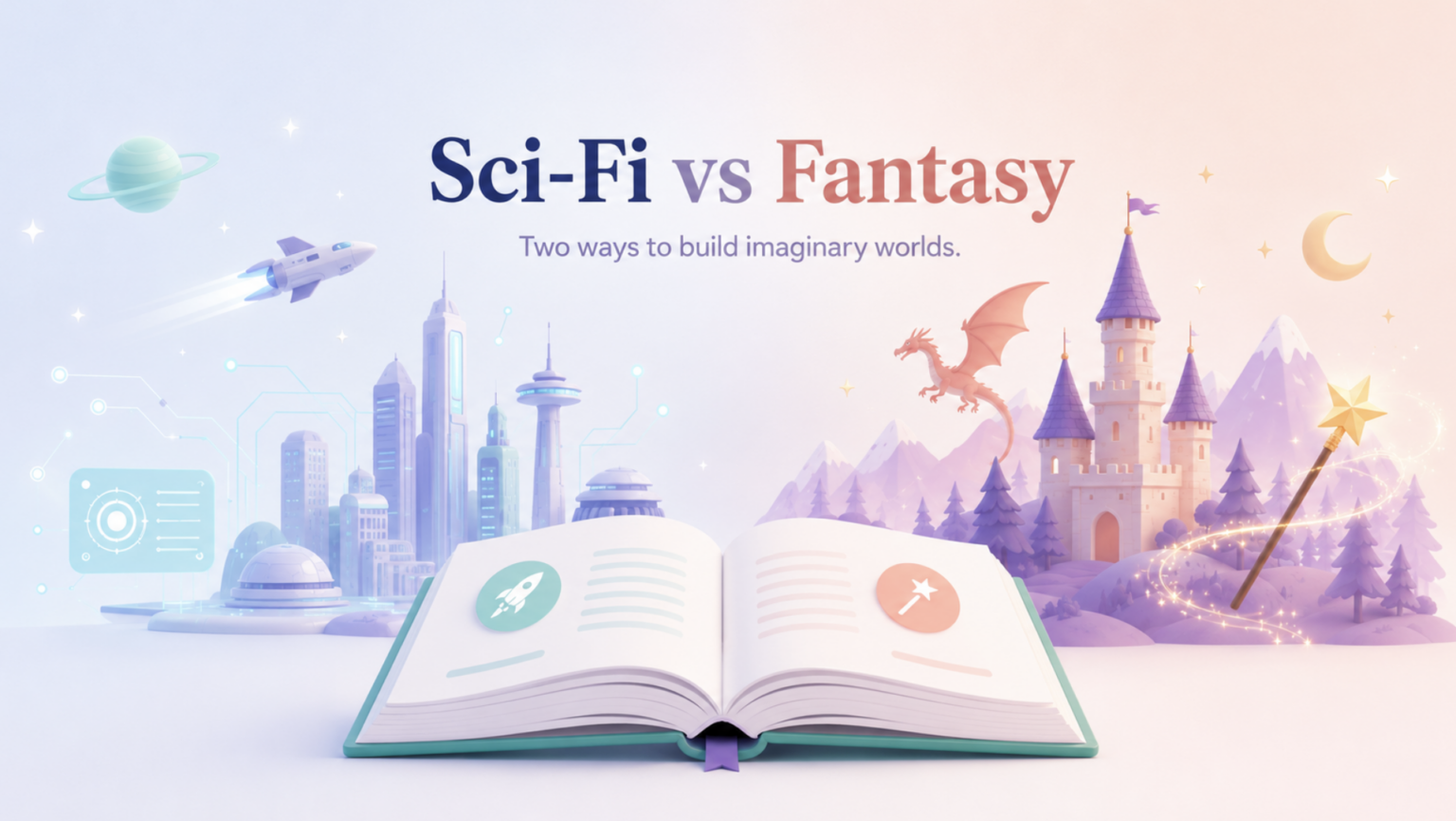
Sci-fi and fantasy are two of the most popular speculative fiction genres, but they work in different ways. The main difference between sci-fi and fantasy is that science fiction is based on science, technology, and possible futures, while fantasy is based on magic, myth, and supernatural forces.
Science fiction often explores space travel, artificial intelligence, advanced technology, time travel, alien life, or future societies. Fantasy usually focuses on creating magical worlds, mythical creatures, quests, prophecies, gods, monsters, and supernatural powers.
In this guide, we’ll explain the sci-fi vs fantasy difference, define both genres, and look at the key elements that make each one unique.
Start Your Publishing Journey FOR FREEWhat Is the Difference Between Sci-Fi and Fantasy?
The easiest way to understand the sci-fi vs fantasy difference is this: sci-fi explains the impossible through science or technology, while fantasy accepts the impossible through magic or myth.
Sci-fi and fantasy both create imaginative worlds, but they are built on different foundations. Science fiction uses science, technology, or future possibility as the basis for its story. Fantasy uses magic, mythology, or supernatural forces that do not need scientific explanation.
In simple terms:
| Genre | Main Foundation | Common Elements |
| Sci-fi | Science, technology, future possibility | Space travel, AI, robots, aliens, time travel, dystopian futures |
| Fantasy | Magic, myth, supernatural forces | Spells, dragons, enchanted worlds, gods, quests, prophecies |
Sci-fi is based on science, technology, and possible futures. Fantasy is based on magic, mythology, and supernatural forces. The main difference is that sci-fi usually explains its world through scientific or technological ideas, while fantasy builds its world around magical or mythical rules.
What Is Science Fiction?
Science fiction is a genre that explores imagined possibilities based on science, technology, and the future. It often asks what if questions about where humanity, society, or technology could go next.
Common science fiction elements include:
| Science Fiction Element | What It Means |
| Advanced technology | Futuristic machines, inventions, weapons, or systems |
| Space travel | Stories set on other planets, ships, galaxies, or civilizations |
| Artificial intelligence | Robots, conscious machines, or human-made intelligence |
| Time travel | Moving between the past, present, or future |
| Alien life | Contact with beings from other planets or dimensions |
| Dystopian futures | Societies shaped by control, collapse, surveillance, or technology |
Science fiction can be hopeful, warning-driven, adventurous, or philosophical. Stories like Star Trek, Blade Runner, The Matrix, and Dune use futuristic ideas to explore human progress, power, survival, identity, and the risks of technology.
At its core, science fiction is not just about gadgets or spaceships. It is about possibility. It imagines what could happen if science changed the way we live, think, connect, or survive.
What Is Fantasy?
Fantasy is a genre built around magic, mythology, supernatural forces, and worlds that do not follow the rules of everyday reality. Unlike science fiction, fantasy does not need to explain its impossible elements through science or technology.
Common fantasy elements include:
| Fantasy Element | What It Means |
| Magic systems | Rules or powers that shape how magic works |
| Mythical creatures | Dragons, elves, fairies, demons, giants, or monsters |
| Invented worlds | Kingdoms, realms, enchanted lands, or alternate universes |
| Quests | A journey or mission that drives the story forward |
| Prophecies | Predictions that influence characters and events |
| Good vs evil conflicts | Battles between heroic and dark forces |
Fantasy stories often explore courage, destiny, power, identity, sacrifice, and the struggle between light and darkness. Examples include The Lord of the Rings, Harry Potter, A Game of Thrones, and The Chronicles of Narnia.
At its core, fantasy is about wonder. It creates worlds where magic is real, ancient forces matter, and impossible things can shape a character’s journey.
Sci-Fi vs Fantasy: The Battle of Imagination
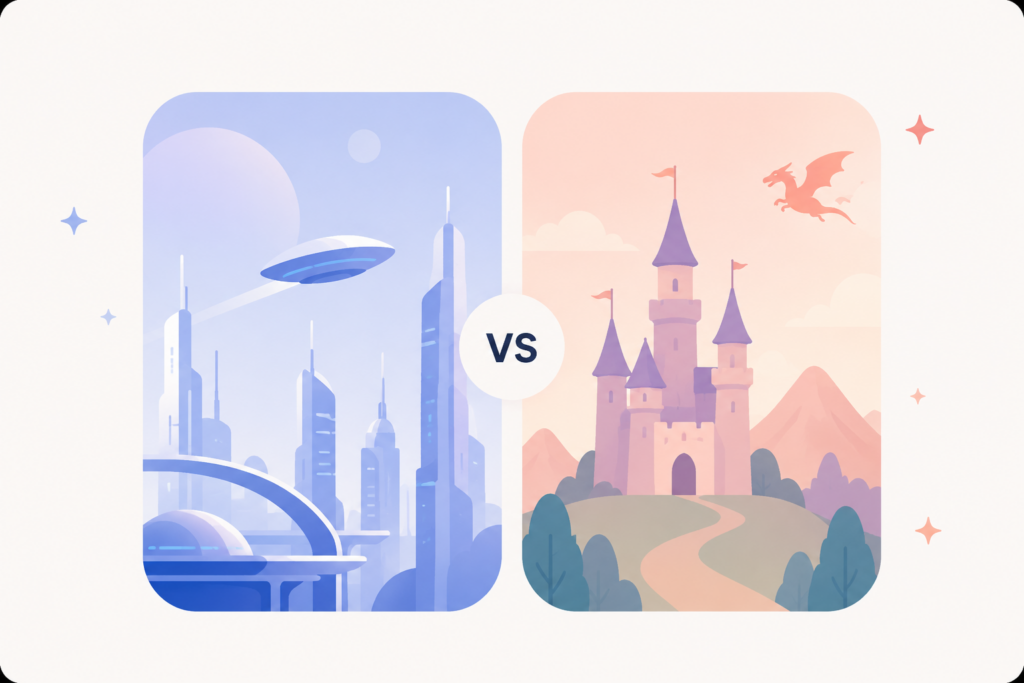
Both genres spark the imagination, but they do so in remarkably different ways. Let’s break down the core sci-fi vs fantasy difference. We’ll cover them from themes to world-building, and everything in between.
Sci-Fi: The Future is Now
At its core, science fiction is rooted in technology, speculative science, and futuristic visions of the world. Sci-fi is often future-oriented, where technological advancements and scientific discoveries drive the narrative. It’s about imagining what could be possible based on the laws of physics, biology, and logic, however far they may stretch. The futuristic worlds of sci-fi are often filled with spaceships, AI, and even alternate dimensions, but they’re always tethered to a sense of scientific possibility. There’s a foundation in reality here, even if it’s on the far edge of what’s possible.
Fantasy: Where Magic Rules the Day
In contrast, fantasy thrives on magic, myth, and supernatural elements. It’s a genre that often disregards science entirely in favor of the boundless power of imagination. Fantasy worlds are filled with dragons, wizards, talking animals, and enchanted lands. Unlike sci-fi, which is rooted in futuristic possibilities, fantasy is steeped in ancient mythologies and medieval-style settings, where magic is the rule, not the exception. Consider Tolkien’s Middle-earth or J.K. Rowling’s Hogwarts—these are places where the laws of physics are irrelevant, and the boundaries of imagination are limitless. Fantasy’s narrative structures typically focus on heroic quests, the battle between good and evil, and the power of magic to alter reality.
World-Building and Themes
The way each genre builds its world reflects these core differences. Sci-fi creates universes that are based on the potential progression of current science, often featuring elaborate technological systems and realistic depictions of space and time. On the other hand, fantasy world-building is a free-for-all, where entire universes can be shaped by the myths, magic, and folklore that reside in the storyteller’s imagination.
While both genres explore profound themes, such as humanity’s place in the universe, identity, and morality, sci-fi typically asks what-if questions grounded in science, whereas fantasy focuses more on what could be if we dared to believe in the impossible. The sci-fi vs fantasy difference can, in many ways, be seen in how they approach the balance between realism and imagination: sci-fi tests the limits of what is possible, while fantasy delights in exploring what is beyond possibility.
Fantasy vs Sci-Fi: The Audience and Appeal
When it comes to fantasy vs sci-fi, each genre speaks to a different kind of imagination, pulling in audiences based on their unique interests and dreams. Sci-fi tends to attract fans who are fascinated by technology, the unknown, and visions of a future that might one day become a reality. It’s the genre for those who imagine life on Mars, the rise of artificial intelligence, or how time travel could potentially reshape history. These fans love the idea of exploring distant planets, unlocking the mysteries of space, or seeing humanity push the limits of what’s possible. Sci-fi taps into our curiosity about progress and the impact of technology on society.
On the other hand, fantasy appeals to those seeking pure escapism, adventure, and a deep connection with the fantastical. Fans of fantasy are enchanted by the power of magic, epic quests, and mythical creatures that bring a sense of wonder and excitement. Fantasy is for dreamers who want to escape the confines of the real world and step into realms filled with swords, sorcery, and timeless battles between good and evil. Whether it’s the allure of a wizard’s staff or the thrill of defeating an ancient dragon, fantasy offers an immersive experience where imagination knows no bounds.
However, fantasy vs sci-fi isn’t always a hard line. There’s a significant crossover between the two genres, with many works blending elements of both. The Matrix combines philosophical questions about reality with the technology-driven world of a dystopian future. These hybrid stories cater to fans who enjoy the best of both worlds, proving that while sci-fi and fantasy may have their differences, they’re not mutually exclusive.
FAQ: Sci Fi vs Fantasy
Q: Is dystopian sci-fi or fantasy?
Yes, dystopian stories are typically considered sci-fi, as they focus on future societies, technological advancements, or social systems gone awry. These stories often explore speculative ideas about how technology or political systems could shape the future.
Q: Are vampires science fiction or fantasy?
Vampires are primarily considered part of fantasy fiction. Their existence is rooted in supernatural lore, magic, and myth rather than scientific principles. Vampires often appear in worlds that blend magic with dark folklore, fitting squarely within fantasy.
Q: What makes high fantasy?
High fantasy is defined by its setting in an entirely fictional world, often with its own rules, magic, and mythology. The genre features epic quests, heroic characters, and battles between good and evil. Key elements include a richly built world with its own history, languages, and creatures (such as elves, dwarves, and dragons). The Lord of the Rings is the quintessential example of high fantasy, where magic and mythical creatures are deeply integrated into the story’s structure.
Q: Can a story be sci-fi and fantasy?
Yes, a story can absolutely be both sci-fi and fantasy. There are many works that combine elements of both genres, often referred to as science fantasy. These stories might feature futuristic technology alongside magical elements or fantastical creatures. A well-known example is Star Wars, where advanced space travel and technology coexist with mystical forces like the Force, blurring the lines between sci-fi and fantasy.
Q: Are werewolves fantasy or sci-fi?
Werewolves are typically considered part of fantasy, as they are rooted in folklore, mythology, and supernatural transformations. While werewolves can appear in more modern or futuristic settings, their origins in ancient myths and their connection to magic or the supernatural place them firmly within the realm of fantasy, not science fiction.