
Ever get the feeling that you recognise certain characters no matter what book you pick up? It’s not that they’re familiar in an annoying way: you know the ones that feel like they’re being used because they’re a “trick”, but rather they have this… this underlying quality that just makes you nod along straight away.
I mean the wise old mentor who always knows what to say at exactly the right moment , the hero who seems to be having a right old run of bad luck, the trickster who always adds a bit of chaos to the mix, they all share some sort of unspoken connection.
They’re not overused clichés (unless you get them appallingly wrong), but rather fundamental character types that readers instinctively respond to.
So what exactly are these character archetypes that keep popping up in all sorts of writing, from ancient Greek epics all the way to today’s best sellers?
Think of them as the fundamental building blocks of storytelling, the fundamental roles that are hardwired into our psyche and which we instinctively identify with, whether that’s the lovable rebel who always sticks it to the man or the caring type who puts everyone else’s needs before their own.
In this guide we’ll be exploring what character archetypes are in more detail, then we’ll take a look at the 12 character types that get used most often in literature and provide you with a list of examples so you can steal (I mean borrow) them for inspiration.
What Are Character Archetypes?
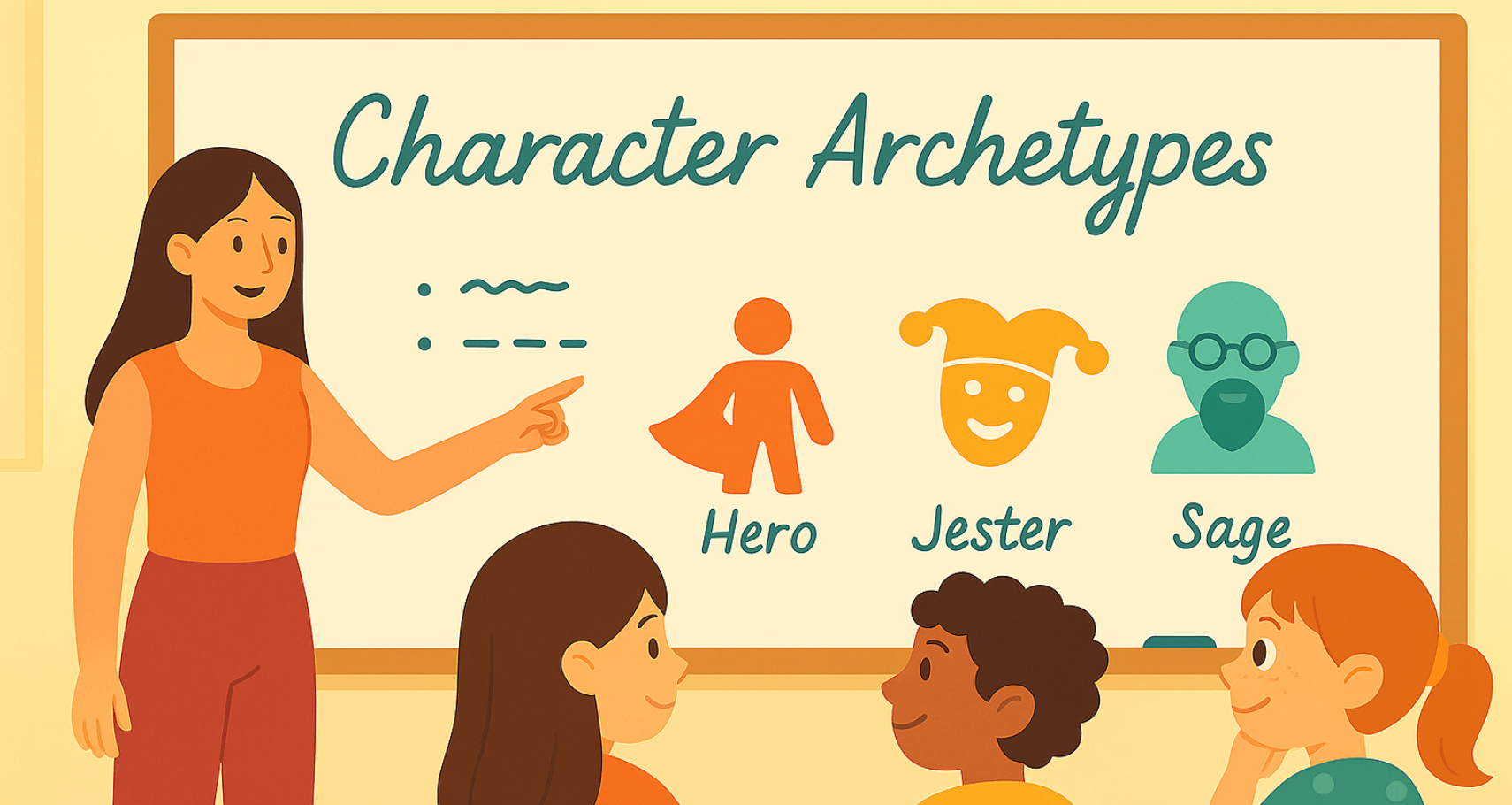
Character Archetypes are deeply embedded universal patterns of behaviour and personality that you find in stories, cultures and right across history. They evoke familiar roles like the hero, the mentor or the rebel, which is no doubt why writers love to use them, because we instantly get what’s going on. We can connect with these characters.
At the heart of character archetypes are persistent patterns of personality and behaviour .They show up everywhere & across cultures & centuries, and they are the fundamental blueprints of being human: which is what makes a hero in ancient mythology feel just as real to us as a hero in a modern fantasy novel.
The idea of archetypes comes from the work of Carl Jung, who had the idea that people share a shared bank of deep, timeless patterns (a collective unconscious) that includes all these universal roles.
That’s why when you read about the caring & protective type or the cheeky troublemaker, or the fearless adventurer, it all rings a bell, even if the story comes from a place vastly different from your own culture.
It is also helpful to think about how archetypes differ from tropes. A trope is a storytelling device or theme that can shift with trends, while an archetype is more fundamental, almost like the skeleton of a character. In other words, tropes can go in and out of style, but archetypes never really leave the stage.
It’s also worth distinguishing character archetypes from character roles. An archetype describes a personality type, the Hero, the Mentor, the Rebel, while a role describes a character’s function in the plot, protagonist, antagonist, foil, deuteragonist.
The same character often carries both: Frodo is both an Everyman archetype and the story’s protagonist. If you’re looking for the full breakdown of narrative roles rather than personality archetypes, see our guide to types of characters in writing.
How Many Character Archetypes Are There?
If you ask ten different scholars how many character archetypes exist, you might get ten different answers. Some will point to Carl Jung’s original concepts, others will reference Joseph Campbell’s Hero’s Journey with its many stages, and a few will argue that new archetypes keep emerging as stories evolve.
For good storytelling, most writers & teachers tend to focus on the 12 character archetypes. These dozen have proven incredibly resilient, showing up everywhere from ancient myths to modern bestsellers & blockbusters and they cover the key roles that keep stories moving, from the bold hero to the wise old mentor to that mischievous trickster who keeps things entertaining.
Of course, that doesn’t mean your story has to be locked into just 12. Characters can evolve over time & blend traits from multiple archetypes to create a more complex personality.
Think of the twelve as a useful set of tools to get you started, rather than some rigid rule to follow. Once you get to know the archetypes, you can start playing with the edges & boundaries to craft characters that will surprise & engage readers, yet still ring true as universally relatable people.
The 12 Character Archetypes Explained
Here is a fuller look at the twelve archetypes, along with their defining traits and famous examples from literature, film, and myth.
Think of this as your storytelling cheat sheet, ready to spark ideas when you are shaping your own characters.
The Hero
- Core Traits: Brave, determined, resilient, willing to sacrifice
- Purpose: Faces challenges, grows through trials, represents the journey of transformation
- Examples: Harry Potter battling Voldemort, Odysseus navigating epic trials, Frodo Baggins carrying the Ring to Mordor
The Mentor
- Core Traits: Wise, guiding, protective, sometimes cryptic
- Purpose: Provides wisdom, equips the hero with knowledge or tools, encourages growth
- Examples: Gandalf in The Lord of the Rings, Dumbledore in Harry Potter, Yoda in Star Wars
The Caregiver
- Core Traits: Compassionate, nurturing, selfless, supportive
- Purpose: Protects and sustains others, often sacrifices their own needs
- Examples: Marmee in Little Women, Samwise Gamgee supporting Frodo, Molly Weasley in Harry Potter
The Rebel
- Core Traits: Independent, bold, rule-breaking, justice-driven
- Purpose: Challenges authority, sparks change, fights for freedom or fairness
- Examples: Katniss Everdeen in The Hunger Games, Robin Hood stealing from the rich, V in V for Vendetta
The Lover
- Core Traits: Passionate, affectionate, loyal, idealistic
- Purpose: Seeks connection, pursues romance, represents devotion and vulnerability
- Examples: Romeo and Juliet, Elizabeth Bennet and Mr. Darcy, Jack and Rose in Titanic
The Creator
- Core Traits: Imaginative, innovative, visionary, occasionally obsessive
- Purpose: Brings ideas to life, shapes worlds, sometimes warns of hubris
- Examples: Victor Frankenstein, Tony Stark building Iron Man, Leonardo da Vinci as portrayed in fiction
The Jester
- Core Traits: Playful, witty, mischievous, insightful through humor
- Purpose: Lightens the mood, points out truth through comedy, shakes up the serious tone
- Examples: Puck in A Midsummer Night’s Dream, Tyrion Lannister in Game of Thrones, Genie in Aladdin
The Sage
- Core Traits: Intelligent, reflective, calm, driven by truth
- Purpose: Offers wisdom, helps others see clearly, serves as the voice of reason
- Examples: Dumbledore (again, he fits two roles), Athena in Greek mythology, Rafiki in The Lion King
The Innocent
- Core Traits: Optimistic, pure, hopeful, trusting
- Purpose: Represents goodness and moral clarity, often inspires others with sincerity
- Examples: Dorothy in The Wizard of Oz, Pip in Great Expectations, Lucy Pevensie in The Chronicles of Narnia
The Explorer
- Core Traits: Curious, adventurous, restless, driven by discovery
- Purpose: Pushes boundaries, uncovers new worlds, embodies freedom and risk-taking
- Examples: Huckleberry Finn, Lara Croft, Moana in Disney’s Moana
The Ruler
- Core Traits: Commanding, authoritative, responsible, protective of order
- Purpose: Maintains stability, creates systems, struggles with the weight of power
- Examples: King Arthur, Mufasa in The Lion King, Aragorn in The Lord of the Rings
The Everyman
- Core Traits: Relatable, grounded, humble, adaptable
- Purpose: Serves as the audience’s mirror, grows through extraordinary circumstances
- Examples: Bilbo Baggins in The Hobbit, Arthur Dent in The Hitchhiker’s Guide to the Galaxy, Winston Smith in 1984
How to Use This List?
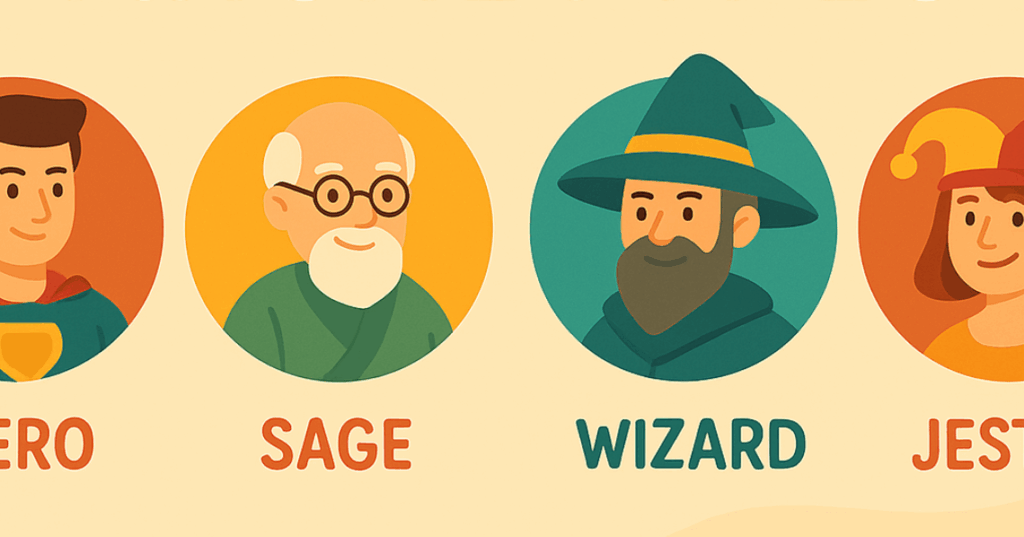
Rather than treating these character archetypes like a rigid checklist, think of them as a creative toolkit. Characters can shift between archetypes as their story unfolds, or blend traits from multiple archetypes to become more complex.
A reluctant hero may have shades of the Everyman. A mentor may reveal a streak of rebellion. The fun lies in combining and subverting archetypes to keep readers invested.
Building Strong Stories with Archetypes
Knowing the archetypes is all well and good, but it’s the application that really sets the magic in motion.
Writers who treat the archetypes as a collection of tools to draw from, rather than a rigid set of formulas to work from, can create characters that are at once both deeply familiar and quietly surprising. Here are a few ways you can put that knowledge to work.
Mixing the Mix
The thing is, characters don’t have to stay stuck in one particular mold forever. A hero can start out as an everyman type and gradually grow into someone with a bit more clout – a ruler, for example.
A mentor might have a bit of the trickster in them too, keeping both the protagonist and the reader on their toes. When you blend different archetypes, characters start to feel more dynamic and less predictable, which is exactly what you want.
Watching Character Grow
A good story is all about character growth, and the archetypes can really help you explore that transformation. An innocent might grow into a full-fledged hero, or a ruler might turn into a rebel. Seeing the archetypes shift and evolve adds depth, and keeps readers engaged in the story.
Subverting Everyone’s Expectations
One thing readers love is a clever twist on a familiar trope. What if the jester was the only one who saw the truth? What if the caregiver’s loyalty turned out to be a bad thing? Playing with the archetypes in unexpected ways creates characters that really stand out from the crowd, even in pretty crowded genres.
Staying Smart About Your Genre
Some archetypes turn up a lot more in certain genres. The explorer is a staple of adventure stories, while the sage is a common sight in fantasy and science fiction.
Knowing which archetypes your genre tends to lean on gives you a better sense of when to play it straight and when to turn something on its head.
At the end of the day, the archetypes aren’t there to restrict your creativity, but to tap into something deep and universal, giving readers a sense of recognition and providing you with a framework to build characters that are truly special.
Archetypes: Same Old, Brand New
Character archetypes have been around for centuries, yet they never lose their spark. They give writers a timeless foundation and readers a sense of instant recognition, while still leaving plenty of room for creativity. Master them, twist them, and your stories will feel both classic and fresh at the same time.
FAQs: Character Archetypes
Q: What are character archetypes?
Character archetypes are universal models of behavior and personality that appear across stories, cultures, and time periods. They represent familiar roles like the hero, the mentor, or the rebel. Writers use them because readers instantly recognize and connect with these roles.
Q: How many character archetypes are there?
There is no single correct number, though most frameworks highlight twelve core archetypes. These include the hero, the mentor, the caregiver, and others you will recognize from countless books and films. Some scholars argue there are more, while others group them differently, but the twelve archetypes remain the most widely used.
Q: What is the difference between a character archetype and a trope?
An archetype is a timeless role, while a trope is a recurring theme or device. For example, the mentor is an archetype, but the “reluctant mentor who swears they are retired” is a trope. Archetypes form the foundation, while tropes add flavor and variation.
Q: Why do writers use archetypes?
Archetypes help writers build characters that feel instantly relatable and engaging. They provide a foundation that readers understand on a subconscious level, while still giving room for creativity, subversion, and surprise.
Q: Can a character fit more than one archetype?
Absolutely. Characters often evolve throughout a story, shifting from one archetype to another, or blending traits from multiple archetypes. A reluctant hero might begin as an everyman, gain wisdom like a sage, and end as a ruler. These combinations keep characters fresh and dynamic.