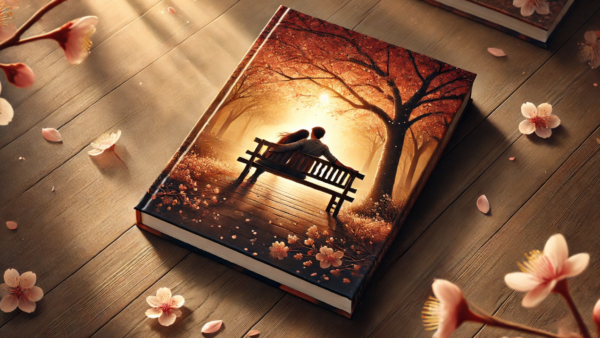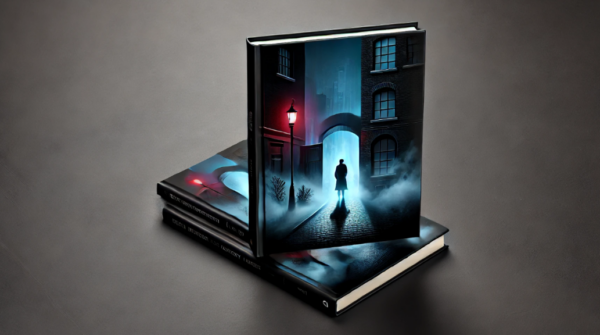
We all like to pretend we don’t judge books by their covers, but let’s be honest: we absolutely do. One glance at a striking jacket design, and suddenly we’re convinced this book gets us on a spiritual level. A bland cover, on the other hand, can send even a brilliant novel straight back onto the shelf, never to be heard from again.
It’s not superficiality, it’s psychology. Famous book covers aren’t just pretty pictures; they’re tiny marketing engines disguised as art. They whisper promises, drop hints, wave symbolic flags, and quietly manipulate us (in the most charming way) into picking them up. Some have become cultural artifacts in their own right, instantly recognizable long after the story’s details have faded.
In this article, we’re stepping behind the curtain to explore the surprising stories, clever design tricks, and occasionally chaotic accidents that turned ordinary covers into icons. Think of it as a guided tour through the visual history of storytelling: where fonts flirt, colors persuade, and symbolism does a bit of undercover work. Ready to judge some covers?
Your Publishing Journey Awaits – Start NowThe Art of First Impressions: Why Famous Book Covers Become Iconic
The first few seconds you spend looking at a book cover are basically a psychological ambush. Designers know this, delight in it, actually, and they use every visual trick available to make you feel something before you’ve even read a single sentence. Color is their favorite weapon: blues whisper calm, reds shout urgency, yellows tap you on the shoulder with a cheerful “Hey, look here!” Even the placement of elements follows a visual hierarchy meant to guide your eyes like a well-trained tour guide.
Famous book covers tend to follow the same winning patterns. Simplicity wins more often than not; a bold shape or a single symbol can punch harder than a chaotic collage. Contrast gives the design its spark, light versus dark, large versus small, quiet versus loud. And symbolism? That’s the secret seasoning. A tiny detail, a repeated motif, or a mysterious icon can create meaning that lingers long after the book returns to your shelf.
Designers love to pretend it’s all very subtle, but let’s be honest: they’re trying to tug your emotions like puppet strings. And the most famous book covers succeed because we happily let them.
Accidental Genius: How Happy Mistakes Created Legendary Covers
Some of the most famous book covers weren’t born from grand visions or endless brainstorming sessions, they were the result of sheer chaos, tight deadlines, or a budget that could barely buy a decent cup of coffee. In fact, many iconic designs began as happy accidents. Think of the original Jurassic Park cover: Chip Kidd didn’t set out to create one of the most recognizable silhouettes in publishing history; he simply stumbled on a scientific sketch and thought, Yeah, that’ll do. Suddenly, a quick placeholder became a franchise symbol plastered on everything from movie posters to Halloween costumes.
Other covers owe their brilliance to limitations. When designers don’t have the luxury of time or resources, they get scrappy, and scrappy often leads to genius. Minimalist covers, bold typography, or a single striking image sometimes emerge because there wasn’t enough budget for anything else.
Sometimes a late-night design panic becomes history. A misplaced brushstroke, an accidental crop, or a “temporary” font choice can turn into the very thing readers remember decades later. Constraints don’t just shape creativity, they occasionally make it legendary.
Symbolism on the Shelf: Hidden Messages in Famous Book Covers
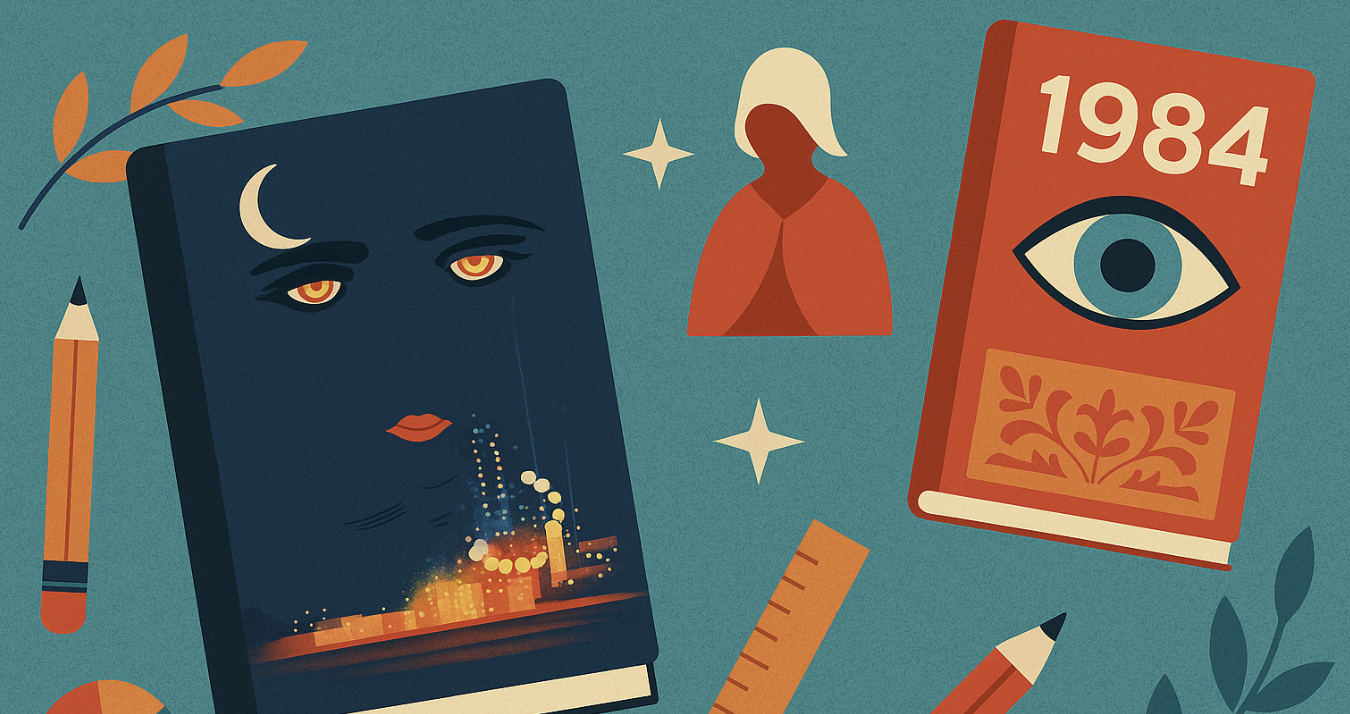
Some famous book covers do more than grab attention, they tell an entire story before you even flip to page one. Take The Great Gatsby, for example. Francis Cugat’s haunting illustration of disembodied eyes floating over bright city lights wasn’t just decorative; it captured the novel’s themes of longing, illusion, and watching a world you can’t quite belong to. F. Scott Fitzgerald loved it so much he revised parts of the manuscript to match the cover’s eerie mood. Now that’s design influence.
Or look at the stark minimalism of George Orwell’s 1984. Modern editions often feature a giant, unblinking eye or censored typography: visual metaphors for surveillance and controlled truth. It’s symbolism doing heavy lifting with barely a whisper.
Then there’s The Handmaid’s Tale. Many covers feature a faceless woman in a blood-red cloak, the color functioning as both warning and identity. The silhouette suggests restriction; the blank face, erasure. It’s design is a quiet rebellion.
These covers work because they embed meaning into every line and color choice. They’re visual Easter eggs, metaphors, and thematic clues rolled into one. And here’s the inspiring part: authors and designers can borrow the same techniques. A symbol doesn’t need to shout; it just needs to matter. When a cover tells a story, readers can’t help but lean in.
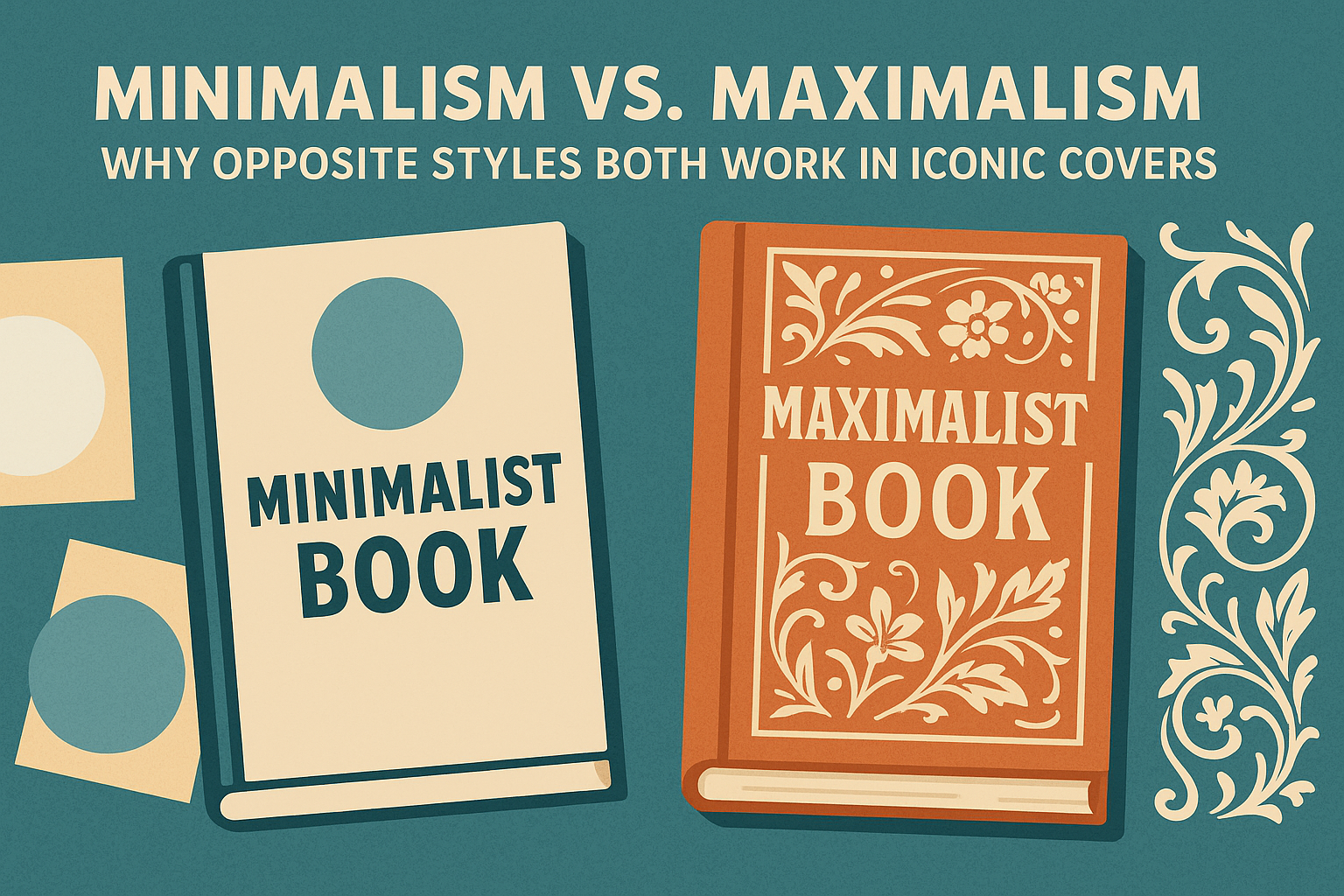
Minimalism vs. Maximalism: Why Opposite Styles Both Work in Iconic Covers
Minimalist book covers have had quite a moment: clean lines, bold shapes, and a confident “less is more” attitude that practically winks at you from the shelf. These designs rely on clarity and punch: one symbol, one color contrast, one big idea. Think of the stark cover of The Girl with the Dragon Tattoo or the elegant simplicity of modern classics. Minimalism works because it leaves room for curiosity. It whispers.
Maximalist covers, on the other hand, are the life of the party. They’re busy, loud, richly detailed, and shamelessly dramatic. Fantasy epics, sprawling historical novels, and lush literary fiction often embrace this style. Every swirl, motif, and texture competes for attention, and somehow, it’s wonderful.
Here’s the magic: both approaches have produced some of the most famous book covers in history. Why? Because each aesthetic knows exactly who it’s talking to. Some covers whisper. Some yell. Both can sell.
Judging a Book by Its Typography: Lettering That Became as Famous as the Story
Typography is the quiet hero of famous book covers, the part readers rarely notice consciously but absolutely feel. Fonts, spacing, and hand-drawn lettering shape a book’s personality long before the artwork does. A sharp, angular serif can signal danger or tension; a soft, rounded script can whisper nostalgia or warmth. Change the font, and you’ve changed the entire mood. (Use the wrong one, and suddenly your high-stakes thriller looks suspiciously like a wedding invitation.)
Some covers became iconic almost entirely because of their typography. Consider the looping, whimsical lettering of Harry Potter, which instantly telegraphed magic and adventure. Or the stark, stamped-in title treatment on The Fault in Our Stars, so recognizable it practically became its own meme. Even The Catcher in the Rye owes part of its lingering power to its bold, slightly erratic lettering; it looks like the book feels: restless.
Great typography doesn’t just label a story; it defines it. When chosen well, it becomes part of the experience, a visual voice that speaks before the first line ever does.
From Shelf to Thumbnail: How Famous Book Covers Evolve in the Digital Age
In the digital age, book covers have had to master a new survival skill: looking good at the size of a postage stamp. Those sweeping details and delicate flourishes that once dazzled on a physical shelf now have to hold their own as tiny Amazon thumbnails and mobile-sized squares. Iconic design principles haven’t disappeared, they’ve simply adapted. Bold contrast, clear typography, and instantly readable imagery have become non-negotiable. A cover has about half a second to shout, Pick me!
Many classics have undergone digital glow-ups for this reason. Editions of 1984 now lean into simple, high-contrast graphics. Modern Pride and Prejudice covers often feature minimalist silhouettes instead of ornate Victorian flourishes. Even Dracula has swapped intricate borders for bold, graphic bats that translate beautifully on screens.
For independent authors, this shift is actually empowering. A modern book cover isn’t just packaging; it’s a micro-billboard. If it pops at thumbnail size, it can compete with the biggest names out there. In a world of endless scrolling, clarity and boldness are the new superpowers.
Conclusion — What Today’s Authors Can Learn From the Greats
If there’s one thing the greats teach us, it’s that a book cover isn’t decoration; it’s communication. The most famous designs succeed because they embrace clarity, evoke emotion, and tell a tiny slice of the story before the reader even hits chapter one. Whether you lean minimalist or maximalist, symbolic or straightforward, the goal is the same: make a bold choice and make it intentional.
Think of your cover as your book’s handshake. It should be confident, memorable, and true to the story it represents. A well-crafted cover doesn’t just catch the eye, it sets the tone, sparks curiosity, and invites readers into your world.
And yes, people will judge your book by its cover, so give them something unforgettable.
FAQs – Famous Book Covers
Q1: What makes famous book covers so effective?
Famous book covers work because they combine clear messaging, strong visuals, and emotional impact. They use color, typography, and symbolism to quickly communicate genre, mood, and tone, convincing readers to click, pick up, or buy in a matter of seconds.
Q2: How can I design a book cover that stands out like famous book covers?
Start with clarity: know your genre, audience, and core message. Use bold, readable typography, strong contrast, and one main visual idea rather than clutter. Study famous book covers in your genre and ask: what are they promising, and how?
Q3: Do I need a professional designer to create an iconic book cover?
A professional designer helps a lot, especially with typography and layout, but it’s not mandatory. If you’re on a budget, use high-quality templates and focus on clear text, strong imagery, and a cohesive style that matches your genre.
Q4: What role does typography play in famous book covers?
Typography shapes a book’s personality. On famous book covers, the font choice, spacing, and style communicate genre and mood instantly—mysterious, romantic, playful, literary—often before the artwork does.
Q5: How should book covers be adapted for Amazon thumbnails and ebooks?
Prioritize readability at small sizes: big title, clear author name, and a simple focal image. Reduce tiny details, increase contrast, and test your cover as a small thumbnail to make sure it still pops on Amazon and mobile screens.
Q6: What can indie authors learn from classic famous book covers?
Indie authors can borrow the same principles: strong concepts, consistent symbolism, and intentional use of color and type. Classic famous book covers prove that a focused idea, well executed, beats a busy design every time.