Ever wonder how authors make their words leap off the page and into your imagination? It’s not just magic, well, not entirely: it’s stylistic devices! Picture this: a metaphor is like a chef’s secret ingredient, adding just the right flavor to a dish, while alliteration is the perfect seasoning that makes each bite memorable. Stylistic devices are the tricks of the trade that writers use to spice up their work, whether they’re crafting a captivating novel or just trying to get you to feel something.
So, what exactly are stylistic devices? Simply put, they’re the tools authors use to shape their language: think metaphors, personification, or even a well-timed pun. They’re what make writing sing, what help words carry emotion, create rhythm, and give depth to stories.
Ever wondered how authors make their words so captivating? The answer lies in stylistic devices! Stick around, and you’ll discover examples of these powerful tools and learn how they elevate writing from “meh” to “wow.”
Stylistic Devices in a Nutshell: What Are They?
Stylistic devices are the secret tools that writers use to bring their words to life. Think of them like spices in a recipe: add the right ones, and you’ve got a dish that’s bursting with flavor. Without them, writing can feel flat, like a bland bowl of oatmeal. These devices help to shape how a story feels, how it sounds, and how it connects with the reader. They add depth, emotion, and rhythm, making the text not only more enjoyable but also more memorable.
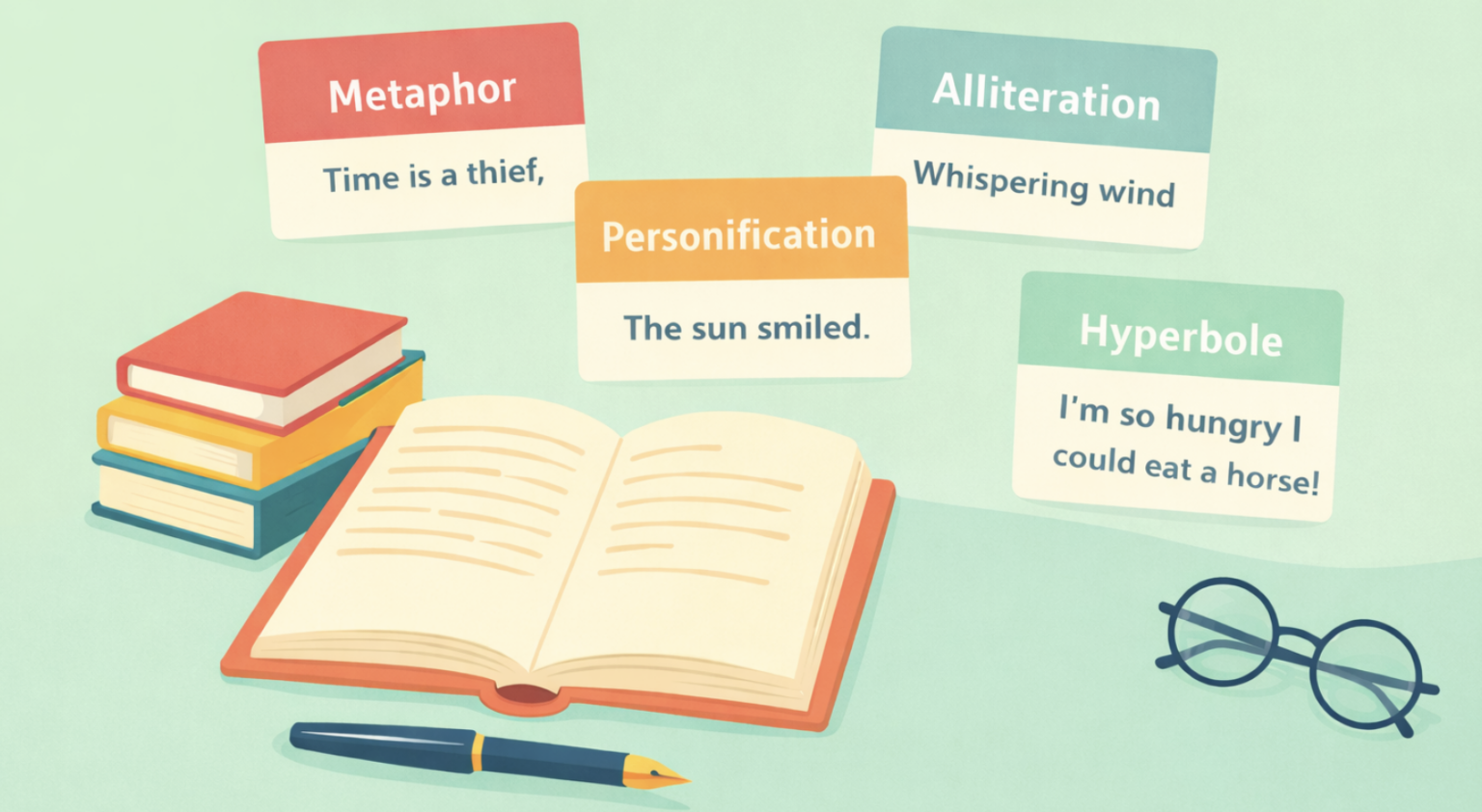
Some common stylistic devices include metaphors, similes, alliteration, personification, and hyperbole. A metaphor, for example, compares two unrelated things without using “like” or “as”, it’s a more direct, creative comparison. Personification gives human qualities to non-human things, making them feel more relatable. And alliteration? That’s the fun repetition of consonant sounds, like “Peter Piper picked a peck of pickled peppers.” It’s all about making the writing sing with rhythm and meaning.
In short, stylistic devices are the colorful tools in a writer’s kit that help create an emotional connection with the reader, taking a simple story and turning it into something unforgettable. But how do these tools work in action? Let’s get into some concrete examples in the next section!
Your Publishing Journey Awaits – Start NowStylistic Devices Examples: A Parade of Power-Packed Tools
Now that you’ve got the gist, let’s take a walk through some of the most common stylistic devices; tools that can make your writing pop and leave your readers saying, “Wow!”
- Metaphor
Metaphors are like the secret sauce of writing, turning ordinary descriptions into something extraordinary. They compare two unrelated things to give deeper meaning. Take Shakespeare’s famous line, “The world’s a stage.” Here, the world isn’t literally a stage, but this metaphor tells us that life is like a performance: full of roles to play and moments to act out. Powerful, right? - Alliteration
Ever find yourself tongue-tied trying to say a sentence like “Peter Piper picked a peck of pickled peppers”? That’s alliteration for you: repeating the same consonant sound at the beginning of words. It’s playful, memorable, and, let’s be honest, just fun. Authors use it to create rhythm, sound patterns, and, sometimes, to give their writing a little flair. - Hyperbole
Hyperbole is the king of exaggeration. It’s used to emphasize a point by making something seem bigger, better, or more intense than it really is. “I’ve told you a million times!” Ever used that line with a friend or sibling? It’s not literally a million times, but it sure drives home how frustrated you are. - Personification
Personification gives life to inanimate objects or abstract concepts, making them seem human. For example, “The wind whispered through the trees.” Now, you’ve got a breeze with a secret to tell! It adds depth and makes nature feel more intimate. - Irony
Irony is the sneaky trickster of stylistic devices. It’s when things turn out the opposite of what you expect. Think of the movie The Matrix, where the “red pill” gives the characters access to reality, but it’s also their ticket to a much worse life. Irony is fun because it twists expectations, often leading to deeper meanings or surprising moments.
These are just a few tricks up an author’s sleeve, but let’s see how they really work in context. Ready for some real-world magic?
The Power of Stylistic Devices in Literature
Stylistic devices aren’t just fancy tricks, they’re the heartbeat of great literature. These tools allow writers to connect with readers on an emotional and intellectual level, adding layers of meaning and creativity that make a piece of writing unforgettable. Without them, writing can feel flat, like a song without melody or a painting without color.
Take Shakespeare, for example. His use of metaphors has shaped the English language for centuries. When he wrote, “All the world’s a stage,” he wasn’t just making a comparison; he was inviting readers into a deeper reflection about life, identity, and the roles we play. It’s this kind of depth that makes his work resonate across generations.
Charles Dickens was a master of vivid description, using stylistic devices to create rich, atmospheric settings that draw readers into his world. Consider his opening line from A Tale of Two Cities: “It was the best of times, it was the worst of times…” The rhythm, contrast, and repetition not only set the tone for the novel but also serve as a commentary on the conflicting nature of the era. It’s this kind of writing that engages the imagination, urging readers to see beyond the surface and consider the larger implications of the story.
Stylistic devices help authors stand out in a crowded literary market. They transform ordinary sentences into powerful, thought-provoking statements that stay with readers long after the book is closed. As Mark Twain once said, “The difference between the right word and the almost right word is the difference between lightning and a lightning bug.” This highlights how precision in language and style can elevate writing from good to unforgettable.
Now that we’ve seen how these devices shape literature, let’s dive into how you can use them effectively in your own writing!
How to Use Stylistic Devices Without Overdoing It
While stylistic devices are powerful tools, the key to mastering them is balance. Like any good recipe, a pinch of spice is all you need; too much, and your dish goes from gourmet to over-the-top. In writing, less is often more. Using too many stylistic devices in one paragraph can overwhelm your reader and distract from the message you’re trying to convey.
So, when should you pull out these tools? The secret is in strategic placement. Use them in key scenes or to emphasize important emotional moments. Want to make your readers feel the weight of a character’s grief? Try a metaphor or personification to bring that emotion to life. Need to build tension? Alliteration and hyperbole can crank up the intensity.
But remember, moderation is your friend. For example, using too many metaphors in one paragraph? Might as well start writing poetry for a dictionary. It’s all about knowing when to let the power of one device shine, rather than drowning the reader in a sea of stylistic flourishes.
Here’s a quick checklist for integrating stylistic devices smoothly:
- Use them to emphasize key moments (emotional peaks or plot twists).
- Choose one or two devices per paragraph to keep it fresh, not crowded.
- Read aloud to ensure the flow feels natural: stylistic devices should enhance, not disrupt, the narrative.
- Avoid the “kitchen sink” approach, you don’t need everything at once!
With the careful use of stylistic devices, you can build a unique voice that stands out in a sea of words, making your writing both distinctive and impactful.
From Page to Impact: The Lasting Effect of Stylistic Devices
Stylistic devices are more than just writing tools, they’re the magic that transforms ordinary prose into something unforgettable. They allow you to craft language that resonates, creating an emotional connection with your readers that lingers long after they’ve turned the page. When used thoughtfully, these devices elevate your storytelling, making your words not only meaningful but memorable.
As a writer, don’t be afraid to experiment. Try out different devices and see how they shape your style. Whether it’s the punch of a well-placed metaphor or the rhythm of alliteration, these tools help you find your unique voice.
As William Wordsworth once said, “Fill your paper with the breathings of your heart.” Stylistic devices are how you breathe life into your writing, giving it the power to move, inspire, and entertain.
Ready to spice up your writing? Start using these stylistic devices and watch your words come alive!
FAQ: Stylistic Devices
Q: How do you identify a stylistic device?
To identify a stylistic device, you’ll need to pay close attention to the structure and language of the text. Look for patterns, figurative language, or any deliberate use of sounds, shapes, or words that seem to evoke emotion, create rhythm, or emphasize certain points. For example, a metaphor might compare two unlike things, while alliteration repeats the same consonant sounds. A quick way to spot them is by focusing on how the language deviates from the straightforward, descriptive, or literal meaning.
Q: What are the 8 poetic devices?
Here are eight common poetic devices used in writing:
Metaphor: A comparison between two unrelated things (e.g., “Time is a thief”).
Simile: A comparison using “like” or “as” (e.g., “She was as brave as a lion”).
Alliteration: Repetition of consonant sounds at the beginning of words (e.g., “Peter Piper picked a peck of pickled peppers”).
Assonance: Repetition of vowel sounds (e.g., “Hear the mellow wedding bells”).
Personification: Giving human qualities to non-human things (e.g., “The wind whispered through the trees”).
Hyperbole: Exaggeration for emphasis (e.g., “I’ve told you a million times”).
Onomatopoeia: Words that imitate natural sounds (e.g., “buzz,” “crash”).
Irony: A contrast between expectations and reality, often used to convey meaning or humor (e.g., a fire station burning down).
Q: What is the difference between literary devices and stylistic devices?
Literary devices are techniques used by writers to create a particular effect in their writing, such as symbolism, theme, and foreshadowing. Stylistic devices, on the other hand, are specific tools that enhance the way language is presented, often affecting the tone, mood, or rhythm of a piece. While all stylistic devices are literary devices, not all literary devices are strictly “stylistic” in nature. Stylistic devices are about the style of the writing, while literary devices encompass a broader range of storytelling techniques.
Q: What stylistic devices are used commonly in which genres?
Different genres often favor specific stylistic devices to enhance their unique qualities.
Fantasy: Metaphors and personification help bring magical worlds and creatures to life.
Poetry: Alliteration, rhyme, and rhythm are frequently used to create musicality and impact.
Romance: Hyperbole and similes help to emphasize intense emotions and connections.
Horror: Imagery and personification are used to evoke fear and build atmosphere.
Mystery/Thriller: Irony and foreshadowing are often employed to build suspense and surprise.
Science Fiction: Metaphors and analogies are used to explain complex, futuristic ideas.
Q: Can stylistic devices be overused?
Yes, stylistic devices can definitely be overused. While they can add depth and creativity to your writing, too many in a single paragraph or scene can overwhelm the reader, making the writing feel cluttered or contrived. The key is moderation: using stylistic devices to enhance moments without distracting from the story or message. Focus on strategic placement and making each device work purposefully rather than just for decoration.
Q: How do stylistic devices contribute to a writer’s unique voice?
Stylistic devices are central to developing a writer’s unique voice because they define how a writer uses language to convey their thoughts, emotions, and narrative style. A consistent use of specific devices, such as metaphors or rhythm, helps readers immediately recognize the author’s personal style. These devices shape tone, mood, and pacing, which all contribute to the distinct flavor of a writer’s voice. Experimenting with different devices can help an author carve out a signature style that resonates with readers.