
The first time a five-year-old reads a full page on their own, something shifts in the room. The best books for kindergarten are the ones that make that moment arrive sooner, then make a child want to do it again the next night.
A good kindergarten book works on two levels at once. It gives a new reader words they can actually decode, and it gives them a reason to care what happens on the next page. That second part is what most book lists miss. Plenty of titles are the right reading level and still get closed halfway through.
Below are the kindergarten books worth keeping on the shelf, grouped by how children tend to use them. Some are read-alouds you will perform at bedtime. Some are the first books a child will finish alone. All of them survive the real test, which is a kid asking for them again.
How we chose: every book here has earned its place in actual reading time with kindergarten-aged children, at bedtime, in a classroom circle, or during those early stretches when a child sounds out a sentence for the first time. The picks favor stories that hold attention, language a five-year-old can grow into, and illustrations that carry meaning rather than decorate the page.
Kindergarten Books to Read Aloud
These are the books to read out loud, the ones with rhythm and repetition that pull a child in and let them chant along. They work at bedtime and at classroom circle time equally well.
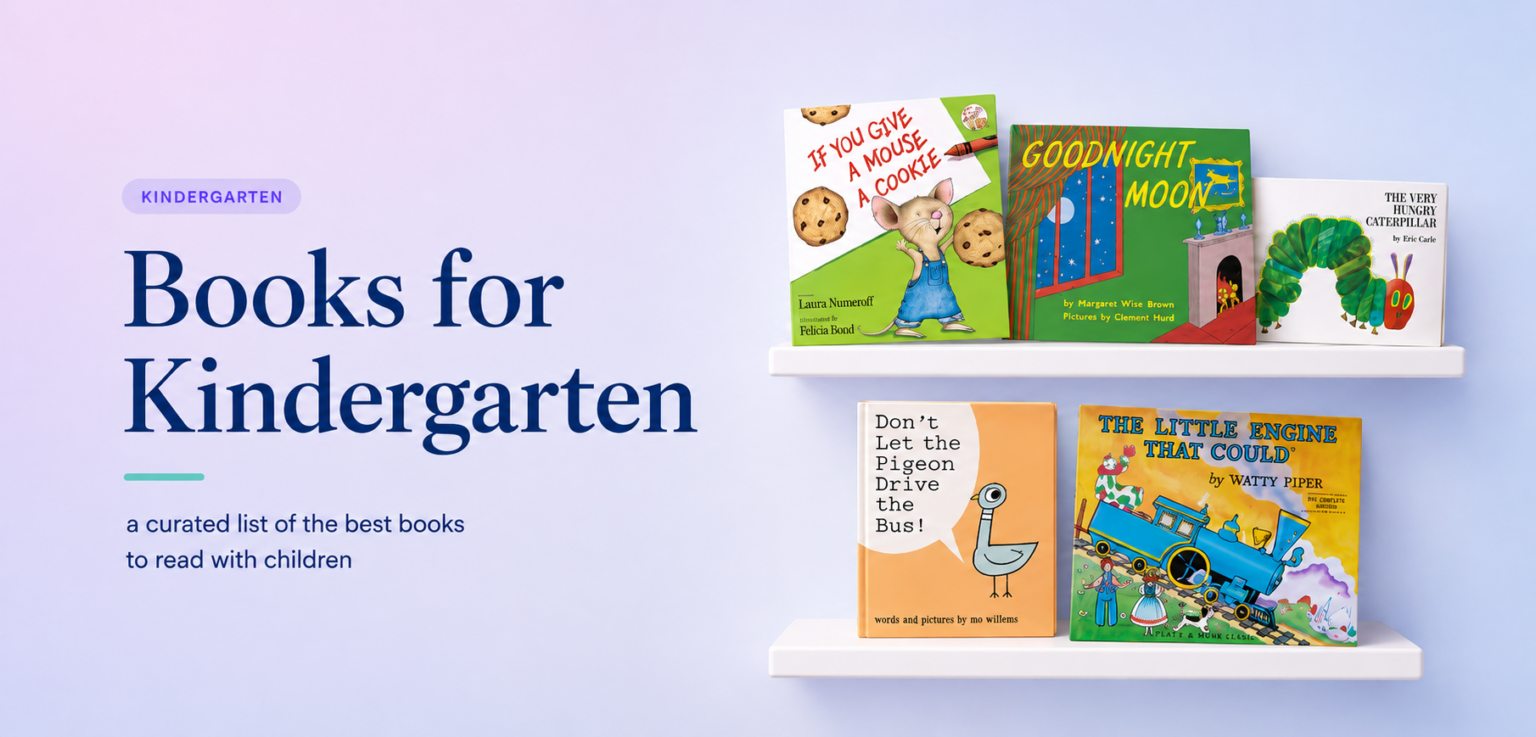
- Don’t Let the Pigeon Drive the Bus! by Mo Willems. The pigeon begs, wheedles, and throws a tantrum, and children get to shout “no” back at him. It teaches kids that a book can talk to them directly.
- Brown Bear, Brown Bear, What Do You See? by Bill Martin Jr. The pattern is so predictable that a child memorizes it after two readings and believes they are reading. That belief is worth a lot at this age.
- The Very Hungry Caterpillar by Eric Carle. Counting, days of the week, and a life cycle all arrive without a single lesson announcing itself.
- Chicka Chicka Boom Boom by Bill Martin Jr. and John Archambault. The alphabet as a rhyming stampede up a coconut tree. It makes letter recognition feel like a party.
- Good Night, Gorilla by Peggy Rathmann. Almost wordless, which means the child does the storytelling. A quiet, funny wind-down for the end of the day.
- Don’t Trust Fish by Neil Sharpson (2024). A ridiculous argument for why fish cannot be trusted, delivered with a straight face. Kindergartners find deadpan hilarious.
Reading aloud is where comprehension really grows, because a five-year-old can follow a story far above their own reading level. Stop on each page, point things out, and let the child guess what happens next. If you want to take engagement further, Spines has a piece on multimedia storytelling in children’s books that covers how sound and interactivity change the way young readers pay attention.
Books for 5-Year-Olds
Kindergarten is often a child’s first long stretch of time away from home. These books give words to feelings a five-year-old is having and cannot yet name, which is why they land so well at this age.
- The King of Kindergarten by Derrick Barnes. A boy walks into his first day like he owns it. Read it the week before school starts.
- The Day You Begin by Jacqueline Woodson. For any child who has ever walked into a room feeling like the only one who looks or sounds the way they do.
- I Am Enough by Grace Byers. Simple, affirming, and useful for opening conversations about self-worth and treating others well.
- Alexander and the Terrible, Horrible, No Good, Very Bad Day by Judith Viorst. Naming a bad day, out loud, turns out to help a child survive one.
- The Lion & the Mouse by Jerry Pinkney. A wordless retelling of the Aesop fable about a small creature repaying a kindness. With no text on the page, the child narrates the whole thing.
Beginner Reader Books Kids Can Read Alone
Beginner reader books are built for the handoff from listening to reading. They use controlled vocabulary, sight words, and repeated sentence patterns so a child can get through a whole book and feel the win.
- Elephant & Piggie series by Mo Willems. Two friends, speech bubbles, and jokes that land. The best on-ramp to independent reading in print.
- Bob Books by Bobby Lynn Maslen. Stripped down to the simplest sounds and words, designed for the very first solo reads.
- Frog and Toad series by Arnold Lobel. Short chapters that build reading stamina, with a friendship gentle enough to carry real feeling.
- Pete the Cat: I Love My White Shoes by Eric Litwin. Repetition and a refrain a child can predict, wrapped around a lesson about staying easygoing when things go wrong.
Series like Elephant & Piggie and Frog and Toad work well here because a child who finishes one immediately wants the next, which is how reading stamina gets built. If your child races through these and starts inventing their own stories, that instinct is worth feeding. Spines has a guide on writing children’s books and one on writing a children’s book series that both work for a curious kindergartner dictating to a parent.
Picture Books Worth Rereading
Picture books tell the story through art as much as text, which makes them ideal for shared reading and for slowing down to look. These are the ones that reward a tenth reading.
- Where the Wild Things Are by Maurice Sendak. It gives a child permission to be furious and still find dinner waiting. Sixty years on, nothing has matched it for capturing a big childhood mood.
- Goodnight Moon by Margaret Wise Brown. The rhythm itself does the work of settling a child toward sleep.
- Last Stop on Market Street by Matt de la Peña. A boy learns to see beauty in an ordinary bus ride across town. Quietly one of the best books written for this age about noticing what you already have.
- The Word Collector by Peter H. Reynolds. A boy collects words the way other kids collect rocks. It plants the idea that language is something you can gather and love.
- Harold and the Purple Crayon by Crockett Johnson. A child draws his own world into existence, which is exactly what imagination feels like from the inside.
The art is doing half the storytelling in every book above. If you have ever wondered how those images get made, Spines has a writer’s guide to illustrating children’s books that explains how illustration and text carry a story together.
Kindergarten Books That Teach Lessons
Some kindergarten books smuggle in real learning, sequencing, cause and effect, early concepts, under a story good enough that the child never notices.
- If You Give a Mouse a Cookie by Laura Numeroff. A perfect loop for teaching cause and effect, and children love predicting the chaos.
- The Little Engine That Could by Watty Piper. A century old and still the cleanest story about effort ever written for small children.
- Oh No, the Aunts Are Here by Adam Rex (2024). A horde of eccentric aunts overruns a girl’s home. A newer family read-aloud that earns its laughs and rereads.
Choosing Books for Your Kindergartner
The right kindergarten book depends less on a reading-level label and more on the match between the child and the story. A few things to look for once you know that.
Reading level that fits. For a five-year-old, look for short sentences, simple vocabulary, and predictable patterns. Beginner reader books built around sight words and phonics let a child read with a little effort and no frustration. Frustration is what teaches a kid that reading is not for them, so the level matters most for the books they read alone, not the ones you read to them.
A subject the child already cares about. Interest beats reading level almost every time. A book about trucks, dinosaurs, or bedtime that a child chooses will do more for their reading than a “better” book they never open.
Illustrations that mean something. In the best picture books, the pictures carry information the words leave out, which trains a child to read images and infer meaning. That is a real comprehension skill, not decoration.
Kindergarten Classroom Books vs Home Reading
The same child needs different books in different settings, so it helps to stock each one with intent.
In the classroom, reach for books that support group discussion, sequencing, and participation. If You Give a Mouse a Cookie is built for cause-and-effect lessons. Frog and Toad works for early guided reading groups. Sturdy read-alouds like Chicka Chicka Boom Boom earn their keep at circle time, and having multiple copies of a few titles makes small-group work possible.
At home, the goal is enjoyment and reinforcement. Let personal interest lead, keep a shelf a child can reach on their own, and rotate a few titles in and out so there is always something familiar and something new. A home shelf that mixes classics like The Little Engine That Could with newer read-alouds keeps a child returning to old favorites while discovering new ones.
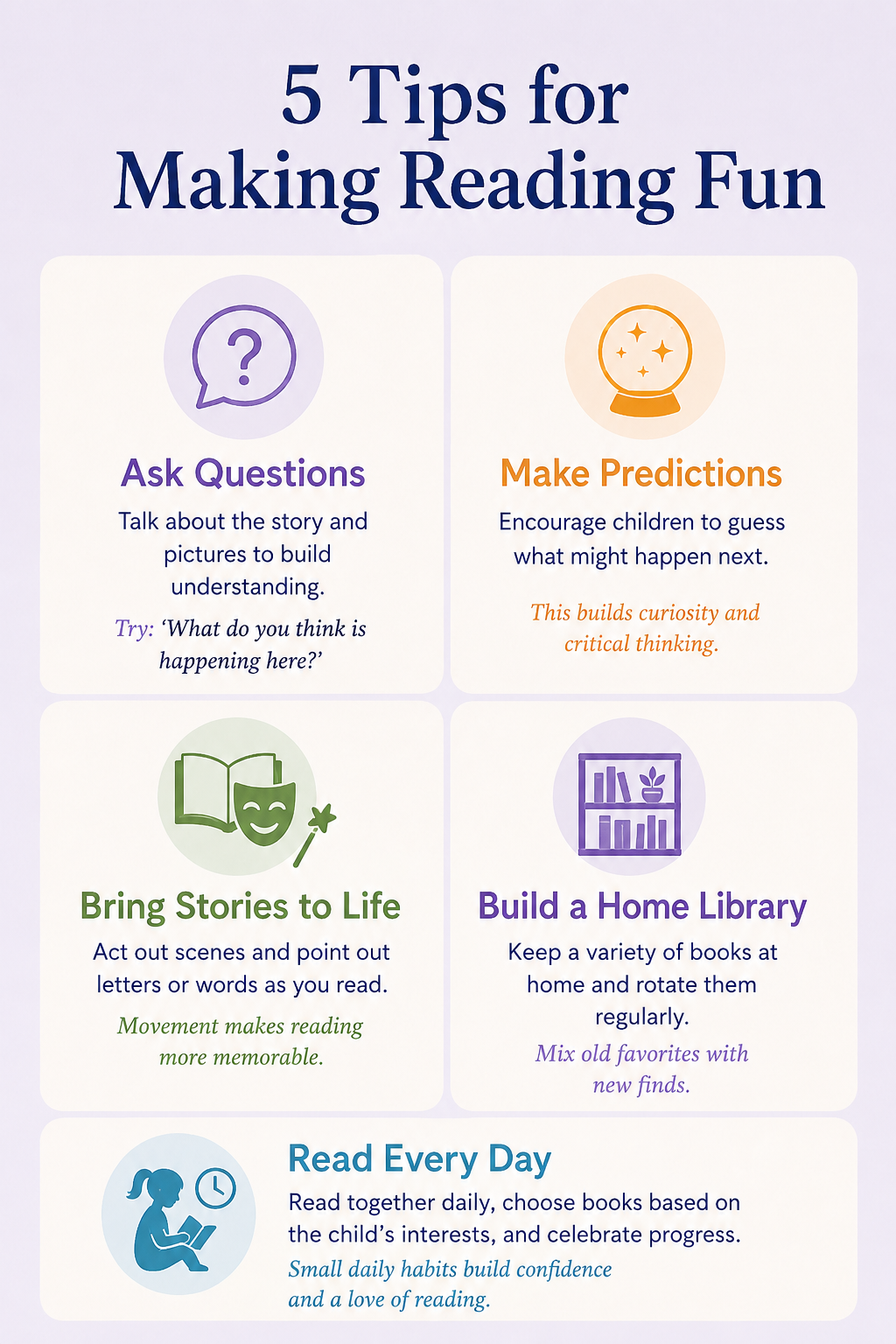
Tips for Making Reading Fun and Effective
Creating a positive reading experience helps children develop literacy skills while enjoying stories. With the right strategies, parents and teachers can make reading both educational and engaging for kindergarten readers.
Interactive Reading Activities
Interactive activities turn reading into a participatory experience. Consider:
- Asking children questions about the story and illustrations to develop comprehension
- Encouraging children to predict what happens next to build critical thinking
- Acting out scenes or using props to make stories come alive
- Highlighting letters, words, or numbers in the text to reinforce early reading skills
These techniques work well with read-aloud books for kindergarten or beginner reader books, making learning memorable and enjoyable.
Building a Home Library
A well-stocked home library encourages regular reading and exploration. Tips include:
- Include a mix of books for kindergarten readers, picture books, and early reader books A balanced collection of classic and newer children’s books gives kids a chance to revisit favorites and discover new interests.
- Organize books by theme, interest, or reading level to make selection easier Keep a few timeless staples, such as The Little Engine That Could by Watty Piper, Harold and the Purple Crayon, and The Little Red Hen, easy to find.
- Rotate books periodically to keep children curious and engaged
- Include both favorites and new titles to challenge and delight young readers Having books readily available at home supports practice outside the classroom and reinforces skills learned in school, and a home collection can also include books by authors such as Mem Fox for families who want widely recognized children’s literature.
Encouraging a Lifelong Love of Reading
Fostering a lasting interest in reading starts with positive experiences. Parents and teachers can:
- Read together daily and discuss stories to build connection and comprehension. Some stories are especially rewarding to share with children and adults during read-aloud time.
- Celebrate completed books to motivate children and build confidence
- Introduce books that align with a child’s interests and hobbies, since rhyme, humor, and funny adventures can help keep motivation high.
Incorporating interactive elements can also make reading more engaging. Explore ideas on multimedia storytelling in children’s books to enhance early reader experiences.
Key Takeways
Kindergarten is where a child decides, without ever saying so, whether reading is something they do or something that is done to them. The books on this list stack the odds toward the first answer. Pick a handful that match your child, read them more than once, and let the rereading do its quiet work.
If reading these with your own kindergartner has made you think about writing one yourself, that instinct is worth following. Spines has guides on writing children’s books and illustrating children’s books, and when your story is ready, a full walkthrough on how to self-publish a children’s book.
Q: What books should a kindergartner be reading?
A mix of read-aloud picture books and simple early readers. At five, most children listen well above their own reading level, so pair books an adult reads aloud, like Where the Wild Things Are and The Very Hungry Caterpillar, with decodable early readers a child can attempt alone, like Bob Books and Elephant & Piggie.
Q: What is a good reading level for kindergarten?
Most kindergartners work with sight words, short predictable sentences, and simple phonics. Early reader books labeled for ages four to six usually fit. The right book is one the child can get through with a little effort and without frustration.
Q: What is the difference between picture books and early reader books?
Picture books tell the story mostly through illustrations and are meant to be read aloud. Early reader books use controlled vocabulary and repeated sentence patterns so a child can read them independently. Kindergartners usually need both at the same time.
Q: What are the best read-aloud books for kindergarten?
Books with rhythm, repetition, and space for a child to join in. Brown Bear, Brown Bear, What Do You See?, Don’t Let the Pigeon Drive the Bus!, and Chicka Chicka Boom Boom all invite kids to predict and chant along, which keeps them engaged and builds early literacy at the same time.
Q: How do I get my kindergartner to enjoy reading?
Read together every day, let the child choose some of the books, and pause to ask what they think will happen next. Matching stories to what a child already loves, whether trucks, animals, or bedtime, matters more than picking the perfect reading level.
Q: Which books work best in a kindergarten classroom?
Books that support group discussion and sequencing, such as If You Give a Mouse a Cookie and Frog and Toad, plus a few sturdy read-alouds for circle time. Multiple copies of core titles help with guided reading groups.