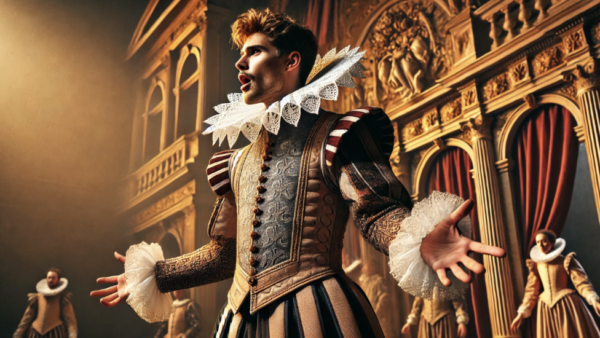

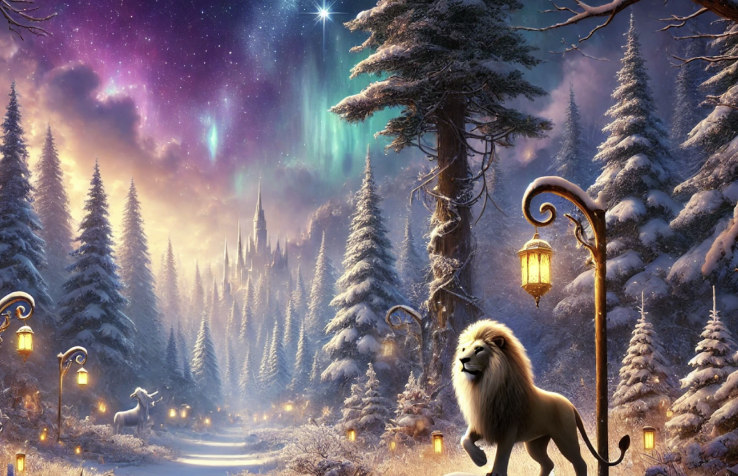
Imagine vast kingdoms with towering castles, enchanted forests filled with mythical creatures, and epic battles that span lifetimes. Magic flows freely, ancient prophecies demand fulfillment, and a great evil may be lurking in the shadows.
Welcome to high fantasy, a genre where the stakes are monumental and the landscapes endless.
This guide breaks down what high fantasy actually is, its defining features, and how it compares to low fantasy and a low magic world more broadly, including something most guides skip: an honest look at the real, ongoing disagreement among fantasy writers and critics about where exactly the line between high and low fantasy sits, and why a question like “is Harry Potter high or low fantasy” doesn’t actually have one universally agreed-upon answer.
Whether you’re simply curious to define high fantasy or actively writing high fantasy of your own, understanding both sides of that debate genuinely helps.
What Is High Fantasy?
High fantasy is a subgenre of fantasy set in entirely fictional worlds, places where magic is as real as the air you breathe, and mythical creatures roam freely across vast landscapes.
What sets high fantasy apart is its world-building. Authors don’t simply add magic to our world, they create entire, immersive universes, an entire universe with its own rules rather than a corner of ours: sprawling kingdoms, ancient prophecies, complex political systems, magical beings living in enchanted forests or treacherous mountains. In high fantasy, the setting often takes center stage, shaping the plot just as much as the characters.
Heroes in high fantasy typically come from humble beginnings, farm boys or orphans, destined for greatness, often through an ancient prophecy.
These heroes undertake massive quests, wield magical weapons, befriend wise mentors, and battle dark forces. Magic isn’t just a tool, it’s governed by strict systems, from intricate spell-casting to ancient rituals, and plays a central role in shaping the world’s history and conflict.

Key Characteristics of High Fantasy
Epic world-building. The hallmark of high fantasy is its elaborate and immersive world-building. The world isn’t just a backdrop, it’s a living, breathing character in its own right, complete with massive continents, unique cultures, languages, and complex histories.
From the towering castles of The Lord of the Rings to the desert landscapes of The Wheel of Time, these worlds feel vast, rich, and fully realized.
Magic and mythology
Magic is never just an afterthought, it’s deeply ingrained in the world’s fabric. Alongside magic, high fantasy literature often includes complex mythologies, gods, heroes, legendary creatures, that add layers of depth and influence character choices and the direction of the story.
Many high fantasy authors draw directly on real mythological traditions, Greek mythology’s pantheon of gods and epic conflicts, Norse mythology’s doomed heroes and world-ending battles, and medieval Europe’s own legends, the Knights of the Round Table among them, all show up reshaped across countless high fantasy stories and short stories alike, even when the world itself is entirely invented.
The hero’s journey
A defining characteristic is the archetypal hero’s journey, where an ordinary individual is called to undertake a life-changing adventure. Heroes encounter wise mentors, forge powerful alliances, and battle enemies far greater than themselves.
A clear battle of good vs. evil
High fantasy often revolves around a cosmic struggle between good and evil, a battle for the fate of entire worlds, not just small-scale conflicts.
Mythical creatures and races
Dragons, elves, dwarves, orcs, and fantasy creatures that live outside our reality are often more than background characters, they’re integral to the world’s ecosystem, politics, and culture.
Many of these magical creatures and the magical powers wielded by high fantasy heroes trace back to fairy tales and older folklore, reshaped for an adult readership rather than the audience children’s librarians typically shelve fairy tales for.
High Fantasy vs. Low Fantasy: Two Real, Competing Definitions
This is worth addressing honestly rather than presenting one flat answer, since fantasy writers and critics genuinely disagree here, not just at the edges, but at the core definitional level.
The setting-based definition, the most commonly cited one, draws the line by world: high fantasy is set in an entirely imaginary, “secondary” world with its own history and rules (Middle-earth, Westeros), while low fantasy is set in the real world, or something very close to it, with magic added on top.
Under this definition, magic’s scale doesn’t matter as much as where the story takes place.
The tone-based definition, argued by working fantasy authors who push back on the setting-only view, draws the line differently: high fantasy is defined by an elevated, formal, sometimes poetic register and heroic, non-gritty stakes, while low fantasy is defined by a grittier, more casual tone, regardless of whether the world is invented or our own.
Under this definition, a secondary-world story could still read as “low” in feel if its tone is casual and unheroic, and a story with only light magical elements could theoretically read as “high” if its tone and stakes are genuinely epic.
| Setting-Based Definition | Tone-Based Definition | |
| What decides the category | Where the story takes place | The story’s register and stakes |
| High fantasy | Set in an invented, secondary world | Elevated, formal, heroic tone |
| Low fantasy | Set in the real world, magic added | Grittier, more casual tone |
| Harry Potter | Low fantasy (real world setting) | Debatable, extensive magical institutions push toward “high” |
| Where it breaks down | Doesn’t account for tone at all | Doesn’t account for world-building scale |
This is exactly why a question like “is Harry Potter high or low fantasy” doesn’t have one clean answer. By the setting-based definition, it’s low fantasy, a hidden magical society existing within our real world, not a separate invented one.
But Harry Potter also builds an extensive secondary institution (its own government, economy, school system, and history) that goes well beyond the “rare, subtle magic in an otherwise real world” most low fantasy actually looks like, which is exactly why many readers and critics resist calling it low fantasy at all, some instead classify it as contemporary or urban fantasy, a related but distinct category.
There’s no single, universally agreed answer here, and it’s worth knowing that going in rather than treating any one classification as uncontested fact.

High Fantasy’s Rebellious Cousin: Grimdark and Deliberate Subversion
This definitional tension shows up especially clearly in grimdark, a real, thriving subgenre built specifically on deliberately subverting classic high fantasy conventions, and it’s worth understanding both as its own category and as a genuine test case for the setting vs. tone debate above.
Where high fantasy typically features a clear, heroic protagonist and a reasonably confident sense that good will triumph, grimdark, popularized by authors like Joe Abercrombie, George R.R. Martin, and R. Scott Bakker, deliberately removes that certainty.
Protagonists are often selfish and morally compromised, a pure heart is treated as a liability rather than a strength, and readers frequently can’t tell who the “good” characters are even supposed to be.
Grimdark usually keeps the secondary-world scale and epic stakes that the setting-based definition would call high fantasy, while rejecting the elevated, heroic tone the tone-based definition requires, making it a genuinely useful real-world example of exactly where those two frameworks pull apart.
For writers drawn to this more subversive route, one honest craft point is worth keeping in mind: subversion only works if you genuinely understand the conventions you’re subverting first.
Writers who deconstruct high fantasy tropes without having read widely in the genre tend to produce work that feels arbitrary rather than deliberately meaningful, since the reader needs to recognize what’s being inverted for the inversion to actually land.
Why Genre Classification Matters Beyond the Debate
This isn’t just an academic argument, it has real, practical consequences for self-published authors specifically, where a book’s genre categorization affects everything from retailer visibility to reader expectations.
One real, documented account from a self-published author illustrates the stakes: Amazon KDP removed a “low fantasy” category from a book’s listing entirely because the platform determined the categorization didn’t accurately reflect the book’s actual content, despite the author believing the classification was reasonable.
Whatever side of the setting-versus-tone debate you land on personally, choosing a genre category that a platform’s own systems and a typical reader would both recognize as accurate matters more than winning the definitional argument, since a miscategorized book risks both algorithmic penalties and reader frustration when the story doesn’t match the shelf it’s sitting on.
How High Fantasy Fits Into the Wider World of Fantasy Fiction
Fantasy fiction as a whole covers a huge range of fantasy stories and fantasy novels, and it helps to know where high fantasy sits relative to a few other real, commonly used classifications, since these terms come up constantly in discussions of fantasy world building.
Secondary world setting vs. primary world
This is really the same setting-based distinction covered above, phrased in the terminology literary critics actually use.
A secondary world is a fantasy setting built entirely from scratch, its own world, disconnected from our primary world (the actual, real one we live in). High fantasy almost always uses a secondary world setting.
Portal fantasy features characters who travel from our primary world into a fantasy world through some kind of doorway, wardrobe, mirror, or similar device, The Chronicles of Narnia is the classic example.
Intrusion fantasy works the other direction, fantastical elements or fantastical creatures cross into our own world rather than a character crossing into theirs.
Contemporary fantasy and historical fantasy describe fantasy stories set in a real time period, our present day or a specific point in the past (often medieval Europe), respectively, with fantasy elements layered in.
Sword and sorcery and heroic fantasy are older, related terms, often used for high fantasy heroes on a smaller, more personal scale than a full epic fantasy saga, single quests and personal heroic romance rather than the fate of an entire civilization, closer to classic sorcery stories from the pulp era than a sprawling multi-book series like Forgotten Realms.
Epic fantasy is sometimes used interchangeably with high fantasy, though some writers reserve it specifically for stories with huge casts, multiple point-of-view characters, and sprawling political plots, think The Wheel of Time or A Song of Ice and Fire, rather than a single hero’s more focused journey.
None of these categories are perfectly separate from each other, plenty of high fantasy novels blend portal-fantasy openings with a secondary world that then becomes the story’s main setting, and grimdark, discussed above, sits at its own sliding scale between epic fantasy’s scope and a much grittier tone.
Examples of High Fantasy
The Lord of the Rings by J.R.R. Tolkien
Often considered the foundation of the modern high fantasy genre, Tolkien created an entire world, Middle-earth, complete with its own languages, cultures, and history. The epic journey of Frodo Baggins and his companions is a quintessential example of both the hero’s journey and the battle between good and evil.
A Song of Ice and Fire by George R.R. Martin
Martin’s sprawling world, Westeros, is filled with intricate political plots, magic, and morally complex characters. Unlike Tolkien’s clearer good-versus-evil framing, Martin’s series thrives on gray morality, sitting closer to the grimdark tradition discussed above.
The Wheel of Time by Robert Jordan
Spanning fourteen books plus prequels, the series is known for its complex world-building and intricate magic systems, combining prophecy, magic, and political intrigue across a richly developed set of cultures.
The Stormlight Archive by Brandon Sanderson
Set on the storm-ravaged planet of Roshar, the series is known for intricate magic systems and a focus on moral questions and the consequences of power.
The Chronicles of Narnia by C.S. Lewis
Though written for a younger audience, Narnia features talking animals, mythical creatures, and a clear battle between good (the lion Aslan) and evil (the White Witch), with an allegorical depth that gives it staying power beyond its intended age range.
The Earthsea Cycle by Ursula K. Le Guin
Set in an archipelago of islands where magic is governed by the balance of the world, Le Guin’s writing stands out for its subtlety and its examination of power and morality through a character-driven lens.
What Is the Difference Between Fantasy and High Fantasy?
Fantasy is a broad genre with many subgenres, but high fantasy stands out through its scale. Fantasy, as a broad category, includes magic, mythical creatures, and supernatural elements, but it can be set in either real or imagined worlds, with stakes that are personal or local.
High fantasy specifically narrows that down to entirely imaginary worlds where magic is central to the plot and the stakes are world-changing.
Some stories, like A Song of Ice and Fire or the more subversive grimdark tradition, mix elements of high fantasy with more intimate or politically driven plots, which is exactly why the boundary between subgenres stays genuinely fuzzy rather than a clean, settled line.

The Enduring Appeal of High Fantasy
High fantasy has stood the test of time for a few real reasons: the escapism of a vast, magical world where anything is possible, timeless themes like destiny and sacrifice that resonate across generations, deep, intricate world-building that rewards close attention, and a genuine adaptability across books, films, and games that keeps introducing the genre to new audiences.
Most high fantasy books also share a generally optimistic throughline even amid dark stakes, unlike grimdark’s bleaker outlook, since the genre’s classic version features protagonists who tend to earn real hope by the end rather than settling for a middle ground between triumph and despair.
There’s also always something new to discover, whether a fresh magic system, an entirely alternate world, or the same world revisited from a new angle in a long-running series.
FAQs – What is High Fantasy?
Q: Is Harry Potter high or low fantasy?
There’s genuine disagreement here rather than one settled answer. By the common setting-based definition (real world vs. invented world), Harry Potter is low fantasy, since it’s set in our world with a hidden magical society. But its extensive magical institutions go well beyond typical low fantasy’s rare, subtle magic, which is why many readers instead classify it as contemporary or urban fantasy.
Q: What is soft fantasy?
Soft fantasy is a subgenre where magic is subtle, undefined, and less central to the plot. Unlike high fantasy’s strict magical systems, soft fantasy focuses more on characters and relationships, with magic often understated. Examples include The Night Circus and Stardust.
Q: What qualifies as high fantasy?
Generally: a completely fictional world with its own history and geography, magic central to the plot and world-building, epic stakes affecting entire realms, and heroic characters embarking on quests. Examples include The Lord of the Rings, A Song of Ice and Fire, and The Wheel of Time.
Q: Is Game of Thrones high or low fantasy?
Generally considered high fantasy, given its fictional world, magical elements, and world-altering stakes, though it differs from traditional high fantasy by lacking a clear-cut battle between good and evil, leaning instead toward the grimdark tradition’s moral complexity.
Q: Is Dune high or low fantasy?
Neither, technically, Dune is classified as science fiction rather than fantasy. It shares some structural similarities with high fantasy, like complex world-building and an epic struggle for control, but its setting is a futuristic, technological universe rather than a magical one.
Q: What are the four types of fantasy?
Commonly cited categories include high fantasy (secondary world, epic stakes), low fantasy (real world with magical elements), urban fantasy (modern, often real-world settings with hidden magic), and grimdark or dark fantasy (subverting heroic conventions with morally ambiguous characters and grittier stakes).