Hybrid publishing is a model where the author pays for professional publishing services, editing, design, and distribution, while a publisher provides the infrastructure and expertise a traditional house would normally supply. The author keeps creative control and a larger share of the royalties. The publisher keeps its name behind a...
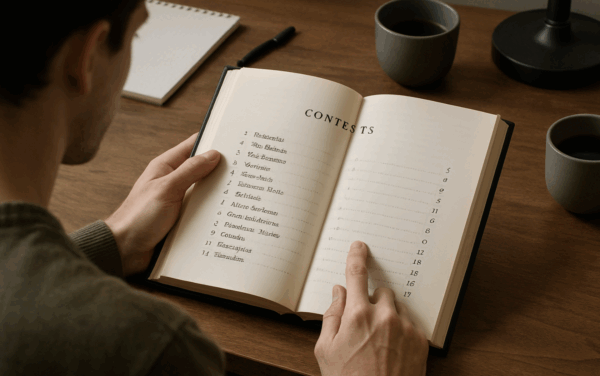
Have you ever opened a book or report and immediately looked for a way to make sense of it all? That’s exactly what the table of contents is there for—a simple yet essential guide that helps readers navigate information without frustration. Whether it’s a printed book, a digital publication, or...
Before any book is published—before it gets a cover, a title on a bookstore shelf, or a reader’s praise—it begins in one essential form: the manuscript. A manuscript is the foundation of every published work. It’s where ideas take shape, stories unfold, and messages are refined. Whether you’re working on...
Somewhere between the 3rd or 4th read of your manuscript, the wheels can start to fall off. By now, you know your sentences so well that they start to blend together, and you stop seeing the words on the page. A plot hole that would jump out at you in...
Publishing without data analysis is like driving blindfolded—you might get somewhere, but odds are it won’t be pretty. For indie authors, the road to self-publishing success isn’t paved solely with creativity. Sure, your brilliant prose and jaw-dropping plot twists are essential, but what about the behind-the-scenes numbers game? Enter data...
In recent years, the science fiction genre has experienced remarkable growth, with sales increasing by approximately 20% in the first half of 2024. This surge highlights the genre’s expanding popularity and the vast opportunities available for authors eager to share their imaginative worlds. The publishing landscape has evolved significantly, making...
In 2026, fiction achieved its highest sales since accurate records began, surpassing the previous peak by an impressive £50 million. This surge underscores the genre’s enduring appeal and the vast opportunities awaiting authors who can craft compelling tales of suspense and intrigue. The landscape of publishing has undergone a significant...
Imagine strolling down a bookstore aisle or scrolling through Amazon, hunting for your next great read. A sea of book covers swims past your eyes, each one vying for your attention. You click on the one with the striking cover—before even reading the title or description, your curiosity is piqued....
If you’re self-publishing a book, the ISBN question can get confusing fast. Do you need one? Should you use a free ISBN? Do you need to buy your own? And does Amazon handle it for you? Here’s the simple answer: if you are publishing a print book, you need an...
You’ve conquered your local market, but is your book ready for a world tour? Imagine your words captivating readers in Parisian cafés, Tokyo subways, or bustling markets in Mexico City. The secret to expanding your reach? Translating your book into other languages. By using foreign publishers and self-publishing translated editions...
You have thirty seconds. Maybe less. An agent is scrolling her inbox, a bookstore buyer is scanning a catalog page, a reader’s thumb is hovering over the back button on a description that hasn’t hooked them yet. In that window, your pitch is the only thing standing between years of...
A query letter is one page. That is the entire design constraint, and it is also why so many writers stall in front of one: you get roughly 250 to 400 words to convince a literary agent to ask for the rest of your book, and one attempt to write...