“Frankly, my dear, I don’t give a damn.” That single line from Gone with the Wind has outlived generations, become cultural shorthand for savage indifference, and still slaps today. Why? Because great dialogue doesn’t just carry a scene—it makes it unforgettable. Whether you’re writing a novel, screenplay, or fanfiction that...
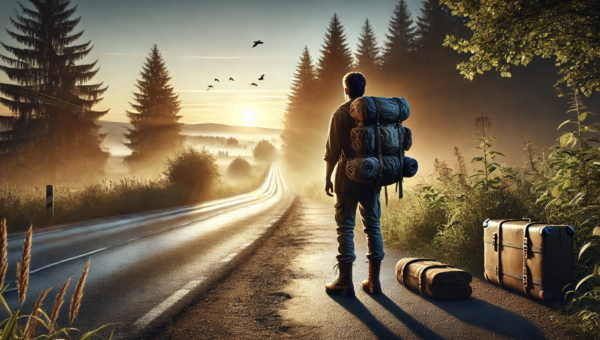
Imagine if Harry Potter had never received his Hogwarts letter. If Katniss Everdeen had let her sister take her chances in the Hunger Games. If Peter Parker had never been bitten by that radioactive spider. No wands, no rebellion, no web-slinging—just ordinary people living ordinary lives. Sounds dull, right? That’s...
Picture this: You’re watching TV, minding your own business, when suddenly—boom!—Sarah McLachlan’s Angel starts playing. Before you even see the first sad puppy’s trembling eyes, you know you’re about to cry. The ASPCA ad unfolds: slow-motion shots of shivering dogs, heartbroken kittens, and a solemn plea to “help now.” Next...
This is a checklist for folks writing fiction, not some boring classroom worksheet. If you’re working on some wafer-thin novel idea, short story, or anything in between, these are the questions you should be running your work through at every stage, from the moment the germ of an idea first...
Let’s be honest: weak verbs are the beige cardigans of writing. They technically do the job, but no one remembers them after the sentence ends. Enter strong verbs — the action heroes of your prose. These words don’t just tell you something happened — they make you see it, feel...
Exposition is the part of a story that introduces the setting, characters, and central conflict before the plot begins to move. It’s the first of five classical plot elements, ahead of rising action, climax, falling action, and resolution, and its only job is to make sure a reader can follow...
Most people who start writing fantasy get stuck in the same place: they have a dragon, a prophecy, and no idea why the story still feels flat. The elements of fantasy are the seven working parts every fantasy story needs in some form: a self-contained world, a magic system with...
The climax is the moment where tension peaks, conflicts reach their breaking point, and the protagonist makes a crucial decision. Without a climax, a story isn’t really a story, it’s just a sequence of events with no emotional payoff. Whether you’re reading a novel, watching a movie, or listening to...
An epilogue is a short final chapter at the end of a book that comes after the main story has resolved, offering closure, a glimpse of the characters’ future, or a final twist that recontextualizes what came before. Think of Harry Potter and the Deathly Hallows, where readers see the...
Every reader has finished a book and felt it was arguing with them about something larger than its own plot. A barnyard revolt that felt like a warning about power. A prisoner who escaped a cave and came back changed, unable to explain what he had seen to people who...
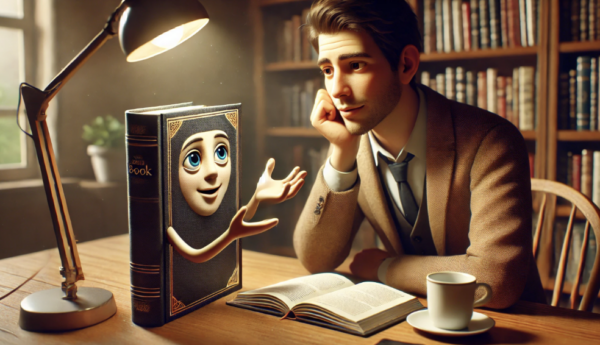
Have you ever read a sentence and thought, Wait, did that tree just roll its eyes? That, my friends, is the power of personification—the art of giving human characteristics to non-human things. It’s like inviting your favorite inanimate objects to the party and letting them join in on the fun....
Writing is an art, but let’s be real—some writing just looks better. You’ve seen it before: a beautifully formatted page, elegant font choices, and words that flow like poetry. It’s not just about what’s written—it’s about how it feels on the page. That, my friend, is the power of a...