

This is a checklist for folks writing fiction, not some boring classroom worksheet. If you’re working on some wafer-thin novel idea, short story, or anything in between, these are the questions you should be running your work through at every stage, from the moment the germ of an idea first pops into your mind to the final tweak of a line edit.
At its core, a writing checklist is just a collection of questions bunched together in a way that keeps you from letting slip the all-important elements that a finished story actually needs: a hook that really lands with readers, characters worth investing in, dialogue that sounds like real people actually talk, and an ending that truly earns its place.
Using it at each stage of the writing process, rather than just saving it for the end, lets you catch problems while they’re still relatively easy to fix.

Brainstorming and Idea Development
Before a single scene gets written, the goal is volume, not quality. Some ideas will be genuinely bad. That’s fine, since bad ideas often lead somewhere useful once you push past them.
A few techniques that reliably produce material worth keeping. Mind maps, starting from a single character, setting, or theme and branching outward, tend to surface connections you wouldn’t reach by thinking linearly. “What if” scenarios, taking an ordinary situation and inverting one assumption, are often where genuinely original story ideas come from. Character sketches, built around a character’s fears, flaws, and private wants before any plot exists around them, frequently generate a stronger story than starting with plot first.
Once you have a pile of ideas, the harder skill is knowing which one to commit to. A useful test is whether an idea generates more questions the longer you sit with it. A premise that feels fully explained after five minutes tends to run out of material by chapter three. A premise that keeps opening new complications the more you poke at it usually has enough underneath it to sustain a full manuscript.
Brainstorming checklist:
- Does your chosen premise raise new questions the more you think about it, rather than fewer?
- Have you generated more ideas than you need, so you can choose rather than settle?
- Does at least one idea surprise you, rather than feeling like something you’ve read before?
- Have you sketched your central character before locking in the plot around them?
Plot and Structure
Every story that actually holds together follows a version of the very same general shape: an intro that introduces the character and sets up the central problem, a meaty middle section where the tension builds and the stakes get higher and higher, and a satisfying ending where the conflict gets resolved in a way that feels fair and well-deserved.
The key is to get the shape right rather than to worry about getting each and every scene just so, because a solid structure can carry through even some pretty messy writing, but the reverse is true too: a story with no shape to speak of just doesn’t stand a chance, no matter how pretty the words are.
That middle bit is where most drafts start to go off the rails. You see, you need actual escalation in your rising action, just throwing in more and more things isn’t going to cut it, and each new complication should be raising the stakes to a higher level, building on the ones set up at the beginning. Just piling on incidents isn’t going to do it.
If you can outline your story before drafting, even loosely, it becomes much easier to catch a sagging middle before you’ve written thirty thousand words into it.
Subplots deserve their own check here too. A subplot that never intersects with the main plot tends to read as a detour rather than a layer, while one that eventually feeds back into the central conflict, sharpening a theme or forcing the protagonist’s hand, earns its place in the manuscript. If a subplot could be deleted entirely without the ending changing, that’s usually a sign it needs either a stronger connection to the main story or a much shorter runtime.
Plot checklist:
- Does every subplot eventually connect back to the main story, rather than running parallel to it?
- Does the opening establish the central conflict within the first few pages?
- Does tension escalate through the middle, or does it plateau?
- Does every scene push the plot forward, or could it be cut without loss?
- Does the climax resolve the story’s central conflict, not a smaller one that showed up along the way?
Character Development
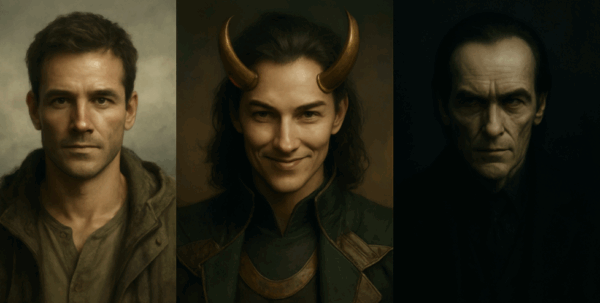
The plot unfolds the events. It’s the character that makes a reader give a darn what happens to them. A protagonist without a clear want comes across as just drifting along with the plot, not driving it, and that’s a big problem.
And an antagonist without a compelling reason for fighting the hero comes off as just a tool to move the story along, not a real person.
The best characters have a clear “want” that shows on their sleeve, a believable reason for why they want it, at least one genuine flaw, and the ability to change by the time the story is over.
On the other hand, static characters, the kind that remain exactly the same at the end of the book as they were at the beginning, tend to only work in kinds of stories that are all about the plot.
Action thrillers for example, where the fun is watching a character who doesn’t change handle increasingly crazy situations rather than watching them grow as a person.
Knowing the difference between a static and a dynamic character matters here, since not every character in your story needs to transform, but your protagonist usually does, and confusing the two can leave a story feeling like nothing actually happened to the person it was supposedly about.
Character checklist:
- Have you distinguished which characters are meant to stay static and which are meant to grow?
- Does your protagonist want something specific, not just “to be happy” or “to survive”?
- Is your antagonist’s motivation coherent enough that they’d defend it themselves?
- Does your character have a real flaw, not just a quirk?
- Do they change by the end, or is the lack of change a deliberate choice?

Dialogue
Dialogue gets a whole lot more done than most first drafts give it credit for. Not only does it move the plot along, often faster than any old description paragraph ever could, but it also gives the reader a huge leg up on figuring out who a character really is.
The two main mistakes people make with dialogue are pretty much at opposite ends of the spectrum, some dialogue ends up overexplaining because characters are saying things they’d never actually blurt out in real life, all just to help the reader along.
At the other end of the spectrum, some dialogue is just too similar, all the characters sound like they’re just a bit different shades of the same voice, but in truth word choice, sentence length and what they choose not to say should all change from person to person. And yeah, reading dialogue out loud can help you spot these problems way faster than just staring at it silently on the page.
Dialogue tags get a quick glance too. One word, “said”, is almost invisible to the reader, and hardly ever needs replacing. But too many adverbs in there, and every character exclaiming, retorting and interjecting away, draws the eye to that and away from what’s actually being said.
Meanwhile action beats, a character crossing their arms or looking away mid sentence, tend to tell us more about what’s going on than some adverb-heavy tag can ever hope to.
Dialogue checklist:
- Does any line exist purely to explain something the reader needs, rather than something the character would actually say?
- Would a reader recognize who’s speaking without the tag, based on voice alone?
- Does the dialogue carry subtext, or does every character say exactly what they mean?
- Does it sound natural when read aloud?
- Are your dialogue tags simple enough to stay invisible, rather than competing with the dialogue itself?
Setting and Atmosphere
A setting that’s just backdrop tends to feel like wallpaper, present but doing no real work. A setting that’s overloaded with description tends to lose the reader entirely, since detail without purpose reads as padding rather than immersion. The difference between the two isn’t quantity, it’s whether the details are doing something.
The forest was dark, the trees were tall, the air smelled damp against the forest, swallowing the last rays of sunlight, twisting shadows between towering pines, the air thick with rain and pine needles. The second version isn’t longer by much. It’s specific, and it lets the environment interact with the character rather than simply existing around them.
This is really an extension of showing rather than telling, applied specifically to place instead of emotion. A character noticing the creak of a floorboard because they’re listening for someone following them tells a reader more about tension than a paragraph announcing that the house feels ominous ever could.
Setting checklist:
- Are you engaging in more than one sense, rather than relying on visual description alone?
- Does each descriptive detail serve mood or plot, or could it be cut?
- Is the setting shown through the character’s interaction with it, rather than listed?
- Does the atmosphere match, or deliberately contrast with, the scene’s emotional tone?
Editing and Revision
A first draft is just there to exist, its main job is to be the foundation for what’s to come. A second draft on the other hand is when the book starts to take shape: it’s all about making sure everything that stays is absolutely earning its place in the story.
That means cutting anything that just isn’t working, tightening up the bits that are sagging and getting rid of any clichés that have snuck in. And the fastest way to spot what’s not working? Read the whole thing out loud, it’s amazing how much you can pick up that way.
People often don’t fully appreciate just how important the order in which you do your revisions is. Spending ages polishing the language before you’re really sure what shape your story is going to take is just a recipe for wasted effort.
You’ll spend hours rewriting paragraphs that end up getting the chop later on. There is a more efficient way to do it. First, make sure your structure is solid, get that right, then sort out your character development and pacing.
Only then is it worth getting down to the nitty gritty of language and grammar. Trying to edit line by line too early in the process is one of the fastest ways to burn out half way through your revisions.
There’s a limit to how much a writer can see in their own manuscript, though, no matter how many passes they run or how disciplined the sequence. Familiarity hides problems the same way it hides typos, which is exactly the gap a professional book editor is trained to close once self-editing has gone as far as it can.
Revision checklist:
- Is the pacing even, or does the middle still drag?
- Does every scene still earn its place, or has anything become dead weight?
- Have you read the manuscript aloud at least once, start to finish?
- Have you specifically hunted for clichés rather than assuming you’d notice them?

The Full Checklist in One Place
For a single reference to return to at any stage:
| Stage | Key Questions |
| Brainstorming | Have you generated more ideas than you need? Does one genuinely surprise you? |
| Plot | Does the opening hook fast? Does tension actually escalate? |
| Character | Does your protagonist want something specific? Is your antagonist’s logic coherent? |
| Dialogue | Would a reader recognize the speaker by voice alone? Does it sound natural aloud? |
| Setting | Does every detail serve mood or plot? |
| Editing | Have you read it aloud? Have you hunted clichés specifically? |
Your Story Writing Journey Starts Now
Writing a great story isn’t about waiting for inspiration to strike, it’s about having the right tools to guide you. A story writing checklist keeps you focused, helps you avoid common pitfalls, and ensures that your ideas actually make it to the page in a way that works.
From brainstorming wild ideas to crafting immersive settings, sharpening dialogue, and polishing every scene, a checklist gives you a roadmap to follow. No more staring at a messy draft wondering what’s missing. No more saggy middles, flat characters, or endings that fall apart.
So what’s next? Create your own writing checklist, or download one and start writing today! Your story is waiting to be told. Are you ready to write it?
Want more expert writing tips and resources? Spines has you covered. Check out our latest guides and tools to take your storytelling to the next level!
FAQ: Writing Checklist
Q: What is a writing checklist?
A writing checklist is a set of structured questions used at each stage of writing a story, from brainstorming through final revision, to make sure the essential elements, plot, character, dialogue, setting, are all doing their job before the work is considered finished.
Q: What should a story writing checklist include?
A strong checklist for fiction covers plot structure, character motivation and growth, dialogue authenticity, setting and atmosphere, and a revision pass focused on pacing and clarity. Each stage has its own set of questions rather than one generic list applied at the end.
Q: How is a fiction writing checklist different from an essay checklist?
A fiction checklist focuses on story-specific elements, character arcs, dialogue, pacing, and narrative tension. An essay checklist instead centers on thesis clarity, argument structure, and supporting evidence, since the two forms are solving different problems entirely.
Q: Should I use a checklist while drafting or only during revision?
Both, though the questions shift. During drafting, a checklist mostly prevents you from skipping foundational elements, a clear want for your protagonist, a coherent structure. During revision, it becomes diagnostic, helping you find and fix what’s not working rather than shape what doesn’t exist yet.
Q: When should I bring in outside help instead of relying on my own checklist?
Self-editing has a real ceiling, since familiarity with your own manuscript hides the same problems it hides in any writing. If a structural issue keeps surfacing across multiple revision passes without resolving, that’s usually the point where a professional editor’s outside perspective becomes worth the cost.