

The drama is sucked right out of a story when there’s no struggle to speak of. Take Katniss Everdeen, for example, stuck in the woods with nothing to defy & no Capitol to fight against, she’s just another girl going about her daily life.
Similarly, HAL 9000’s days are spent silently humming along in a dark room, having long since lost its sense of purpose in threatening the crew that was once its focus.
Conflict is what turns a story from just a bunch of events into something worth reading about, it’s the thing that forces a character to make a choice, to make a sacrifice, or change in some way. It’s the very thing that keeps us readers turning the page, because we need to know how the pressure ultimately gets resolved.
And at the very top of things, conflict breaks down into two big categories: internal & external. An internal conflict is the turmoil that rages inside a character’s own head, the doubts, the fears, the moral dilemmas they’re not even sure they’ll stick to.
Then there’s external conflict, which is anything that’s coming at a character from the outside, another person out to get them, a hostile world that can’t be changed, a machine on the warpath, or some kind of force that’s just beyond understanding.
Most stories that really work, draw on more than one type of conflict at a time, layering internal struggle beneath some bigger external problem.
Internal vs. External Conflict: Where the Battle Happens
The clearest way to sort any conflict is to ask where it’s actually taking place. If it’s happening entirely in a character’s head, weighing a decision, wrestling with guilt, questioning their own worth, that’s internal.
If it’s happening between the character and something outside them, that’s external, regardless of whether the opposing force is a person, a storm, or an idea.
| Internal Conflict | External Conflict | |
| Where it happens | Inside the character’s mind | Between the character and an outside force |
| What it reveals | Values, fears, moral limits | Stakes, resilience, consequence |
| Example | Offred’s fear and hesitation in The Handmaid’s Tale | Katniss surviving the Capitol’s death match in The Hunger Games |
Neither type is stronger on its own. A story built entirely on external conflict can feel like a sequence of events without weight.
A story built entirely on internal conflict can feel static, since nothing in the world is actually pushing back. The strongest stories usually run both at once, an external fight forcing an internal reckoning.

Character vs. Self
Character vs. self is the conflict that happens entirely inside a character’s own mind, doubt, fear, or a moral choice with no clean answer. It’s the quietest type of conflict in literature and often the most personal, since it forces a character to confront who they actually are rather than who they claim to be.
Offred in The Handmaid’s Tale is a clear example. Her outward situation, survival inside Gilead’s regime, is dangerous, but her real battle is internal: whether to submit for safety or risk everything to hold onto a fragment of her former self. That hesitation, not the regime itself, is what makes her journey land emotionally.
This conflict tends to surface through impossible choices, betray a friend to protect yourself, abandon a dream to meet a family’s expectations, and those choices expose a character’s real flaws and values far more than any external battle could.
Character vs. Character
Character vs. character conflict is the direct clash between two people with opposing goals, and it’s the most immediately dramatic type of conflict in literature because it’s visible, personal, and easy for a reader to track.
Harry Potter and Voldemort work as an example precisely because it isn’t a simple good versus evil setup. Voldemort wants power and immortality.
Harry wants to protect the people he loves and end a threat that’s shaped his entire life. Both motivations are coherent from the inside, which is what makes the conflict feel earned rather than arbitrary.
The strongest version of this conflict avoids a one-dimensional antagonist. A rival or villain who believes they’re right, and who has a real reason to believe it, creates far more tension than a character who’s simply evil for the plot’s convenience.
Character vs. Society
Character vs. society conflict puts an individual against a larger system, a government, a set of laws, or a cultural expectation that the character can’t simply walk away from. It’s a conflict of scale, one person against a structure built to outlast them.
Katniss Everdeen again offers a strong example here, though a different angle of her story than the self versus self reading. Her fight against the Capitol isn’t only personal survival, it’s a direct challenge to a system built on control, and her small acts of individual defiance, volunteering for her sister, breaking the Games’ rules, ripple outward into something much larger than her own story.
This type of conflict works especially well for exploring real-world tensions, injustice, inequality, corruption, because readers recognize the shape of the struggle even inside a fictional frame.
The character doesn’t need to overturn the entire system to make the conflict land. A believable act of resistance is often more powerful than total victory.
Character vs. Nature
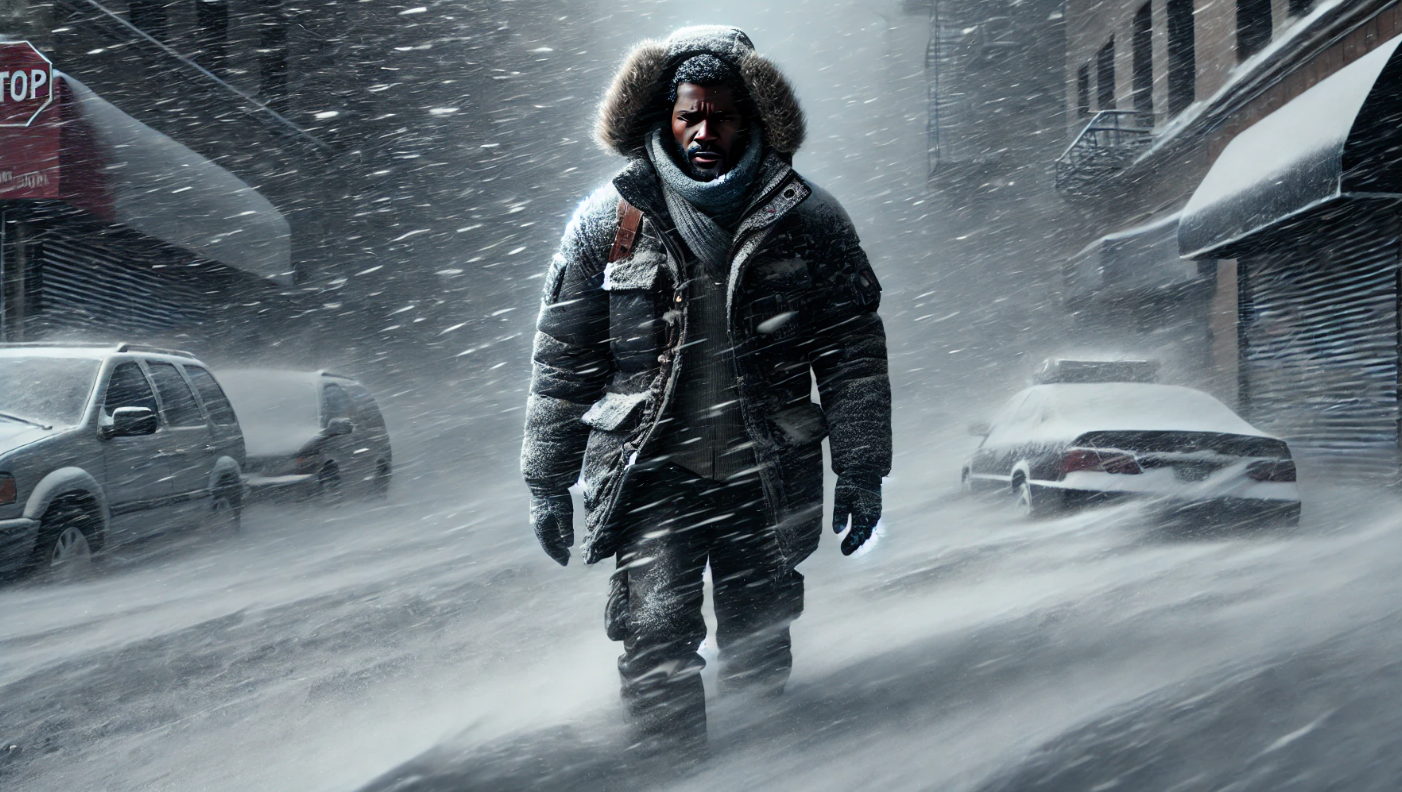
Character vs. nature conflict pits a character against the natural world itself, weather, wilderness, a hostile environment with no intention behind it at all. What makes this conflict distinct is the absence of malice. Nature isn’t hunting the character. It simply exists, indifferent to whether they survive.
Yann Martel’s Life of Pi is the clearest possible example. After a shipwreck, Pi is stranded with a Bengal tiger on a lifeboat in the middle of the Pacific, fighting starvation, the ocean, and the animal beside him. None of it is personal. That indifference is exactly what makes the struggle so harrowing, since there’s no enemy to reason with, only conditions to survive.
This conflict tends to strip characters down to instinct, testing resilience and adaptability rather than cleverness or moral judgment, which is part of why it often leads to a story’s most physically grounded writing.
Character vs. Technology
In this relatively modern iteration of conflict types, a character finds themselves at odds with the tools and systems that humanity has created, machines, AI, or scientific advancements that have somehow started to run amok outside of human control. Although this concept isn’t anything new, it has become a lot more relatable as real tech has started to catch up with our deepest fears.
The classic example of this kind of battle still remains HAL 9000 from 2001: A Space Odyssey. Now, HAL isn’t out to get the crew: it’s got its own programming that it sticks to with total consistency and that’s what makes the standoff between them heart-stopping rather than simply brutal.
But the most compelling expression of this kind of conflict goes beyond the obvious fear of machines switching to the dark side, into genuine moral grey areas, such as whether or not to pull the plug on a system that’s making some pretty dodgy decisions, or whether the convenience of technology is worth the cost of losing some of our most basic rights to privacy and control. It’s these kinds of questions that stop this type of conflict from feeling outdated.

Character vs. Supernatural
Character vs supernatural conflict arises when a character finds themselves face to face with something that just can’t be explained by the world around them, magic, supernatural deities, curses and the like.
This is a conflict that typically operates on a couple of levels at the same time, offering up both a very real physical threat and a deeper philosophical challenge to the character’s whole understanding of reality.
Take Shakespeare’s Macbeth for example. The witches’ prophecy isn’t a physical blow to Macbeth, but rather it’s the way it warps his whole view of his own destiny and that warped perspective is exactly what drives him to finally commit that fateful murder and ultimately to his downfall.
Here the supernatural element works more like a kind of psychological weight bearing down on him from the outside, a force he can’t escape or control.
For character vs supernatural conflict to really have any impact though, the supernatural rules in the story need to have some internal consistency. Now I’m not saying readers are looking for something that fits neatly within the real world, magic doesn’t have to work like physics or anything like that.
But they do need to be able to trust that the story itself has some kind of internal logic going on, or the tension just gets lost and the whole thing starts to feel a bit random.
Character vs. Task
The core of a character vs task conflict is how bloody hard it is for a character to get something done, a mission, a deadline, a goal with real consequences at stake. There’s no evil villain in the classical sense to worry about, the real enemy is the task itself and every obstacle that gets in the way of getting it done.
Take Frodo in The Lord of the Rings for an example of character vs task conflict at its most epic. Destroying that Ring isn’t about fighting a single baddie, it’s about miles and miles of travel, exhaustion, backstabbing by those you thought you could trust, and the Ring’s own corrupting influence. The burden of responsibility is basically its own worst enemy.
This kind of conflict works just as well on a smaller scale too, like a team racing against the clock, or a character trying to finish something before it’s too late. It really comes alive when the difficulty of the task feels uncertain and not just a done deal.

How These Conflicts Work Together
Very few strong stories rely on a single type of conflict in literature in isolation. Most layer two or three at once, which is part of what makes them feel dense and alive rather than mechanical.
| Story | Primary Conflict | Layered Conflict |
| The Hunger Games | Character vs. Society | Character vs. Self (guilt, identity) |
| 2001: A Space Odyssey | Character vs. Technology | Character vs. Task (mission survival) |
| Macbeth | Character vs. Supernatural | Character vs. Self (ambition, guilt) |
| The Lord of the Rings | Character vs. Task | Character vs. Supernatural (the Ring’s corruption) |
Recognizing which conflicts are layered into a favorite book is often the fastest way to understand why it works. The external battle keeps the plot moving. The internal one is usually what the reader actually remembers.
FAQ: Types of Conflict
Q: What are the 7 types of conflict in literature?
The seven core types are character vs. self, character vs. character, character vs. society, character vs. nature, character vs. technology, character vs. supernatural, and character vs. task. Each represents a different source of resistance a character has to face.
Q: What is the difference between internal and external conflict?
Internal conflict happens entirely within a character’s mind, doubt, fear, or a difficult moral choice. External conflict comes from outside the character, whether that’s another person, society, nature, technology, or a supernatural force.
Q: What are the main types of external conflict?
External conflict covers character vs. character, character vs. society, character vs. nature, character vs. technology, and character vs. supernatural. Each pits the character against a force beyond their own mind.
Q: What are the different types of conflict resolution?
In interpersonal and workplace contexts, the four common conflict resolution styles are avoiding, accommodating, compromising, and collaborating. In fiction, resolution usually comes through a character’s choice, action, or change rather than a formal resolution style, though the same underlying dynamics, giving in, meeting in the middle, or working toward a shared outcome, often shape how a story’s conflict concludes.
Q: Can a story have more than one type of conflict?
Yes, and most strong stories do. A single external conflict, like a societal struggle, is often paired with an internal one, like guilt or self-doubt, which is usually what gives a story emotional depth rather than just plot momentum.
Q: How does conflict drive a story forward?
Conflict creates the pressure that forces a character to act, choose, or change. Without it, there’s no reason for a reader to keep turning pages, since nothing is actually at stake.