Character arcs inject soul, struggle, and suspense into your plot. They keep readers hooked not just on what’s happening, but why it matters.
So, what are character arcs, exactly? In plain terms, a character arc is the internal transformation a character undergoes throughout a story. It’s how a coward becomes brave, a villain finds redemption, or a hero questions everything they once believed.
Without strong character arcs, even the most explosive plot twists can feel… flat. But with one? Your character becomes unforgettable.
Let’s talk about Prince Zukom, a fire-wielding royal with daddy issues, a scarred face, and enough inner turmoil to fill a therapy couch. He starts Avatar: The Last Airbender as the angsty antagonist, but by the finale? He’s one of the most beloved heroes in animation. That’s the power of great character arcs.
The Arc Explained: From Flat to Fantastic
A character arc is the emotional and psychological journey a character experiences throughout a story. It’s the arc-shaped blueprint of change, growth, or glorious self-destruction. Think of it as the emotional rollercoaster your character didn’t sign up for, but absolutely needed to become who they’re meant to be.
There are two flavors of arcs: internal and external.
- The internal arc is where the juicy stuff happens. This is the character’s beliefs, fears, flaws, and emotional baggage doing the tango with fate. Zuko learning honor isn’t about approval? Internal arc, baby.
- The external arc is the plot-driven transformation, events that force change. Think Katniss volunteering for Prim in The Hunger Games, which kicks off both her survival journey and her emotional evolution.
Of course, the best character arcs blend both. Harry Potter’s path from under-the-stairs orphan to self-sacrificing hero is just as much about finding courage and belonging (internal) as it is about defeating a snake-faced villain (external).
So, while your readers may show up for dragons and drama, they stay for the transformation. That, dear writer, is the magic of a well-crafted character arc.
Start Your Publishing Journey FOR FREEArc-eology 101: The 3 Main Types of Character Arcs
Not all heroes wear capes. Some spiral into darkness. Others remain the same while the world changes around them. Welcome to Arc-eology 101, where we dig into the three core types of character arcs, each with its own flavor of narrative satisfaction.
Positive Character Arc: The Glorious Glow-Up
Ah, the classic. Your character starts flawed, broken, or blind to the truth, and ends wiser, stronger, or slightly less emotionally constipated. This is growth in action.
Tropes:
- The Reluctant Hero
- The Cynic Turns Believer
- The Underdog Rises
Examples:
- Elizabeth Bennet (Pride and Prejudice) overcomes pride and prejudice, go figure.
- Peter Parker embraces responsibility (after a whole lotta guilt).
- Moana defies expectations, saves her island, and finds her identity.
This arc is the reader’s comfort food: familiar, satisfying, and deeply rewarding.
Negative Character Arc: The Downward Spiral
It starts with good intentions, or at least a shred of hope. But instead of rising, the character falls. Hard. And often tragically.
Tropes:
- The Tragic Hero
- The Corrupted Idealist
- The Villain Origin Story
Examples:
- Walter White (Breaking Bad): Chemistry teacher to drug kingpin. Yikes.
- Anakin Skywalker: One galaxy-sized meltdown.
- Lady Macbeth: Power-hungry and haunted, quite literally.
These character arcs show us the cost of poor choices, unchecked flaws, or a world too cruel to survive unchanged.
Flat Character Arc: The Unshakeable Force
Sometimes, the character doesn’t change, the world does. This arc flips the script. The hero stays true to their beliefs and inspires change in others instead.
Tropes:
- The Moral Compass
- The Changemaker
- The Lone Wolf Who Was Right All Along
Examples:
- Captain America (the early days): The world bends around his unwavering values.
- Paddington Bear: Too pure, too kind, too determined to make things better.
- Furiosa (Mad Max: Fury Road): Stoic and strong, she changes the course of dystopia.
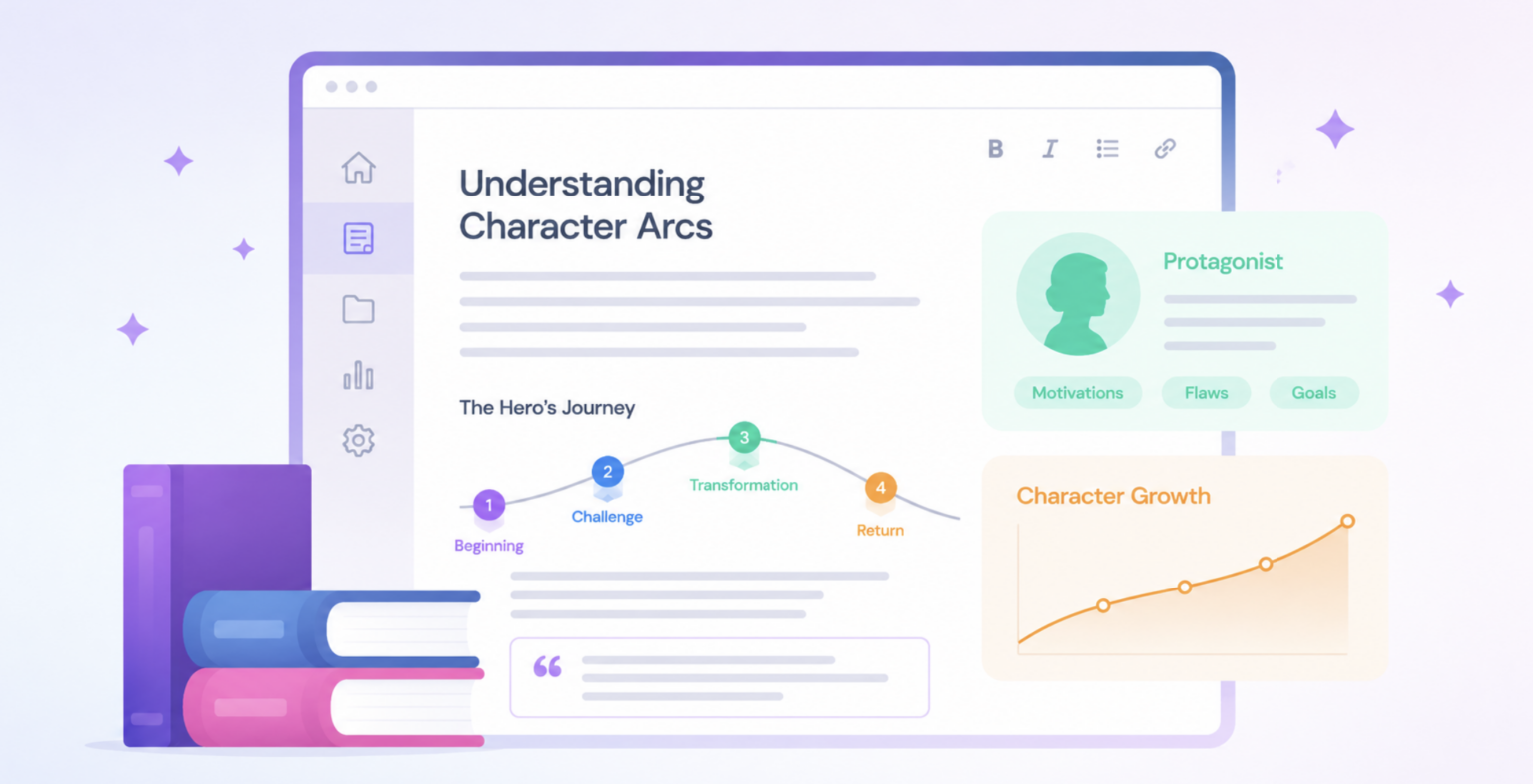
Want to visualize it? Picture three paths on a graph: one rising, one falling, one steady, each shaping the emotional terrain of your story.
Together, these types of character arcs are the backbone of storytelling. Choose wisely, or mix them up to keep readers guessing.
Anatomy of a Killer Arc: The Key Stages
Behind every unforgettable character arc is a roadmap of emotional highs, lows, and aha! moments. Think of it as a makeover montage for the soul, but with more pain and fewer pop songs. Whether you’re working with a hero, antihero, or chaotic raccoon in a space suit, the stages of transformation usually follow a recognizable rhythm.
Here’s your five-part blueprint for crafting a killer arc:
1. The Lie the Character Believes
Every strong character journey begins with a juicy internal falsehood. Maybe they think love makes you weak (Elsa), or that they’re unworthy of leadership (Simba). This lie drives their initial worldview, and their mistakes.
2. The Inciting Incident
Cue the chaos. Something rocks their world and forces them into action. Katniss volunteering for Prim? That’s not just plot, it’s the emotional detonation that kicks off her arc.
3. The Midpoint Shift
Halfway through, the character gets a glimpse of the truth, or at least a flicker of doubt. It’s messy, complicated, and usually involves someone crying in the rain. Think: this changes everything.
4. Climax (Choice or Change)
The emotional core of the arc. The character must choose: cling to the lie or embrace the truth. Katniss stops playing the Capitol’s game and starts fighting back.
5. Resolution
They’ve changed. Or failed to. Either way, the journey lands. Their world might not look different, but they do.
These stages often align with the three-act structure: Setup (Lie + Inciting), Confrontation (Midpoint), and Resolution (Climax + Aftermath). Structuring your character’s evolution this way ensures their arc resonates with purpose and packs an emotional punch.
Because a character who evolves stays with readers long after the last page. One who doesn’t? Well… let’s just say, not every arc has a happy ending.

How to Write Character Arcs That Actually Work
So, you’ve got a character. Maybe they’re a brooding vampire, a runaway bride, or a sentient toaster. Great start. Now comes the real magic: how to write character arcs that hit readers in the feels and make narrative sense.
Here’s your no-fluff formula to get started:
Start With the Lie
- Ask yourself: What lie does your character believe?
Do they think they’re unlovable? That power = worth? That avocados are overrated? (Okay, maybe not that last one.) This internal falsehood is the emotional engine of your story.
Discover the Truth
- Then ask: What truth will they find, or fail to?
This is the destination of their arc. Whether they grow into a fearless leader or crumble under pressure, the truth must challenge everything they thought they knew.
Match Arc to Genre
Character arcs come in all shapes and intensities.
- In romance, arcs often revolve around vulnerability and self-worth.
- In thrillers, they might tackle trust or morality.
- In fantasy, expect epic transformations of identity, purpose, or power.
Build the Beats
Once you’ve nailed the emotional core, map it onto plot beats (like we covered in the last section). Your character’s internal journey should echo the external story. Think parallel tracks, emotion and action moving in sync.
In short, writing a character arc is about earned change. When you give your characters something to overcome inside, their victory (or downfall) outside feels all the more powerful.
Give them a lie. Lead them to the truth. Then let them rise, fall, or rock the world just the way they are.
Pitfalls, Plot Holes & Arc Fails
Even the best intentions can lead to arc-tastrophes. If your character arc feels more like a limp noodle than a narrative spine, chances are you’ve fallen into one of these classic traps:
Static Hero Syndrome: Your character ends exactly the same as it started, no lessons learned, no growth, just vibes. Unless you’re writing a flat arc on purpose, that’s a storytelling red flag.
The Plot-Arc Disconnect: If the arc doesn’t evolve alongside the action, you’re left with emotional whiplash, or worse, boredom.
Emotional Flatline: An arc with no emotional stakes is like karaoke with no backing track: awkward and forgettable. Don’t just move your character through events. Move them through feelings.
Do Not Do Checklist:
- 🧍♂️ Hero learns nothing (and still wins??)
- 🧩 Arc changes mid-story for no reason
- 🎢 All action, no transformation
- 😐 Emotional growth happens off-screen
- 🌀 Readers ask: Wait, why did they change again?
Avoid these pitfalls and you’re one step closer to writing arcs that soar!
From Idea to Arc: Tools & Tips for Writers
Turning a spark of character inspiration into a full-blown character arc doesn’t require a PhD in narrative structure, just the right tools (and maybe a little caffeine).
Tools of the Arc Trade:
- Arc Templates – Use frameworks like the 3-Act Arc or Dan Harmon’s Story Circle to sketch the emotional rise or fall.
- Character Journals – Write diary entries from your character’s POV at key stages to explore their evolving mindset.
- Worksheets & Trackers – Plot out key transformation points visually to see the arc unfold scene by scene.
Try These Exercises:
- “Lie to Truth” Ladder:
Write down the lie your character believes at the start. Now, build a ladder of events or realizations that lead them to the truth. - Mirror Monologue:
Write a short internal monologue from your character at the beginning and end of their journey. Compare their tone, values, and self-awareness.
And if you’re craving a plug-and-play jumpstart, consider linking to or creating your own downloadable character arc worksheet, something to bridge that gap between big idea and brilliant execution.
With the right tools in hand, your characters will stop wandering aimlessly and start transforming with purpose.
FAQ: Character Arcs
Q: What is the difference between character arcs and story arcs?
A character arc is about internal transformation, how a character changes (or doesn’t) over time. A story arc, on the other hand, is the external plot structure, the sequence of events and stakes. Think of the character arc as the emotional journey, and the story arc as the road trip. Ideally, the two should work in sync, so what’s happening outside mirrors what’s happening inside.
Q: Does every character need an arc?
Main characters usually need a character arc, but supporting characters can stay the same. And some protagonists follow a flat arc, where they don’t change, but everyone around them does. Use arcs to spotlight growth where it matters most.
Q: How do you identify character arcs?
Look at where the character starts vs. where they end emotionally, morally, or mentally. What beliefs did they shed? What truths did they gain? If they’ve grown (or regressed) in response to conflict, congratulations, you’ve spotted their arc.
Q: What is the opposite of a character arc?
A character who experiences no change at all, often unintentionally, is said to be static. This can work for side characters or comedic roles, but for leads, it usually feels flat unless it’s a purposeful flat arc.
Q: How do you start a character arc?
Start with a lie, a false belief the character holds. Then, build your story around challenging that belief. The arc begins when the character is forced to confront reality… and either grow, fall, or resist the truth entirely.